How OBotz Is More Than Just a Coding Program

Most parents searching for coding and robotics classes near me have one goal—to help their child prepare for a technology-driven future. Coding is undoubtedly an essential skill, but the world children are growing into demands much more than writing lines of code.
Tomorrow's innovators will need to understand robotics, artificial intelligence, machine learning, automation, design thinking, collaboration, and creative problem-solving. They won't simply use technology—they'll build it.
That's exactly why OBotz was created.
Unlike traditional coding academies that focus on one programming language or repetitive exercises, OBotz offers a structured learning ecosystem where children progressively develop into confident creators, innovators, and future technology leaders.
If you've been exploring OBotz, here's why it's much more than just another coding program.
Learning programming is valuable, but technology careers today are interdisciplinary.
Engineers combine coding with electronics.
AI developers combine programming with data.
Robotics experts blend mechanical systems with software.
Game developers use design, storytelling, mathematics, and programming together.
This is why OBotz doesn't stop at teaching syntax or programming concepts. Instead, it introduces children to a complete technology ecosystem where coding becomes the tool—not the final destination.
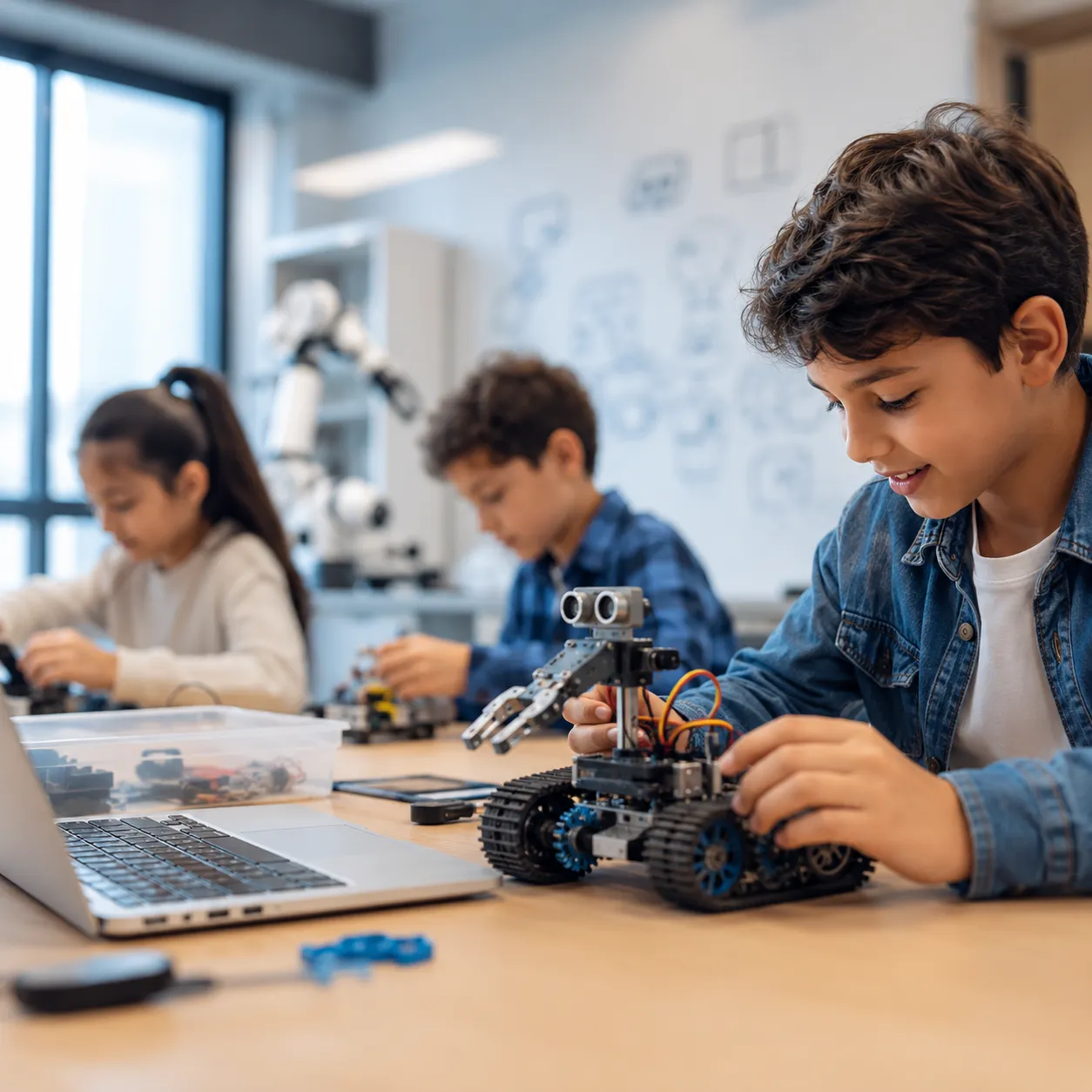
Students experience robotics for kids through interactive projects that connect software with real-world applications, making learning meaningful rather than theoretical.
Many coding academies offer isolated beginner courses.
Children complete one program.
Then another.
Eventually learning becomes repetitive.
OBotz takes a completely different approach.
Its structured seven-level curriculum is designed so that every stage naturally prepares students for increasingly advanced concepts.
Instead of repeatedly starting from scratch, children continuously build on previous knowledge.
As they advance, they explore:
This progressive roadmap keeps students challenged while building confidence year after year.
Children learn best when they can immediately see the results of their work.
That's why robotics classes for kids create much deeper engagement than coding alone.
Instead of watching text appear on a screen, students can:
Suddenly, programming becomes tangible.
Children don't just write code—they watch it transform into action.
This hands-on learning significantly improves retention while making STEM exciting.
Today's children will graduate into workplaces where AI is everywhere.
Understanding how AI works is becoming just as important as understanding computers themselves.
OBotz introduces students to age-appropriate AI concepts that help them understand:
These lessons go beyond memorizing commands.
Children begin understanding how technology "thinks," preparing them for careers that don't even exist today.
The article on AI's impact on the next generation naturally expands on this idea in Gen Alpha & the AI Revolution in Robotics.
Knowledge becomes powerful only when children apply it.
Every stage of OBotz encourages students to build meaningful projects instead of completing repetitive worksheets.
Projects may include:
By solving real challenges, students develop confidence that extends well beyond programming.
Technology education should never exist in isolation.
That's why OBotz integrates the principles of a modern STEM Camp experience throughout its curriculum.
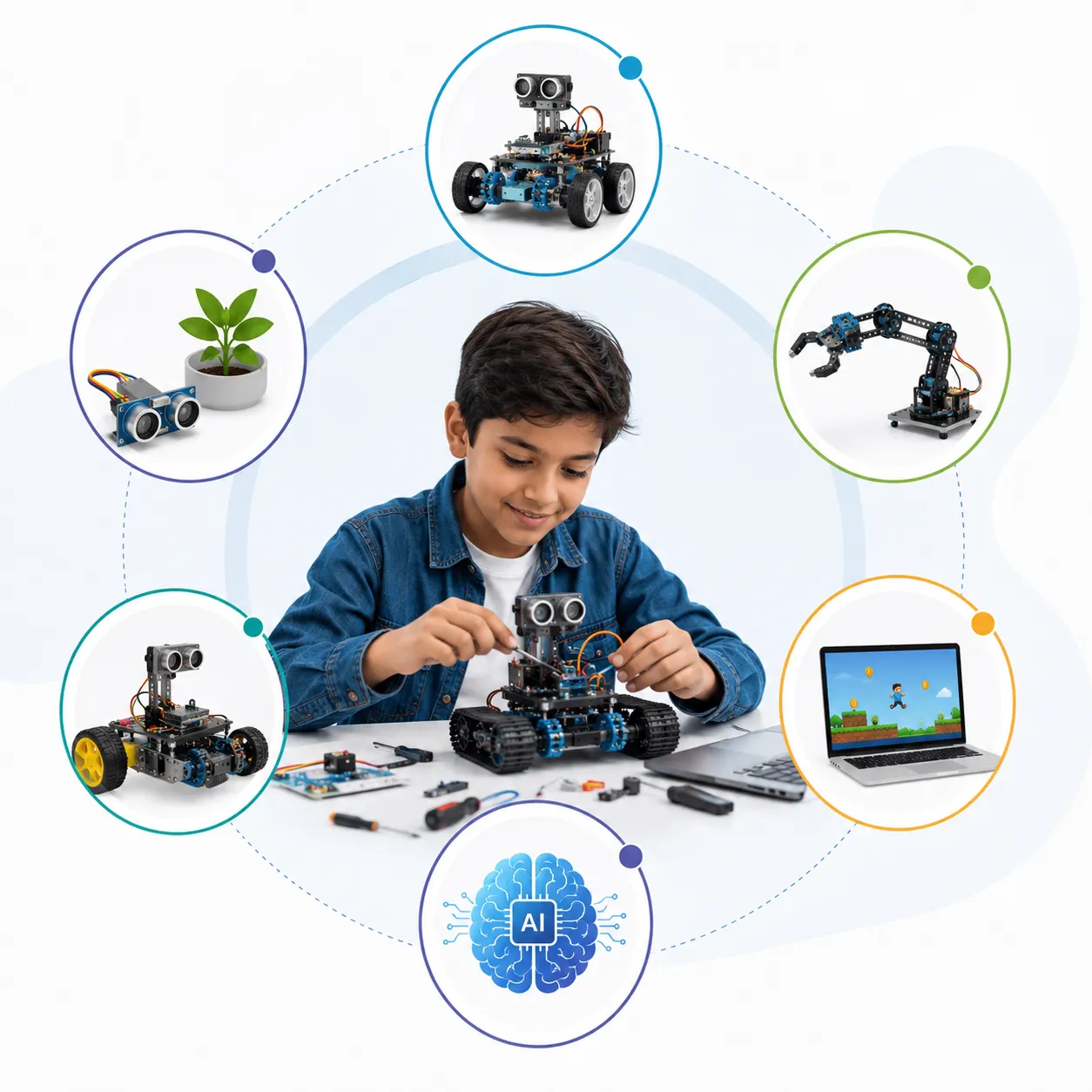
Students simultaneously develop understanding across:
Instead of treating these subjects separately, children learn how each discipline supports the others while solving practical problems.
This interdisciplinary learning prepares them for future academic success as well as emerging careers.
The biggest advantage of OBotz isn't simply technological knowledge.
It's the life skills children develop along the way.
Students gradually strengthen:
These transferable abilities remain valuable regardless of which career children eventually choose.
Parents often worry whether beginners can keep up.
The answer is yes.
OBotz welcomes complete beginners while ensuring advanced learners remain challenged.
Every level introduces new concepts gradually, making learning comfortable and confidence-building.
Whether families are searching for online robotics classes for kids or in-person learning, the curriculum is designed to support long-term growth rather than short-term achievements.
The technology landscape changes rapidly.
Many jobs today's children will hold haven't even been invented.
Rather than preparing students for one programming language, OBotz prepares them to adapt.
As explained in The Future of Robotics & Coding Education 2026, future-ready education focuses on adaptability, innovation, and continuous learning instead of narrow technical skills.
That's exactly what the OBotz curriculum is designed to achieve.
OBotz is more than lessons and projects.
Students become part of an environment that encourages experimentation, collaboration, and curiosity.
Children aren't afraid to fail.
They're encouraged to test ideas.
Improve designs.
Ask questions.
Think independently.
This mindset often becomes more valuable than any single programming language they'll ever learn.
The same educational philosophy has also inspired entrepreneurs interested in building future-focused learning centres, as discussed in Coding & Robotics Franchises for Young Entrepreneurs.
Families frequently search for:
If you're located in Ontario, finding the right centre is simple. Explore the OBotz Cambridge Centre to see how the OBotz learning experience is delivered in a classroom environment.
Coding is no longer a standalone skill.
The future belongs to children who can combine programming with robotics, artificial intelligence, engineering, creativity, and problem-solving.
That's why OBotz isn't simply another coding academy.
It's a complete innovation ecosystem designed to help children become confident creators who understand technology instead of merely using it.
Whether you're exploring coding camps for kids, year-round technology education, or comprehensive robotics learning, OBotz provides a structured pathway that grows alongside your child's curiosity and abilities.
Visit OBotz to discover the complete learning journey, or Book an OBotz Experience and let your child experience firsthand why OBotz is much more than just a coding program.
OBotz goes beyond teaching programming by integrating robotics, AI, machine learning, engineering concepts, and hands-on innovation projects into a structured seven-level curriculum. This comprehensive approach develops both technical expertise and essential life skills.
Yes. Students gradually explore robotics, artificial intelligence, machine learning fundamentals, automation, and smart technologies alongside coding. The curriculum is designed to keep pace with emerging technology trends while remaining age-appropriate.
Each level builds upon previously learned concepts, allowing students to continuously advance instead of repeating beginner material. This progressive approach keeps learning engaging while steadily increasing confidence and technical ability.
Children create projects such as smart robots, interactive games, automated systems, sensor-based devices, and AI-inspired applications. These hands-on experiences help students apply classroom concepts to practical challenges.
Unlike many programs that focus primarily on coding languages, OBotz provides a broader technology education that includes robotics, AI, STEM learning, engineering concepts, and project-based innovation. This makes the learning journey deeper and more future-focused.
OBotz nurtures critical thinking, creativity, collaboration, communication, resilience, analytical reasoning, and leadership alongside technical skills. These competencies prepare children for success across academics, careers, and everyday problem-solving.
Absolutely. OBotz welcomes complete beginners and introduces concepts step by step through its structured curriculum. As students gain confidence, they gradually progress to more advanced technologies and increasingly complex projects.