How Structured Robotics & Coding Projects Improve Academic Performance of Children

Parents today want more than report cards filled with decent grades. They want children to think clearly, solve problems independently, and feel confident in the classroom. Yet many students struggle with math, logic, and focus despite spending hours studying. The issue often isn’t effort—it’s the lack of structured, skill-based learning that builds real understanding.
This is where robotics and coding step in. When taught through structured programs, they do more than teach tech skills—they strengthen academic performance. Programs like OBotz are designed around curriculum-aligned, hands-on learning that connects STEM activities directly to school success.
In this blog, we will talk about the correlation between coding, robotics, and academics. We will learn how programs like OBotz can help improve a child’s academic performance.
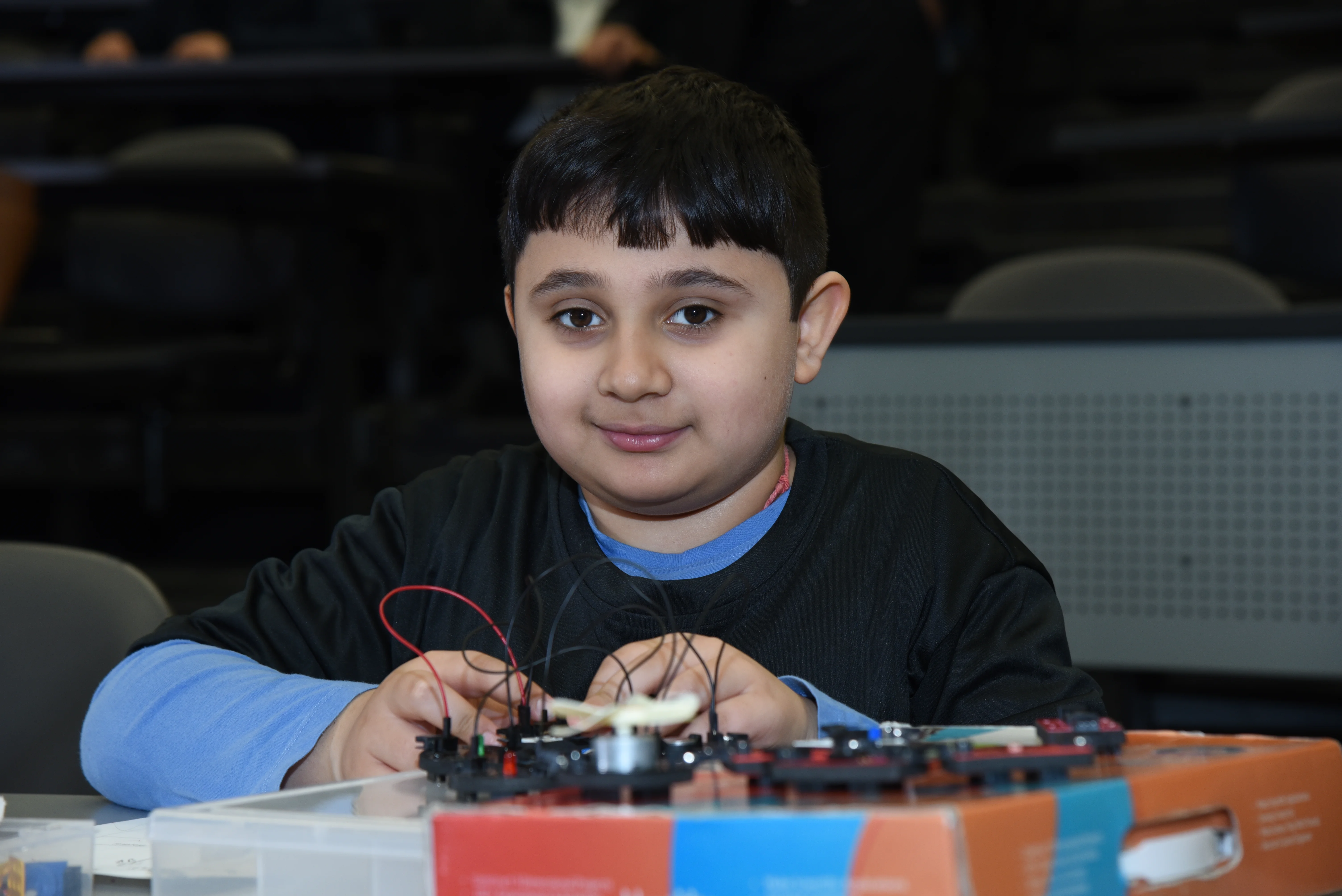
Even hardworking students often struggle not due to lack of effort, but lack of structured skill-building.
Many children memorize formulas but struggle to apply them. Weak number sense and difficulty visualizing abstract concepts make math feel intimidating. Without hands-on application, concepts remain theoretical, which affects accuracy and confidence.
Screens, passive learning, and lecture-heavy classrooms make it hard for students to stay engaged. When learning feels disconnected from real life, attention naturally drops, and academic performance follows.
Children often ask, “Where will I use this?” When science and math feel disconnected from everyday life, engagement decreases. Theory-heavy learning leads to low curiosity and limited retention.
Fear of mistakes and avoidance of challenging subjects can impact participation and grades. When students don’t feel capable, they disengage—even if they have potential.
Structured, hands-on STEM learning addresses these issues at their root by making concepts tangible and engaging.
Activities help, but structured programs create measurable academic improvement.
Random workshops may be fun, but they rarely build lasting skills. Structured STEM programs offer continuity, progression, and feedback. Students move from basic to advanced concepts with clarity and purpose.
Sequential thinking, pattern recognition, and cause-and-effect understanding are essential for academics. Structured robotics lessons train these skills consistently, helping students approach schoolwork more logically.
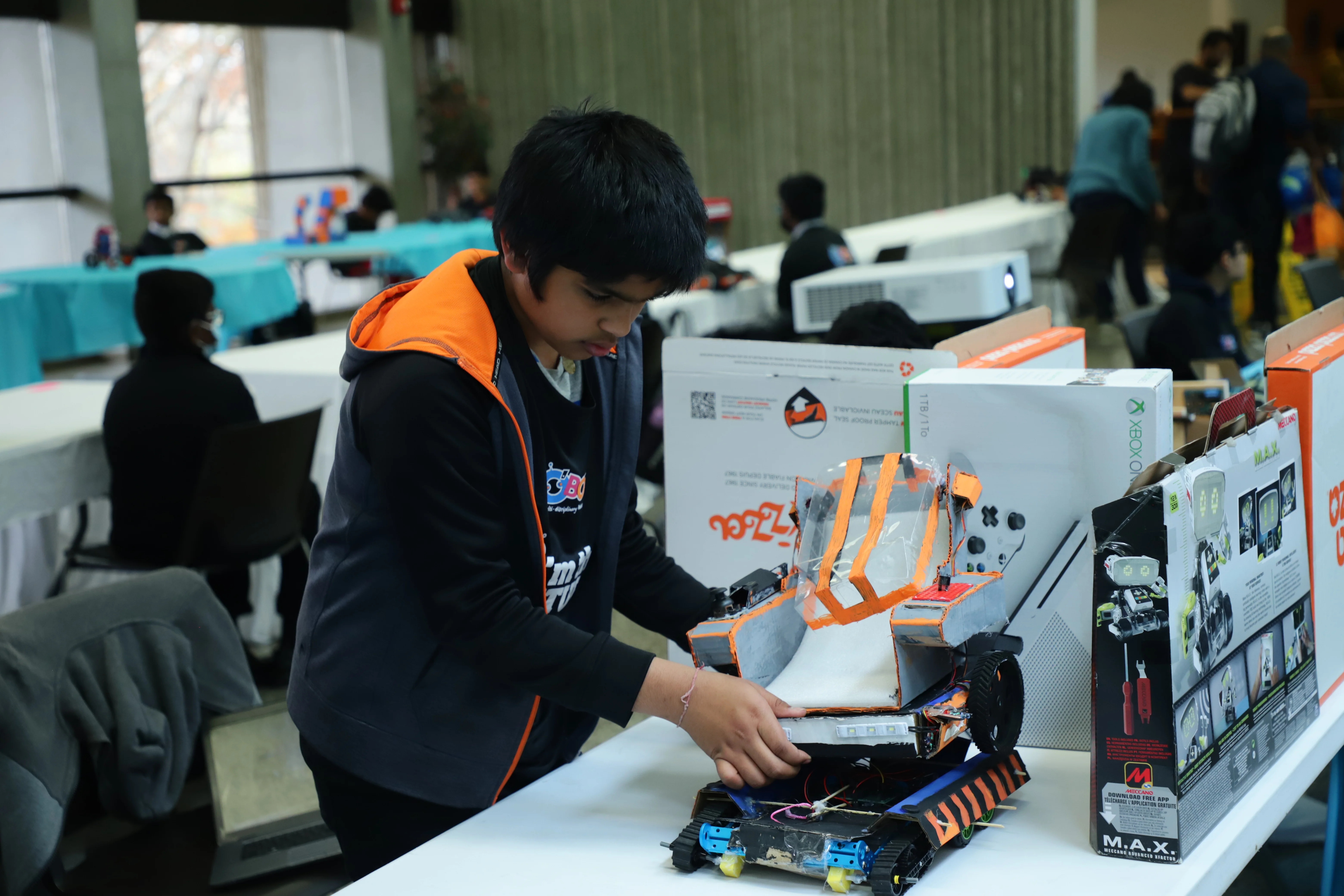
Active learning sticks. When children build, code, and test projects, they engage multiple senses. This improves retention and deepens conceptual understanding. It’s one of the key reasons STEM improves grades over time.
Regular practice and gradually increasing complexity help children see visible progress. As they improve in structured STEM programs, confidence spills into classroom subjects as well.
Robotics naturally integrates mathematical thinking into exciting, practical tasks. You can read this guide to dive deeper and understand the importance of robotics and coding for kids.
Robotics involves measurements, angles, speed, and distance. Children apply arithmetic in real scenarios, which strengthens number sense. Over time, coding improves math skills by making calculations meaningful and contextual.
Motion, force, friction, and energy become visible when robots move and interact. Instead of memorizing definitions, children experience concepts in action. This hands-on learning builds clarity and curiosity.
Debugging code or fixing mechanical errors teaches resilience. Students learn to test, fail, adjust, and try again. This cycle builds strong robotics and problem-solving abilities that directly support academic success.
Building robots helps children understand shapes, structures, and geometry in motion. These skills translate into better performance in math and science tasks requiring visualization.
Students often show faster calculations, improved accuracy, and greater confidence in math class. Teachers notice increased participation because students feel more capable and engaged.
Coding teaches sequencing, algorithmic thinking, and planning. These skills improve reading comprehension, problem-solving, and test performance across subjects.
Multiple studies show strong links between STEM programs and academic improvement.
Research consistently shows that structured robotics programs improve math and science scores. Students develop deeper conceptual understanding, not just memorization.
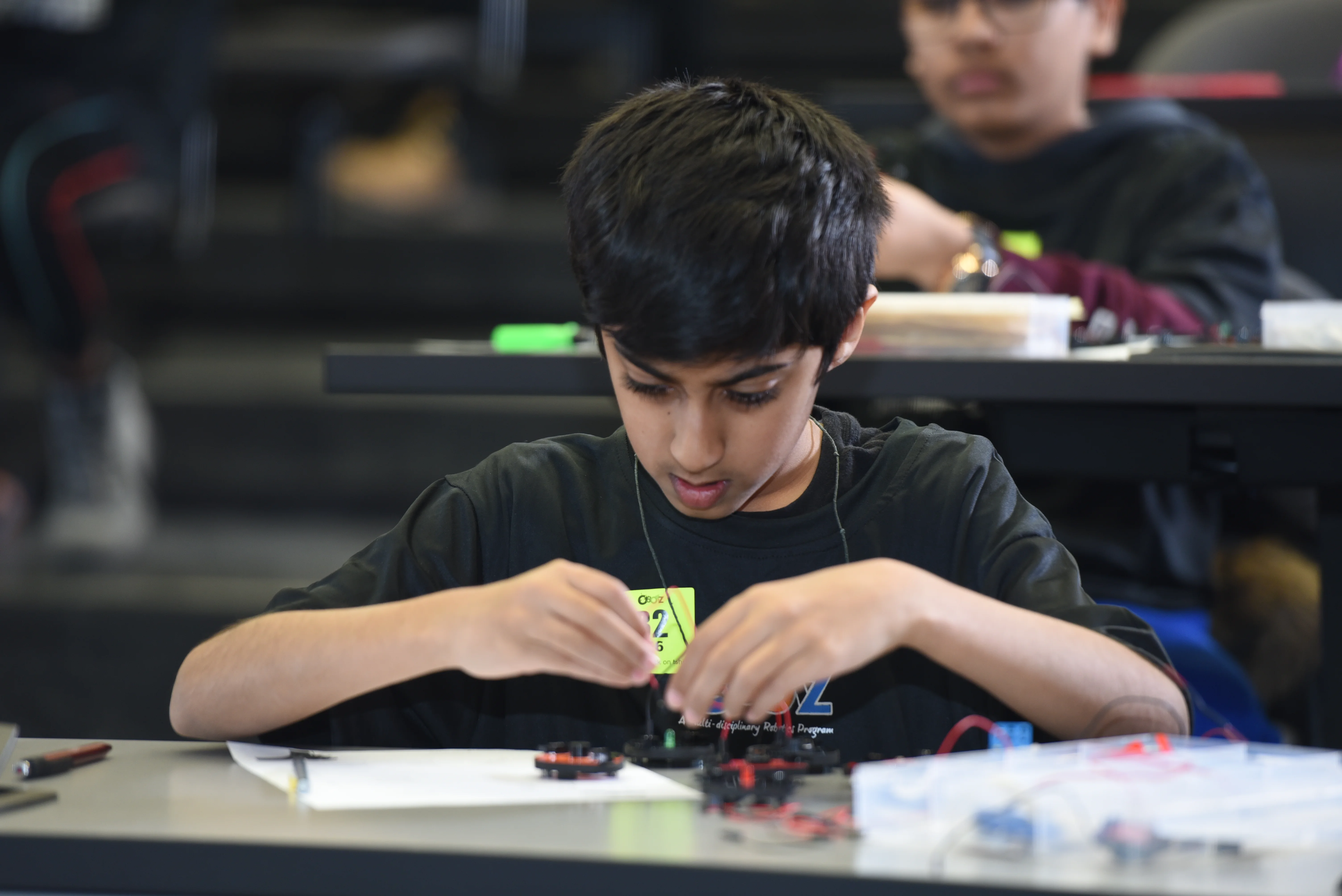
Hands-on learning boosts retention and classroom participation. When children enjoy learning, they naturally perform better academically.
Robotics builds planning, working memory, and task management skills. These executive functions are critical for academic success and long-term learning.
Learning from mistakes builds resilience. Students become more willing to tackle difficult subjects, which increases academic motivation and results.
OBotz focuses on structured, skill-based robotics education designed to support school performance.
OBotz offers level-based modules that grow with the child. Their nano robotics program for kids has lessons that are age-appropriate and build from foundational concepts to advanced problem-solving.
Each project integrates math, science, and logical reasoning. The goal isn’t just building robots—it’s improving school performance through structured STEM programs.
Students build, code, and test with defined learning goals. Performance tracking and feedback help them see improvement over time. This reinforces how robotics and coding academic benefits translate into classroom success.
As children solve problems independently, their confidence grows. They participate more in class, focus better during homework, and approach academics with a positive mindset. Their learning journey very naturally transcends from play to programming.
Robotics is not just an extracurricular activity—it’s an academic support system.
Structured robotics builds real academic skills. It strengthens math, science, logic, and confidence while making learning exciting. When children connect classroom concepts to real-world projects, understanding deepens and performance improves.
Parents looking for meaningful academic support often find that structured STEM programs like OBotz, deliver results where traditional methods fall short. When STEM improves grades, it’s usually because children are learning by doing, not just memorizing.
OBotz robotics and coding programs are designed to improve academic performance while making learning exciting and meaningful.
Book an experience class today to learn more!
Yes, structured robotics and coding programs strengthen math, logic, and problem-solving skills, which often lead to better performance in school subjects like math and science.
Most children can start as early as 5–6 years old with age-appropriate, structured STEM programs that build foundational thinking and gradually increase in complexity.
Coding improves math skills by teaching sequencing, patterns, and logical reasoning, which helps children understand mathematical concepts more clearly and apply them confidently.
Yes, hands-on robotics projects improve attention span, patience, and persistence, which often translates into better focus during classroom lessons and homework.
Attending structured robotics sessions once or twice a week consistently is usually enough for children to build skills that positively impact school performance over time.
Not at all—robotics builds universal skills like problem-solving, logical thinking, and confidence that support academic success across all subjects and future career paths.