5 Simple Robotics Projects Kids Can Do at Home

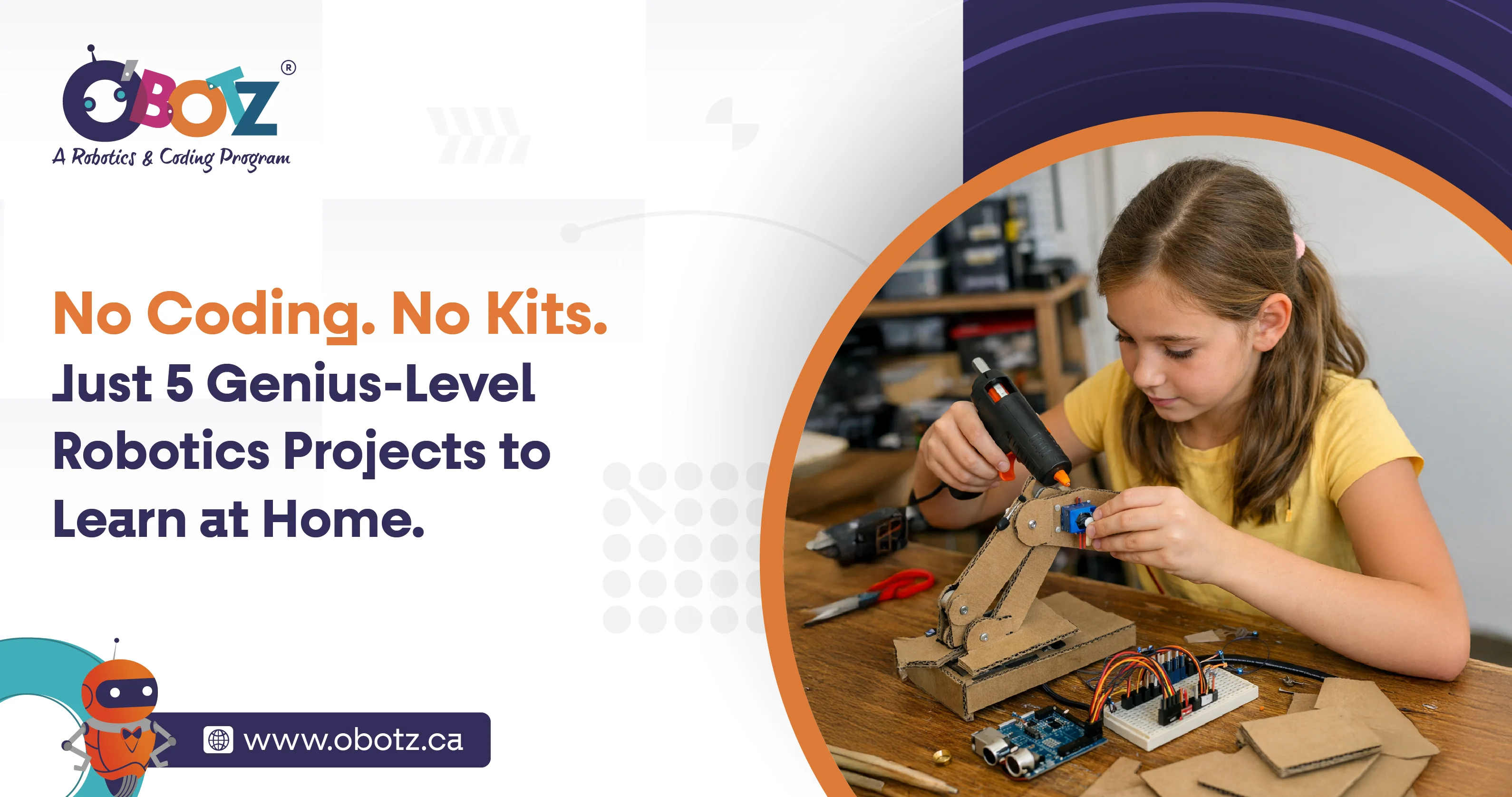
Robotics doesn’t have to start with screens, complicated kits, or advanced coding. For many families, the best introduction begins right at home—with cardboard, markers, batteries, and a lot of curiosity. That’s exactly how many children discover their love for robotics.
At OBotz, we see this pattern often. Parents start by encouraging small experiments at home, and soon their kids are asking bigger questions about how robots think, move, and respond. This blog brings that first step to life with robotics projects for kids at home that are simple, safe, and surprisingly powerful.
Let’s explore five easy robotics projects for kids that turn everyday materials into exciting learning moments.
This is often a child’s very first “robot”—small, silly, and incredibly effective at sparking excitement. A bristlebot is a tiny robot made from a toothbrush head that moves using vibration. It doesn’t look like a robot in the traditional sense, but once it starts moving, kids instantly understand that they’ve built something that responds to energy and motion.
You’ll need an old toothbrush head, a small vibration motor, a coin cell battery, and tape or a rubber band. These materials are inexpensive and easy to find.
The motor is taped onto the toothbrush head, and the battery powers the vibration. As soon as the motor spins, the bristles create movement across the surface.
Children learn cause-and-effect thinking, basic mechanics, and early engineering logic. Among all robotics projects for kids at home, this one delivers confidence almost instantly.
This project blends creativity with electronics, making robotics feel approachable—even for kids who love art more than machines. It’s a paper robot drawing that lights up using simple circuits. Kids don’t just build; they design.
Paper or cardboard, an LED light, copper tape, and a coin cell battery are all you need.
Kids draw a robot, place copper tape as pathways, and connect the LED and battery to complete the circuit. When the light turns on, the “robot” comes alive.
This project introduces circuit logic, problem-solving, and patience. It’s one of the easy robotics projects for kids that quietly builds strong STEM foundations.
A simple car that moves forward using air pressure from a balloon. This project shows kids that robotics isn’t always about electronics—sometimes, it’s about understanding physics.
Cardboard, straws, bottle caps for wheels, and a balloon.
Kids assemble the car body, attach wheels, and connect a balloon through a straw. When the air releases, the car zooms forward.
Children explore physics concepts like pressure and motion, along with design thinking. This is a hands-on way to understand how movement works in robotics projects for kids at home.
It’s an activity where light and shadow are used to “control” movement or behavior. Before kids learn about sensors and AI, they need to understand how input affects output. This project does exactly that—without technology overload.
A flashlight, paper cut-outs, and a movable base or surface.
By changing the light source, kids observe how shadows move and change. Parents can turn this into a storytelling or challenge-based activity.
Observation, sequencing, and logical thinking develop naturally here. It also opens the door to conversations about smart systems and helps break down the concepts of AI for kids.
This project is always a hit because kids see immediate, colorful results. It’s basically a robot that creates patterns using markers and vibration.
A plastic cup, washable markers, a small motor, and a battery.
Markers are taped around the cup like legs, and the motor is placed on top. Once switched on, the robot creates unique drawings as it moves.
Pattern recognition, creativity, and mechanical understanding all come together here. It’s a perfect example of how easy robotics projects for kids can combine learning and fun.
While each project looks simple, the learning happening underneath is powerful. Here are some powerful skills that your kids will learn:
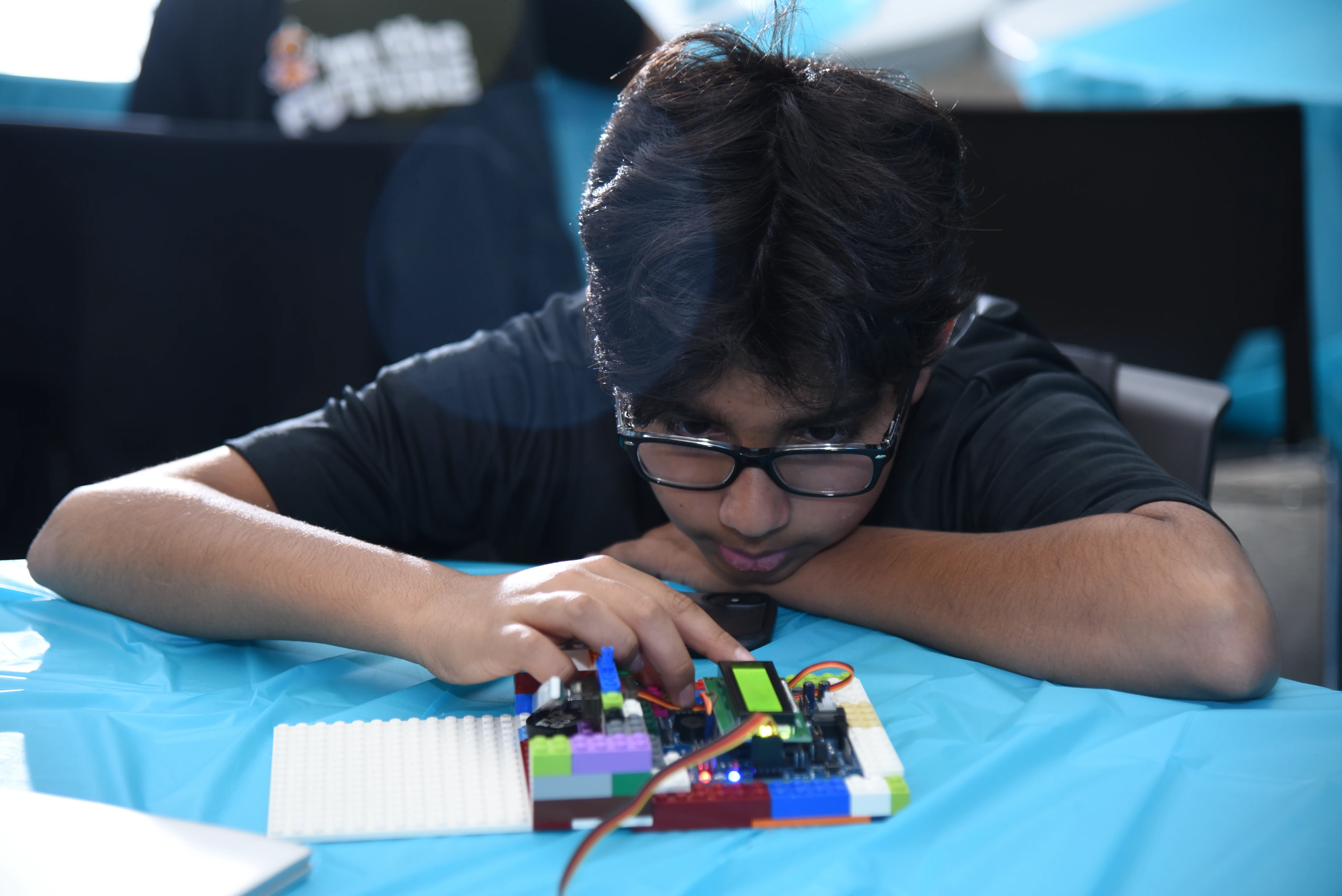
A little preparation goes a long way in making robotics safe and stress-free. Remember that adult supervision matters, so check the batteries, motors, or small parts that are involved. Choose blunt, low-voltage components and avoid sharp edges. Lastly, focus on exploration, not perfection. Let kids experiment freely because the goal is curiosity, not flawless results.
At some point, children start asking deeper questions—and that’s a good sign.
DIY activities spark interest, but they don’t always provide structured progression. Curiosity grows faster than the projects themselves.
Guided programs help children build skills step by step, work with peers, and understand how robotics applies in the real world. Many parents also explore creative extensions like turning waste into machines or using recycled materials to build robots.
Observe your child’s interests, encourage consistency, and introduce structured learning when curiosity is at its peak.
Robotics doesn’t begin with advanced kits or complex coding—it begins with curiosity. These robotics projects for kids at home are small steps that lead to big thinking, confidence, and creativity.
If your child is ready to go beyond DIY and explore robotics in a structured, engaging way, OBotz offers programs designed to nurture young innovators from the ground up. Our guided robotics learning can help your child build real-world skills.
Enroll with OBotz today and give your child the confidence to turn curiosity into capability under our expert guidance.
Most robotics projects for kids at home work well for children aged 5–10, with adult supervision helping younger kids stay safe and engaged.
Not at all—these easy robotics projects for kids are designed to be hands-on and intuitive, so parents can learn alongside their child.
Yes, as long as parents supervise activities involving batteries, motors, or small parts and use age-appropriate materials.
Even 20–30 minutes a few times a week is enough to build curiosity, focus, and problem-solving skills without screen overload.
Robotics helps children build logical thinking, creativity, patience, and confidence while introducing basic STEM concepts naturally.
When curiosity grows, structured robotics programs can help children progress systematically and apply their learning beyond DIY experiments.