The Canadian Parent's Guide to Talking to Your Kids About AI Without Scaring Them

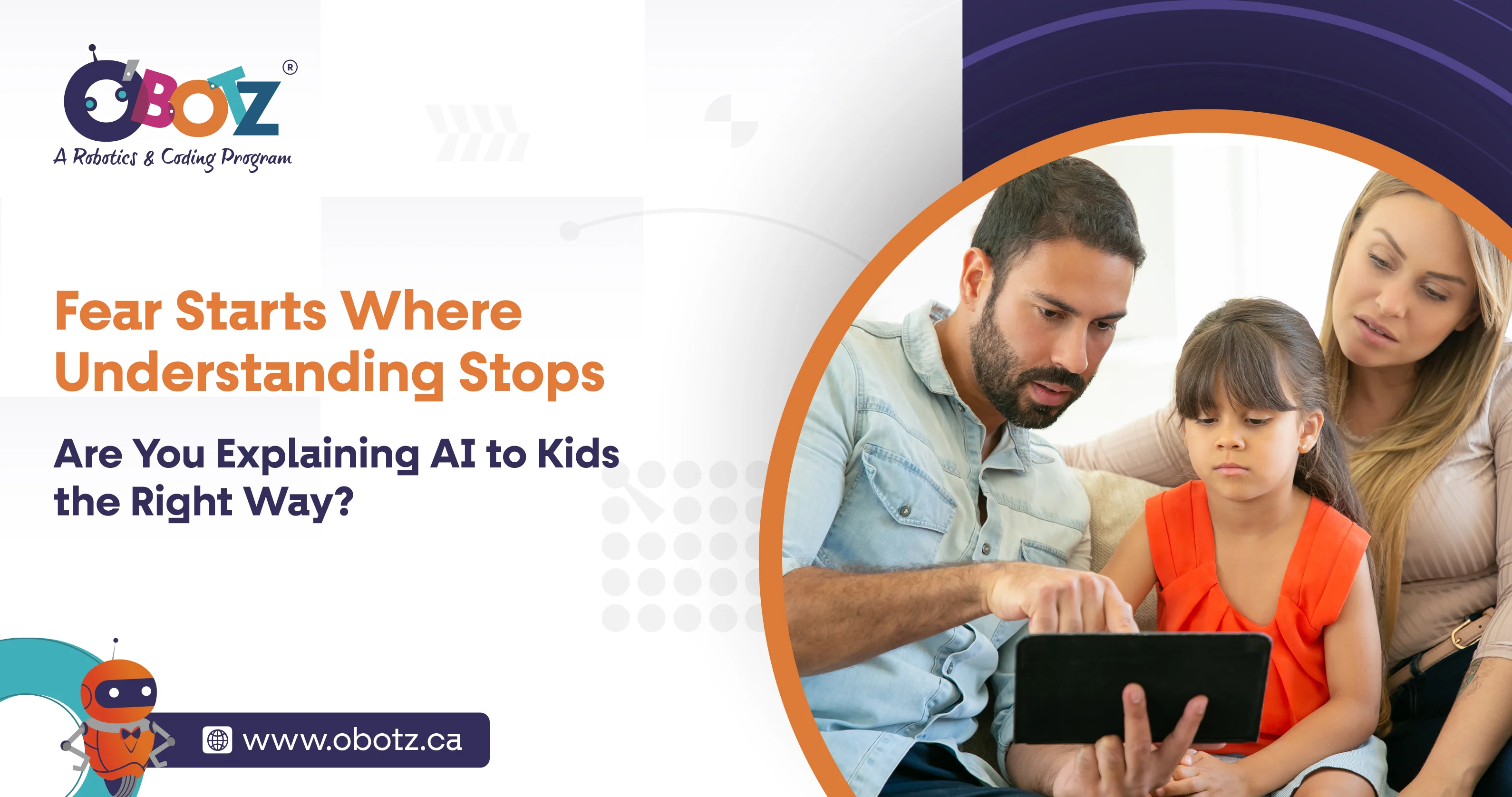
AI is no longer a distant concept—it’s in your child’s world right now. From YouTube recommendations to smart assistants, children are interacting with artificial intelligence daily.
But here’s the challenge: when kids hear about AI from the media or friends, it often comes with fear—robots taking over jobs, machines replacing humans, or even apocalyptic ideas.
That’s where you come in.
As a parent, your role isn’t just to inform—it’s to reassure, guide, and build understanding. Platforms like OBotz are already helping Canadian children engage with AI and robotics in a hands-on, confidence-building way. But conversations at home matter just as much.
This parent guide to AI conversation will help you navigate these discussions calmly, clearly, and confidently.

Many parents across Canada are noticing a new concern—AI anxiety in kids. Kids are exposed to headlines, videos, and even casual conversations that exaggerate AI’s capabilities. Without context, their imagination fills the gaps—often with fear.
These fears are real for children—and dismissing them won’t help. Instead, kids AI fear reassurance will help. Have thoughtful conversations with kids and try explaining to them the pros and cons of the current solution.
Here are a few tips to help parents introduce their kids to AI without the associated fear:
When thinking about how to explain AI to kids in Canada, avoid technical definitions.
Instead, say:
“AI is like a smart helper that learns patterns and helps people do things faster.”
This makes it easier to explain artificial intelligence to children without overwhelming them.

These examples make AI feel familiar—not scary.
An age-appropriate AI talk is crucial.
For younger children:
For older kids:
Children need to understand that AI is created by humans.
Say things like:
“AI doesn’t think like humans—it follows instructions.”
This simple shift helps in talking to kids about AI in Canada in a reassuring way.
Explain that people design, control, and improve AI systems.
This builds confidence and reduces fear around “machines taking over.”
For parents wondering about an age-appropriate AI explanation for 8 year olds Canada, here’s a simple framework:
You can explore more structured explanations through this guide on what AI means for kids.
Follow a balanced, and honest approach when answering this. When children ask about jobs, avoid dismissing the question.
Instead say:
“Some jobs will change, but new ones will also be created.”
Explain that skills like:
…will always be valuable.
This approach helps reduce fear and builds long-term confidence.
Here are some ways that can help kids become digital citizens and responsible users of AI.
Introducing digital citizenship AI Canada concepts early helps children:
Teaching responsible AI to kids includes:
Reading this insightful guide on gen alpha AI revolution in robotics can give parents a broader perspective on how kids are already interacting with these technologies.
Here is how you can make these conversations positive and empowering for your children:
Curiosity is the antidote to fear.
Encourage your child to ask questions, experiment, and explore.
You can use resources like these curiosity-building strategies in teenagers to keep conversations open and engaging.
When kids build or interact with AI, fear turns into understanding.
Learning concepts like machine learning through simple examples can help. This guide on how to explain machine learning to kids makes AI feel approachable.
Be a guide, not an expert. You don’t need all the answers.
What matters is creating a safe space for discussion.
Keep the conversation ongoing because AI isn’t a one-time topic.
As your child grows, your conversations should evolve—becoming deeper, more nuanced, and more empowering.

AI is shaping the future—but your child doesn’t need to fear it. With the right approach, you can turn uncertainty into curiosity and anxiety into confidence.
Programs like OBotz are designed to help children understand AI through hands-on learning—giving them the skills and mindset to thrive in a tech-driven world.
Give your child the opportunity to explore, build, and understand the technology shaping their future. Book a hands-on AI & robotics experience today and make your children AI ready.
Use simple, relatable examples and describe AI as a helpful tool rather than something powerful or threatening.
Use analogies like “AI learns from examples like you do” and avoid technical jargon or complex explanations.
They focus on future skills, explain job evolution, and reassure children that humans create and control AI.
Interactive platforms, beginner-friendly guides, and structured STEM programs like OBotz resources are highly effective.
Coding helps kids understand how technology works, giving them control and confidence instead of fear.
They recommend honest, age-appropriate conversations, validating fears, and focusing on empowerment through learning.