What Is Rotational Motion? Easy Ways Kids Learn It Through Robotics

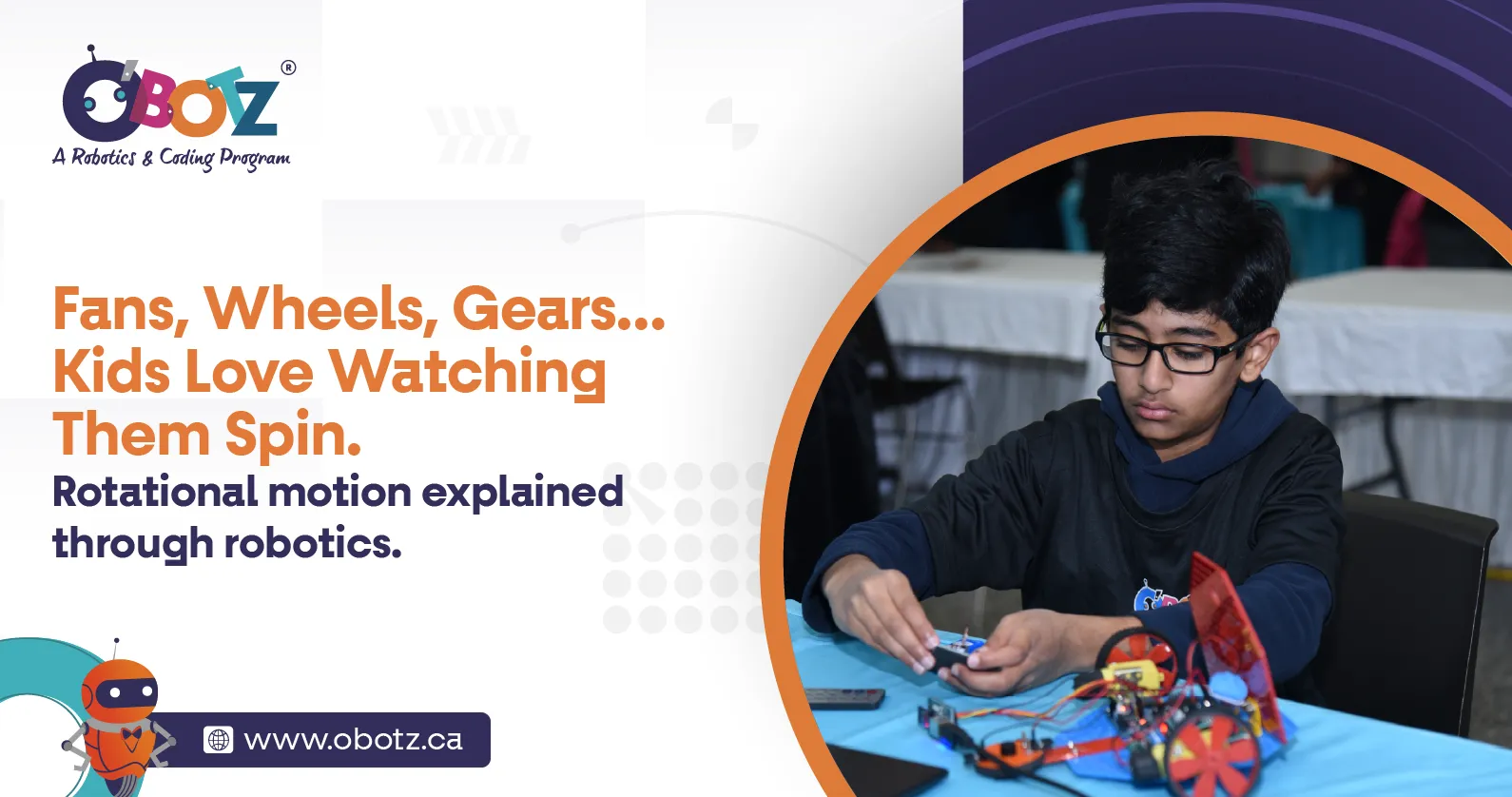
If your child has ever stared at a spinning fan, watched bicycle wheels turn, or played with a toy car that suddenly changed direction, you’ve already seen rotational motion for kids in action. The challenge is that while kids see rotation every day, understanding why it happens can feel confusing when explained only through books.
That’s where robotics changes everything.
At OBotz, children don’t just read about motion—they build it, control it, and experiment with it. Robotics turns abstract ideas from motion science for kids into something they can see, touch, and enjoy. Let’s break down rotational motion in a way that actually makes sense—and show how robotics makes learning physics basics for kids fun and memorable.
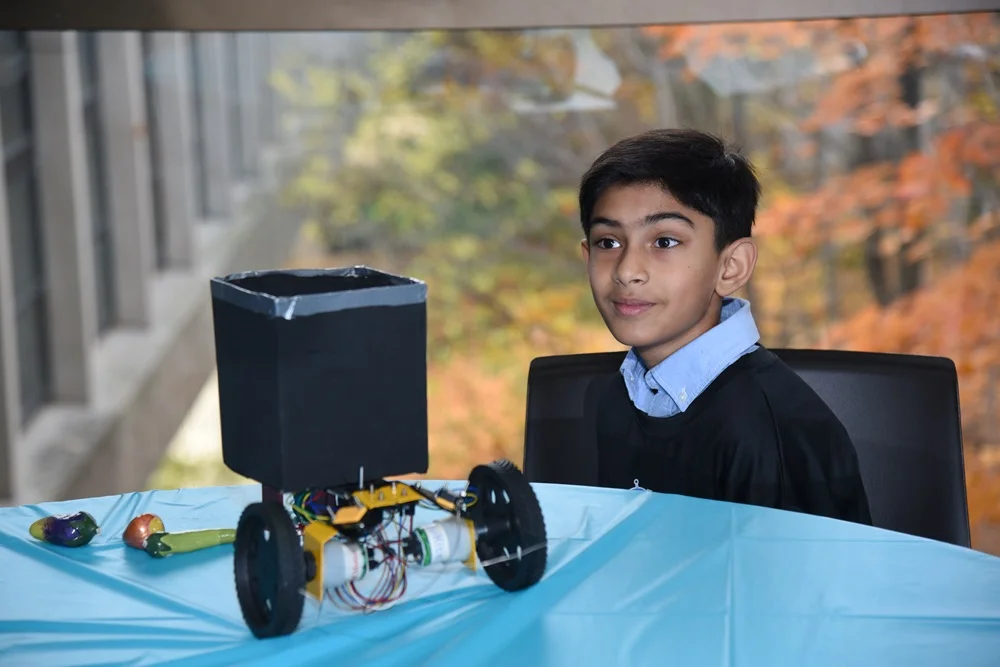
Before kids can program robots or solve engineering challenges, they need to understand how objects move. Rotational motion is one of the easiest motion concepts to grasp—when it’s explained visually.
Rotational motion happens when an object spins around a fixed point or axis. Instead of moving forward in a straight line, the object turns in place.
Think of:
This simple idea forms the foundation of many robotics projects and is a core part of physics basics for kids.
Kids often mix these two up, so robotics helps clarify the difference quickly.
Most robots use both at the same time. Wheels rotate, which creates forward movement. Seeing this connection helps children understand motion science for kids far better than diagrams alone.
If you want to introduce your child to some new robotics terms, this simple robotics glossary for kids can help them learn many motion concepts and robotics terms.
Children already understand rotational motion intuitively—they just don’t know the name yet.
Robotics simply gives these familiar movements a name and purpose.
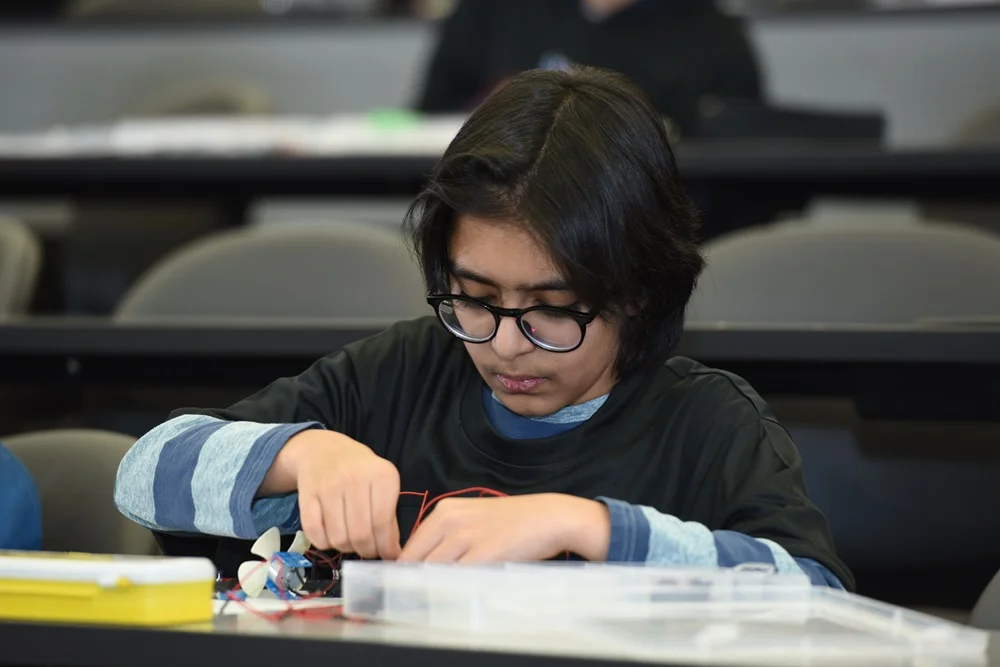
Robotics removes guesswork from learning. Kids don’t imagine motion—they create it and test it. When children attach a motor to a robot and see it spin, rotational motion clicks instantly. There’s no memorization—just cause and effect.
This hands-on approach makes rotational motion for kids feel natural and exciting.
Robotics encourages kids to experiment safely:
Each small mistake becomes a learning moment, strengthening their math and problem-solving skills tied to motion science and coding for kids.
Kids learn best when they’re curious and involved. Robotics:
This is why robotics is such a powerful way to introduce physics basics for kids without overwhelming them.
Most beginner robotics kits are built around rotating parts. Kids learn rotational motion simply by assembling and using them.
Motors are the heart of rotational motion in robotics. They convert electrical energy into spinning movement.
Kids learn:
This is rotational motion for kids in its most direct form.
Wheels show how rotation creates movement. When kids adjust wheel placement or alignment, they immediately see the impact.
Key learning moments:
These insights build early engineering intuition and reinforce physics basics for kids.
Gears make rotational motion even more exciting.
Kids discover that:
This introduces torque and speed concepts—without using complex terms. It’s motion science for kids, simplified through play.
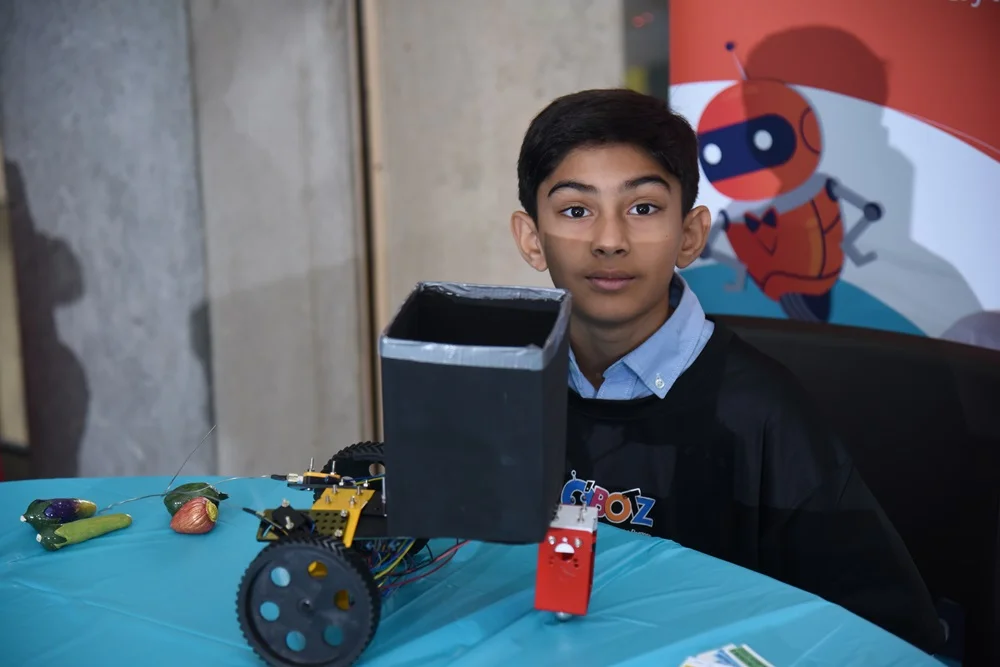
The best learning happens when kids build something that actually moves and behaves differently each time they tweak it.
These projects show continuous rotational motion clearly.
Kids learn:
When wheels rotate, robots move—and kids see the connection instantly.
This reinforces rotational motion for kids in a practical, exciting way.
These projects introduce applied engineering.
One-line takeaways kids love:
These activities deepen understanding of physics basics for kids while building confidence.
Rotational motion doesn’t need formulas or heavy theory to make sense. When children build robots, attach motors, and watch wheels turn, learning becomes intuitive and fun.
At OBotz, kids explore rotational motion for kids, motion science for kids, and physics basics for kids through hands-on robotics programs designed to match how children naturally learn—by doing. Every project encourages curiosity, problem-solving, and confidence, helping kids understand not just what moves, but why it moves.
If you’re ready to help children learn science in a way that actually sticks, explore how OBotz makes STEM exciting, practical, and future-ready.
Start your child’s OBotz journey today by booking an experience session with us
Rotational motion for kids means understanding how objects spin around a fixed point, like wheels, fans, or gears—something children can easily grasp through hands-on robotics projects.
Robotics turns motion science for kids into a visual and interactive experience, helping children see how motors, wheels, and gears work together instead of learning through theory alone.
Yes, rotational motion is a core part of physics basics for kids and helps build early understanding of movement, force, and energy in an age-appropriate way.
Most children can begin learning rotational motion concepts through robotics as early as 6–7 years old, using simple motors, wheels, and guided building activities.
Absolutely—when kids adjust speed, direction, or balance in a robot, they naturally strengthen logical thinking, experimentation, and problem-solving abilities.
Robotics allows kids to learn by doing, making abstract motion concepts easier to understand, remember, and apply in real-life situations.