What Makes a Robotics & Coding Franchise Scalable Across Cities and Countries

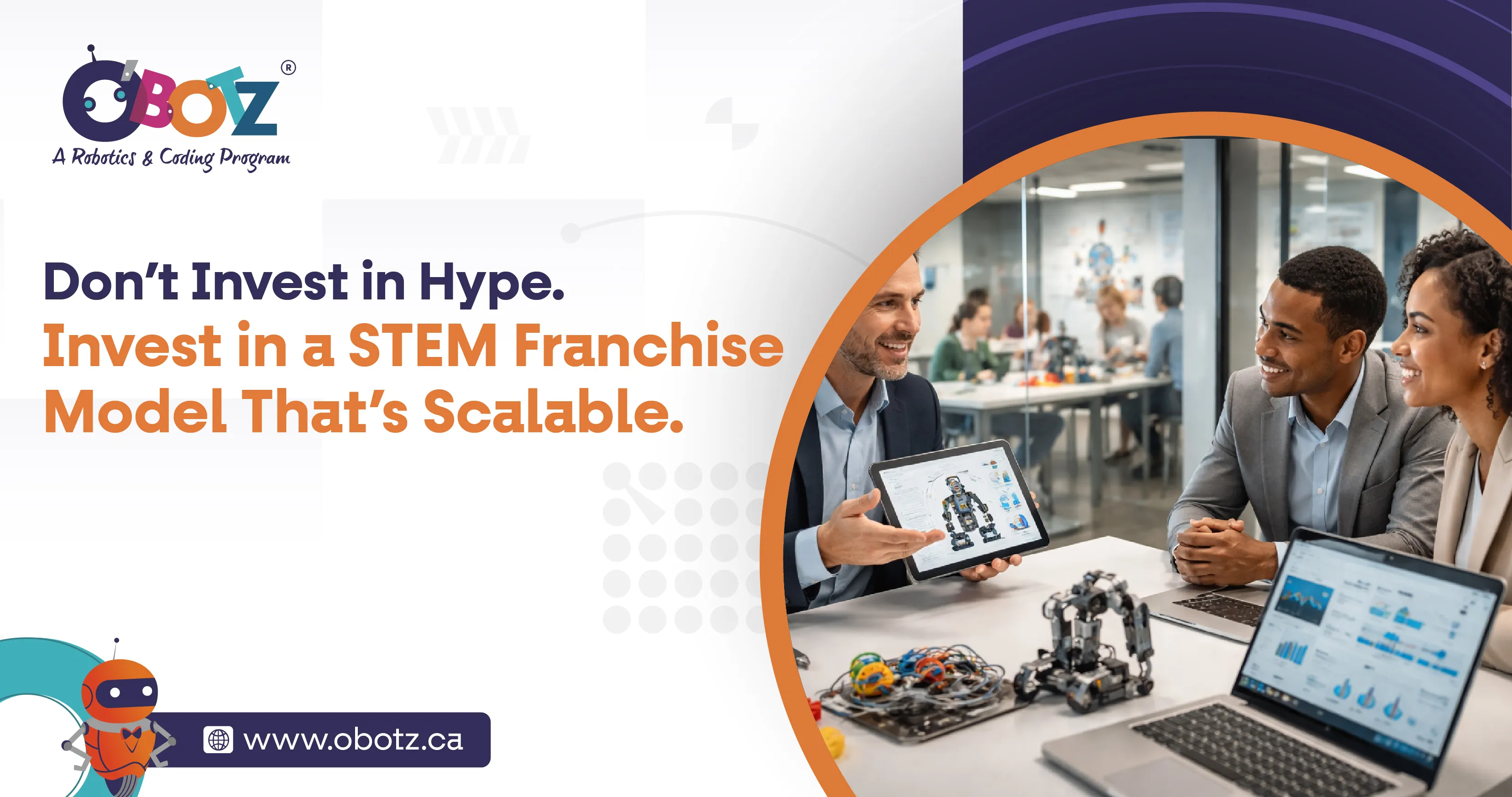
A decade ago, robotics classes were considered niche. Today, they’re mainstream. Parents want future-ready skills. Schools are integrating coding. Governments are pushing STEM. And investors? They’re looking closely at the STEM franchise model as a serious long-term opportunity.
But here’s the catch: not every robotics brand is built for expansion. Opening one successful center is one thing. Replicating that success across 10 cities — or 5 countries — is another.
This is where robotics coding franchise scalability becomes the real differentiator.
Brands like OBotz are not just teaching robotics — they are building systems that allow consistent, predictable expansion. Because a truly scalable education franchise doesn’t depend on luck, it depends on design.
Let’s break down what actually makes a robotics brand ready for multi-city and international growth.

Before we talk about systems and structure, let’s understand why robotics education itself is such fertile ground for expansion.
STEM is no longer optional. From Silicon Valley to Singapore, technology is shaping every industry. We see a growing importance of coding and robotics for kids - even schools are adapting, but often slowly. That’s where after-school robotics programs fill the gap.
The global demand for coding, AI, robotics, and automation skills ensures that a strong global robotics franchise is not riding a temporary wave — it’s aligned with a long-term macro shift.
And that’s powerful for investors.
Parents are no longer satisfied with repetitive tuition models. They want creativity. Problem-solving. Innovation.
If you’ve explored how robotics enhances cognitive development, you’ll see the deeper shift happening in education priorities.
This shift isn’t limited to Tier 1 cities. It’s expanding into Tier 2 cities, suburban markets, and even international diaspora communities. That’s a strong foundation to support robotics coding franchise scalability in the near future.
Coding languages are universal. Robotics kits function the same way in Toronto, Dubai, or Mumbai. Unlike curriculum-heavy academic models that require localization from scratch, robotics operates on a universal technical logic.
That makes the STEM franchise model far more adaptable across borders compared to traditional tutoring businesses.
Growth without structure leads to chaos. True scalability starts with a model that can be replicated without reinventing the wheel each time.
A scalable robotics franchise has:
When the setup cost and infrastructure are predictable, expansion becomes strategic rather than experimental.
That’s what separates a hobby-based robotics center from a serious, scalable education franchise.

Scalability requires a predictable revenue architecture.
A strong global robotics franchise doesn’t depend on random workshops. It offers:
For example, a specialized program like the Nano Robotics program for kids creates premium value tiers while maintaining curriculum structure. Recurring enrollment drives stability. Stability drives expansion.
The best STEM franchise model is asset-light.
Compared to full-scale schools, robotics centers require lower capex, smaller spaces, and structured instructor training. When unit economics remain strong across cities, franchisees can scale faster — and investors gain confidence.
In education, the curriculum is the product. If it varies wildly across locations, brand trust collapses.
A scalable robotics program isn’t random project-based chaos. It’s structured.
Beginner → Intermediate → Advanced → Specialized.
When learning pathways are modular, new centers can adopt them immediately. That’s critical for franchise scalability.
Technology evolves quickly. AI, IoT, automation — these fields move fast.
In a strong global robotics franchise, curriculum updates happen centrally and are deployed uniformly. This ensures that a student in one country isn’t learning outdated material while another location upgrades.
Uniformity protects brand credibility.
Standardized evaluation systems are often overlooked — but they are crucial.
Assessments allow benchmarking across cities. Certifications build trust with parents. And consistent evaluation ensures that your scalable education franchise delivers measurable outcomes.
That’s how expansion sustains reputation.
Many education franchises focus only on physical expansion. The smart ones invest in digital backbone systems.
Attendance tracking. Performance analytics. Parent dashboards.
A centralized LMS enables real-time monitoring across locations. For a growing STEM franchise model, this creates visibility and accountability.
Without it, scaling becomes blind growth.

COVID accelerated a global truth: hybrid learning is here to stay.
A robotics brand that can shift between physical and online delivery expands faster across countries. It can test new markets digitally before opening physical centers.
This flexibility enhances robotics coding franchise scalability dramatically.
Robotics requires hardware. Poor inventory systems can destroy margins.
Centralized sourcing and standardized kits ensure consistency, reduce procurement costs, and improve quality control — essential for any global robotics franchise.
Curriculum and technology mean nothing without franchisee support.
A scalable education franchise provides:
When onboarding is structured, new franchisees become productive faster.
Brand-level campaigns reduce individual franchise burden.
Centralized creatives, digital campaigns, and territory-specific strategies give franchisees momentum from day one. That’s how a STEM franchise model scales efficiently.
Expansion without audits leads to dilution.
Instructor re-certifications, classroom reviews, and performance dashboards maintain consistency. That’s the difference between temporary growth and long-term scalability.
The robotics market is booming. But many brands hit a ceiling.
Why?
Many robotics academies revolve around a charismatic founder.
Once expansion begins, quality drops because knowledge isn’t systematized.
OBotz, however, operates with documented SOPs, structured training systems, and delegation-ready frameworks. That’s what supports sustainable global robotics franchise growth.
Some franchises overcomplicate programs with excessive customization.
The result? Inconsistent teaching standards and difficult replication.
OBotz focuses on structured, modular pathways — making its franchise model more practical rather than theoretical.
Poor inventory control. Inconsistent instructor hiring. No performance tracking.
These weaknesses limit expansion.
A strong STEM franchise model relies on standardized kit systems, centralized oversight, and measurable outcomes — allowing OBotz to scale without compromising quality.
The robotics education sector is expanding globally. Demand is strong. Markets are ready.
But true scalability doesn’t happen by accident. It requires replicable systems, curriculum integrity, technology infrastructure, franchisee enablement, and global adaptability
That’s what defines a real scalable education franchise.
If you’re exploring global robotics franchise opportunities that are backed by structured systems and expansion-ready architecture, OBotz offers a proven STEM franchise model designed for growth beyond borders.
If you’re ready to take the next step, reach out to us by filling this franchise enquiry form, and let’s together build a robotics franchise that scales.
Documented SOPs, standardized center setup models, centralized procurement systems, structured instructor training, and performance tracking dashboards create predictable replication across cities and countries.
Standardized, modular curricula ensure consistent learning outcomes across locations, protect brand credibility, and make it easier to replicate programs without compromising quality.
A centralized Learning Management System (LMS), hybrid learning capabilities, inventory management tools, and real-time performance analytics are essential for managing multi-city or international operations efficiently.
Regular instructor certifications, classroom audits, standardized assessments, and centralized monitoring systems help maintain consistent academic and operational standards.
Core KPIs include center-level profitability, student retention rates, instructor productivity, cost per acquisition, and time-to-breakeven for new franchise units.
STEM education aligns with global workforce trends, rising parental demand for future-ready skills, and government emphasis on technology literacy, making it a long-term, expansion-ready opportunity.