Why Traditional Canadian Schools Are Failing to Prepare Kids for the Robot Revolution

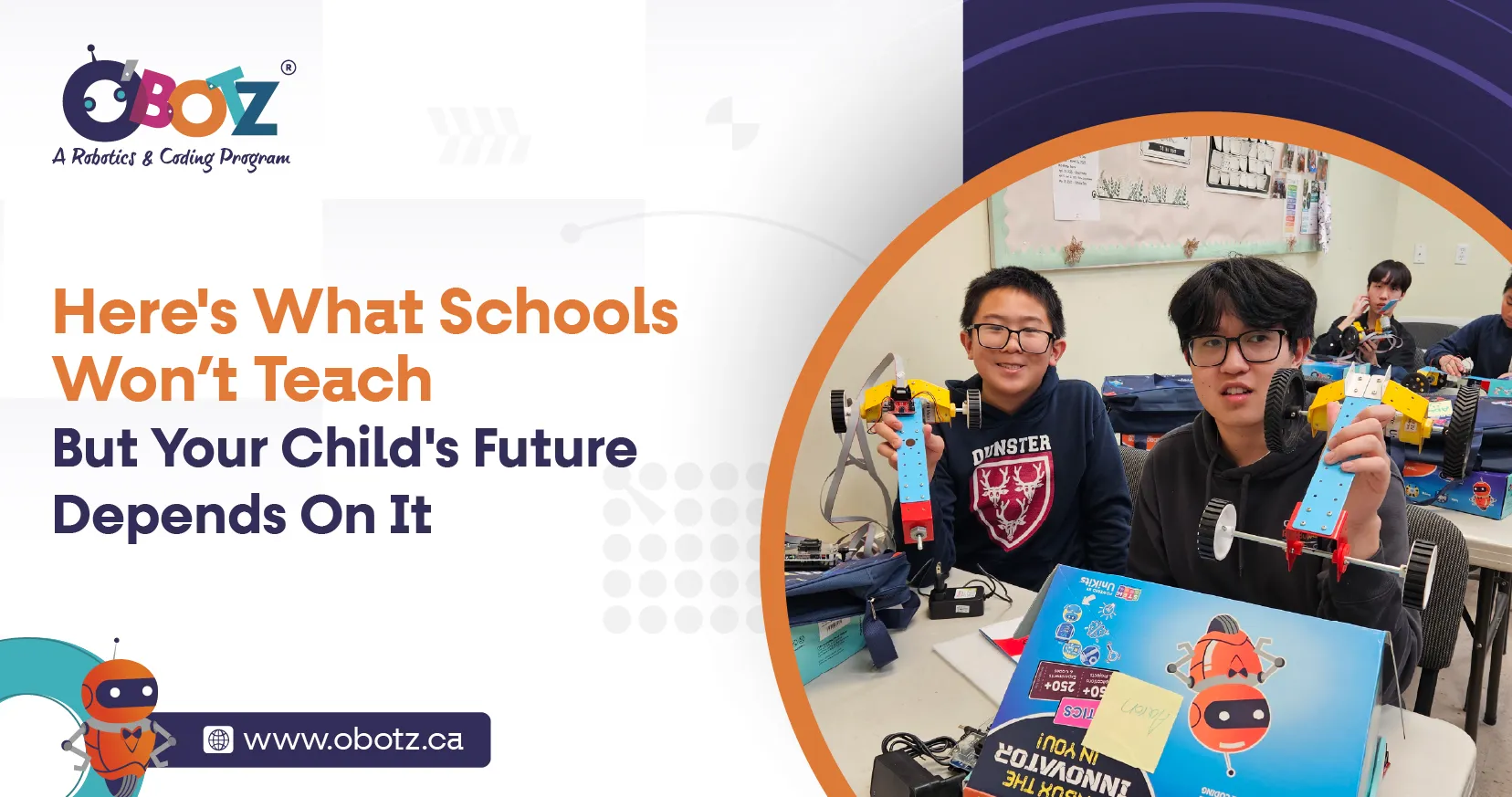
What if your child’s school was unknowingly setting them up to fall behind? While the world races toward a future powered by artificial intelligence, automation, and robotics, most Canadian classrooms are still stuck in the past. The harsh truth? Today’s students may graduate knowing how to take standardized tests—but not how to thrive in a tech-driven economy.
This blog dives deep into why traditional schools are falling short, and what parents can do to get their children future-ready.
We’re not preparing kids for the future. We’re preparing them for a world that no longer exists.
According to a 2023 report by the Brookfield Institute, nearly 42% of Canadian jobs are at high risk of being impacted by automation in the next 10–20 years. This includes not just factory or manufacturing jobs, but positions in finance, retail, and even healthcare. Canada is standing at a crossroads: embrace the robot revolution, or risk being left behind.
The problem? Traditional schools are moving too slowly.
Most Canadian public schools still operate on a system built during the Industrial Revolution. The structure, content, and pace are designed for memorization, standardization, and following instructions - skills that robots are already doing better.
Coding and robotics for kids? Still considered an after-school luxury or is reserved for geniuses. But in reality, robotics and coding are not just for tech geniuses. Many classrooms still spend more time on cursive writing than computational thinking. And while critical thinking and collaboration are touted as key skills, they are rarely assessed or taught explicitly.
Robotics and coding classes for kids are largely absent from the mainstream curriculum. While provinces like British Columbia have introduced basic coding in elementary schools, the depth and consistency across Canada are sorely lacking.
Even when schools offer tech programs, they’re often theory-heavy and short on hands-on experience - a far cry from what the job market demands.
Children learn best by doing. Robotics for kids isn't just about gears and circuits. It's about designing, building, and programming something real. It’s teamwork. It’s creative thinking. And most importantly, it’s fun.
Yet, most schools don’t offer structured, project-based robotics classes where children can engage deeply over time.
Countries like Singapore, Estonia, and South Korea have already embedded coding and robotics into the core curriculum, starting in early elementary school.
Meanwhile, in Canada, only 35% of elementary students have access to any form of computer science education, according to a report by Canada Learning Code. And when they do, it’s often inconsistent and depends heavily on the school district or individual teacher.
Not all kids learn the same way. But traditional schools still favor textbook-heavy instruction, which can alienate visual, kinesthetic, and hands-on learners. These are often the same kids who thrive in robotics and coding classes for kids - where they can move, build, and create.
Today’s children are surrounded by technology. But using an iPad isn’t the same as understanding how it works.
We’re raising passive users of technology when we should be nurturing active creators.
This is where programs like OBotz come in. Robotics for kids isn’t a trend—it’s a necessity.
Hands-on robotics classes build real-world skills that traditional schools often miss:
Children who participate in robotics programs often show improved performance in math and science. They also gain confidence in tackling open-ended problems - a crucial skill in an unpredictable future.
One parent shared in their testimonial that her son "went from being shy and unsure of himself to leading a team project at school, all because of what he learned in robotics class."
Kids who start early are more likely to pursue STEM fields in high school and beyond. According to a report by Actua, early exposure to STEM can spark their interest in innovative, creative careers while simultaneously developing key employability skills they’ll need to excel in Canada’s future technology-driven workplaces.
Starting early also helps normalize tech literacy - so it becomes as fundamental as reading or writing. Besides early exposure, this blog talks about other things that parents can try to ignite their child’s interest in STEM naturally.
OBotz is not your average after-school club. It offers a structured, 7-level robotics program designed specifically for kids aged 7 to 17.
Each level builds on real-world skills with increasing complexity - starting with basic motor controls and culminating in advanced programming and AI. Kids don’t just play with robots; they engineer them.
Whether you're searching for "robotics classes near me" or a full-fledged STEM development path, OBotz delivers both.
What Makes OBotz Different
Still have some questions in mind? Here is a know-it-all guide for parents so you can have all your questions answered. Additionally, you can also book a free trial to experience the difference firsthand.
The robot revolution isn’t coming. It’s already here.
And while Canadian schools are doing their best within an outdated framework, the gap is growing too fast to ignore. It’s up to parents to act.
Programs like OBotz don’t just fill the educational gap—they build a bridge to the future. So the next time you search for "robotics classes near me", remember: this isn’t just enrichment. It’s empowerment.
Your child deserves to be more than a user of technology. With the right tools and training, they can become a creator. And it starts with one robot.
With locations across Canada, there’s likely an OBotz centre near you. Use the centre finder to get started and explore how your child can begin their robotics journey.


