How to Get Kids Interested in STEM Without Making It Obvious

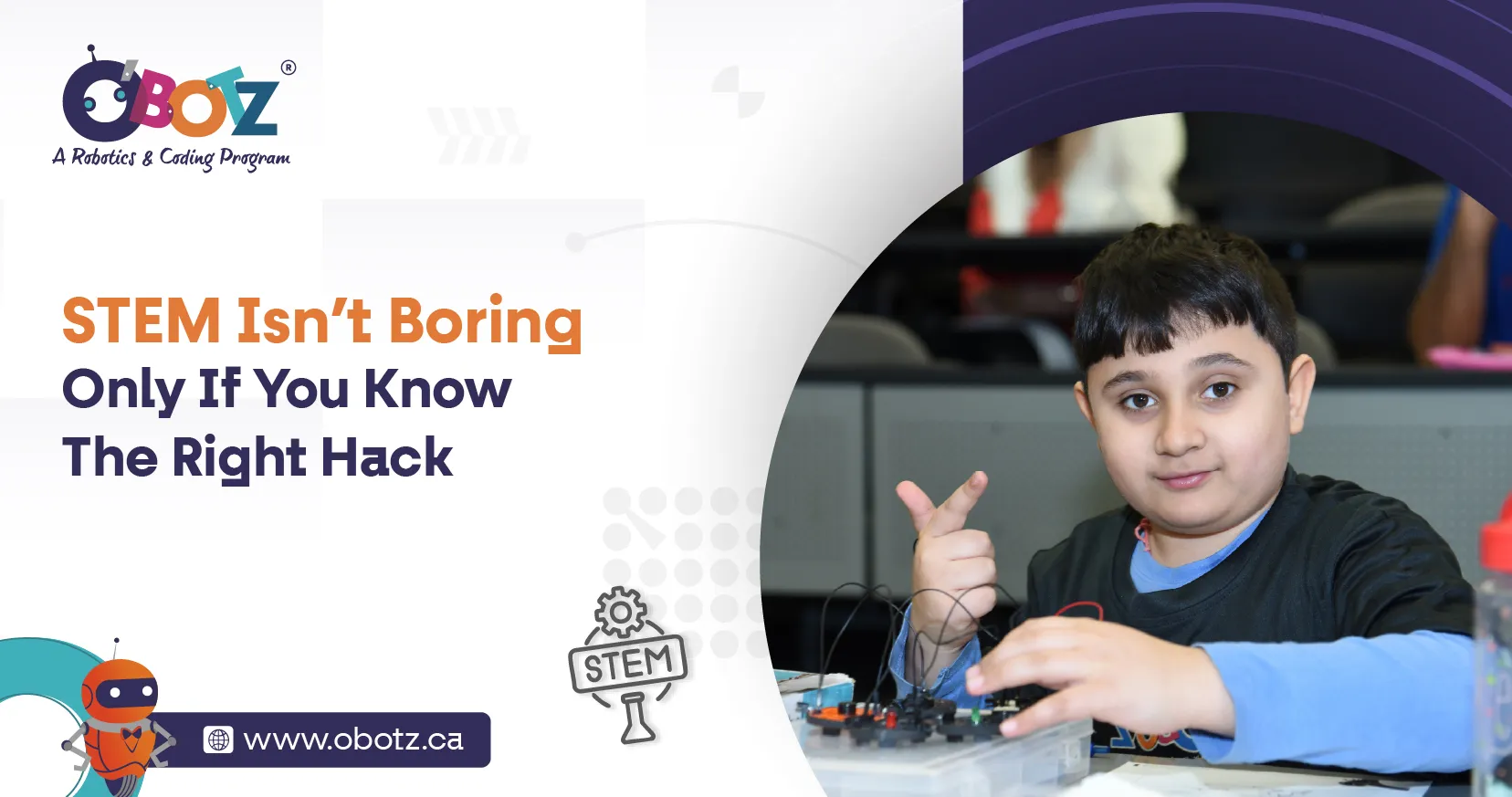
Your child is carefully stacking blocks, adjusting tiny blocks with precision, eyes wide with excitement as the structure begins to take shape. What if we told you that, in that moment, your child is actually engaging in foundational STEM thinking?
Now imagine a version of this moment that doesn’t involve dragging your kid to a science workshop or lecturing them about coding careers. Because nothing kills curiosity faster than turning it into homework.
So how do you spark a love for STEM, science, technology, engineering, and mathematics, without making it feel like a chore? That’s exactly what we’re diving into today.
We’re not just talking about future engineers and coders. STEM isn’t only for the math nerds or science buffs. It’s for the puzzle-solvers, the question-askers, the doodlers, the tinkerers. And in today’s fast-paced, tech-driven world, kids who are confident in STEM subjects are more likely to thrive academically, professionally, and creatively.
In fact, according to the U.S. Bureau of Labor Statistics, STEM occupations are projected to grow nearly twice as fast as non-STEM jobs by 2031. Additionally, there are predictions that STEM graduates will earn approximately 26% more on average than their non-STEM peers.
But here's the kicker: early exposure matters. That’s why introducing STEM in childhood, when kids are naturally curious and exploratory, gives them a massive head start. So, most definitely forcing them into STEM is not the answer.
STEM can be fun. It can feel like play. The trick lies in disguising the learning behind activities they already enjoy.
Got a kid who’s obsessed with building games or digital worlds? Great. You’ve got a budding engineer on your hands. Love for video games? That’s logic and coding waiting to happen. Constantly asking “why” about everything? You’ve got a future scientist right there. The goal isn’t to change your child’s interests; it’s to build STEM bridges through those interests.
Let’s break down some effortless, low-pressure ways to weave STEM into your child’s everyday life, without them realizing they’re learning.
Forget dull lectures and worksheets. Kids learn best when they do, not when they’re told. That’s where our programs like the Nano Robotics Program for Kids come in. Designed especially for kids aged 6 and up, this program helps your child build real robots while picking up critical STEM concepts through hands-on experimentation.
They’ll think they’re just playing with cool gadgets, but they’re actually learning how circuits work, understanding sensors, and exploring basic engineering principles. Want more proof? Check out our blog on how the OBotz STEM education program helps students thrive in school and beyond.
Kids don’t want to watch a video on quantum physics. But they will watch an episode of “Emily’s Wonder Lab” or tinker with a Scratch-based game. There’s a treasure trove of STEM-rich YouTube channels, interactive apps, and games that sneak in STEM learning without them even noticing. Just don’t call it “educational content.”
And if you’re looking for something offline, try DIY kits or summer workshops. Programs like the STEM Camp for kids let kids dive into coding, robotics, and problem-solving through hands-on activities, and yes, they’ll come home excited to tell you all about their robot’s latest upgrades.
STEM isn’t always about gadgets or equations. It’s about asking questions. Why does the moon change shape? How does Wi-Fi work? What makes planes fly? Instead of giving them the answers, explore the questions together. Pull out a magnet, help them understand the concept of poles, test out some kitchen chemistry, and build a catapult using popsicle sticks.
Let them lead the way. You’ll be amazed at how much STEM is hidden in everyday life. If you’re unsure where to start, check out our blog on exploring kids' natural innovation through STEM for inspiration.
Kids love stories. So why not share stories about real-life STEM superstars? You don’t have to look far. From astronauts to animators to app designers, STEM is everywhere. And if you’ve got a daughter who thinks tech is “just for boys,” introduce her to trailblazers like Ada Lovelace or Kalpana Chawla. Our blog on 6 influential women in STEM is a great place to start. Representation matters. When kids see others doing incredible things in STEM, they begin to believe they can do it too.
Turn ordinary moments into STEM opportunities by encouraging your child to question how things work. Building a snowman? Why does snow stick together? Watching a plane fly overhead? How does it stay up there? These little moments, over time, build a thinking mindset, the kind STEM thrives on. And when you're ready to give it structure, check out our guide on why STEM education matters in early childhood.
At OBotz, we believe that every child is already a natural innovator. We’re just here to give that curiosity a little nudge and a lot of fun tools to play with. Through robotics classes for kids that feel more like playtime than classroom time, we introduce key STEM concepts in ways that are engaging, age-appropriate, and tailored to every learning style.
Whether it’s a summer camp, a weekend program, or a Nano Robotics starter course, there’s something for every curious mind. Our programs are built on a simple belief: Kids learn best when they don’t even realize they’re learning. And we’ve seen it work, and so have their parents. Don’t believe us? Read our testimonials section to see what these proud parents say.
You don’t need to push, pressure, or preach to raise a STEM-loving kid. All it takes is the right environment, a bit of creativity, and a willingness to let them explore.
So if you're ready to ignite that spark and nurture your child’s inner innovator, we invite you to explore OBotz programs, from the Nano Robotics Program to our signature STEM Summer camps.
Book a free trial class and discover why parents trust OBotz to unlock their child’s full potential.


