The Motivation Problem: Why Kids Start Coding but Don�t Continue

A child builds their first animation, makes a character move across the screen, or gets a robot to respond to a command. Their face lights up. Suddenly, they want to become a programmer, game designer, or robotics engineer.
Then, a few weeks or months later, something changes.
Coding feels harder. The projects take longer. Errors become frustrating. The excitement disappears, and parents start wondering: Why do kids stop coding after starting?
The problem is not necessarily coding itself. Often, it is the way children experience the transition from beginner excitement to real skill-building. Motivation needs more than novelty. It needs achievable challenges, visible progress, creativity, encouragement, and a reason to keep going.
At OBotz, coding and robotics learning is designed around progressive, hands-on experiences that help children move from curiosity to deeper skill development.
The beginning of almost any new activity is exciting. Coding is no exception. Children get to explore something unfamiliar, create their first program, and see instant results.
But beginner activities are usually designed to deliver quick wins. As children progress, they encounter debugging, logical thinking, more complicated instructions, and projects that may not work on the first attempt.
This is where some of the most common coding dropout reasons begin to appear.
A child who initially thought, “Coding is fun!” may start thinking, “Maybe I’m not good at this.”
That distinction matters. The goal should not be to remove every difficult moment. Children need appropriate challenges to develop skills. Instead, we need to help them see difficulty as part of the learning process rather than evidence that they cannot code.
Parents wondering about why children struggle with coding, this guide talks about some science-backed ways to understand what is happening behind those moments of frustration.
At first, practically everything feels new. Children are experimenting, clicking, creating, and discovering.
Eventually, coding becomes less about instant discovery and more about building knowledge. If lessons become repetitive at this stage, kids lose motivation coding because there is no longer enough curiosity pulling them forward.
One way to address this is to continually introduce new challenges, applications, and projects. Parents can also explore strategies for keeping children motivated to learn STEM without turning learning into pressure.
A missing character, incorrect command, or logical error can stop an entire program from working. An adult may see debugging as a normal part of coding. A child may see it as failure.
Overcoming coding frustration requires teaching children to ask, “What can I try next?” rather than immediately concluding, “I can’t do this.”
Small successes matter here. When a child identifies an error independently, that moment deserves recognition because they are developing persistence and problem-solving skills.
Imagine spending every coding class following instructions exactly as they appear on a screen.
Eventually, it can start feeling like homework.
Children are more likely to remain curious when they have opportunities to make decisions. What should the robot do? What kind of game should they design? Can they change the project and make it their own?
This is why keeping kids engaged in programming often requires a balance between instruction and experimentation.
Children are motivated when they can see themselves improving.
If every class feels disconnected from the previous one, they may not recognize how much they have learned. A structured progression can make development more visible.
OBotz, for example, offers a 7-level robotics program that moves progressively through electronics, machine design, wireless technology, visual programming, Embedded C, embedded systems, and humanoid robotics.
Each new stage gives children another destination to work toward instead of making coding feel like an endless collection of exercises.
Sometimes motivation disappears because learning becomes too focused on performance.
Parents naturally want their children to succeed. But repeatedly asking about scores, speed, completed levels, or comparison with classmates can unintentionally make coding feel like another academic obligation.
Kids' motivation in STEM can grow when the conversation changes from:
“Did you get it right?”
to:
“What did you create today?”
“What problem did you solve?”
“What was the hardest part?”
That shift puts attention on curiosity, effort, and progress. Coding can also become a powerful way of building children's confidence through problem-solving when children learn that mistakes can lead to better solutions.
Children often need a reason to learn beyond “coding is an important future skill.”
That reason might be building a robot, creating a game, programming lights, solving a real-world problem, or completing a project they can proudly show someone.
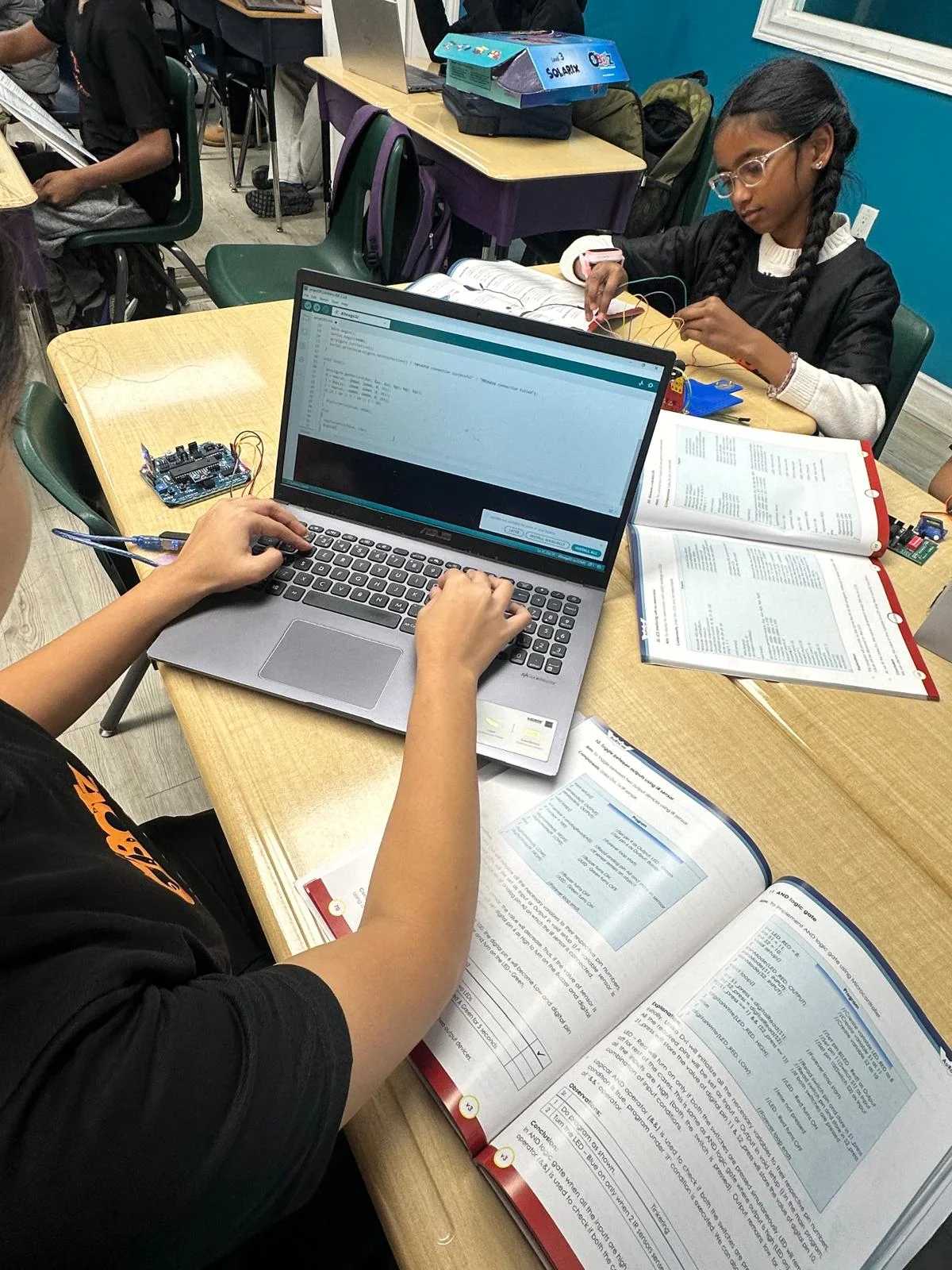
OBotz's progressive robotics curriculum includes hands-on applications ranging from automated street lights and robo-soccer to smart parking systems, mobile-controlled robots, robotic arms, and humanoids.
Suddenly, code is no longer just text or blocks on a screen. It makes something happen.
Sustaining interest in coding is less about constantly entertaining children and more about creating the right learning environment.
First, give them challenges that are difficult enough to be interesting but achievable enough to prevent constant discouragement. Break bigger projects into smaller milestones so children experience progress regularly.
Second, connect coding to their interests. A child interested in games may enjoy creating one. A child fascinated by machines may respond better to robotics. Someone who loves storytelling might enjoy interactive animations.
Third, protect their curiosity. Children naturally ask questions and experiment, but curiosity can decline when every activity becomes focused on finding the “correct” answer. Parents can learn more about why curiosity can decline with age and how to keep it alive.
Finally, choose learning experiences that provide progression rather than random activities. A well-designed coding program for kids can give children increasingly challenging goals while allowing them to apply what they have already learned.
More coding is not always better coding.
If children spend hours completing exercises they no longer enjoy, adding another class or worksheet may increase coding burnout in children rather than solve it.
Instead, watch for signs such as repeated resistance before class, excessive frustration over small errors, loss of excitement about projects, or statements such as “I’m bad at coding.”
A temporary dip in enthusiasm is normal. The response should be to understand what changed.
Is the work too easy? Too difficult? Too repetitive? Does the child want more independence? Would a hands-on project make the concept more meaningful?
Finding the cause is more useful than simply telling a child not to quit.
The question of how to keep kids motivated to learn coding does not have one magic answer.
Children stay engaged when learning gives them a combination of challenge, choice, progress, creativity, and accomplishment. They need opportunities to struggle without feeling defeated and to succeed without everything being made easy.
That is also why structure and fun do not have to be opposites.
OBotz combines a structured curriculum with hands-on robotics experiences, progressive learning levels, projects, and take-home kits designed to help children apply what they learn.
The goal is not simply getting children excited enough to start coding. It is helping them develop enough confidence, curiosity, and persistence to keep going when coding stops being easy.
Give your child an opportunity to experience coding and robotics through practical, progressive learning. Book an OBotz experience and let them discover what they can create when curiosity meets the right challenge.
Children may lose interest when the initial novelty disappears, lessons become repetitive, difficulty increases too quickly, or they cannot see meaningful progress. These are some of the common reasons kids quit coding classes even after an enthusiastic beginning.
Give your child achievable challenges, celebrate problem-solving rather than perfection, and connect projects to things they already enjoy. Project-based learning can also make abstract coding concepts feel more meaningful.
Coding frustration often occurs when children encounter repeated errors, concepts beyond their current skill level, or insufficient guidance. Teaching them to treat debugging as problem-solving rather than failure can make difficult moments easier to manage.
Yes. A temporary loss of motivation can happen whenever children move from beginner-level excitement to more challenging learning. Before allowing them to quit immediately, try understanding whether difficulty, boredom, pressure, or the learning format is causing the problem.
A structured curriculum introduces concepts progressively so children can build on existing knowledge instead of constantly facing disconnected or overly difficult tasks. Clear milestones can also make progress easier for children to recognize.
Parents can encourage experimentation, show interest in what their child creates, and avoid making every coding experience about achievement. Asking about projects, ideas, and discoveries can reinforce curiosity without adding unnecessary pressure.
Games and projects give children an immediate purpose for applying coding concepts. Building something they can see, test, improve, and share makes learning more active and can encourage them to persist through challenges.