How Do I Know If My Child Is Ready for an After-School Robotics Program?

For many parents, the idea of enrolling their child in robotics sounds exciting until the questions begin: Are they old enough? Do they need to know coding? What if they've never built a robot before?
If you've found yourself searching "is my child ready for robotics program," here's some reassuring news: readiness isn't determined by whether your child can already code or name the parts of a robot. It often begins with something much simpler: curiosity.
At OBotz, a hands-on robotics and coding program for kids, children learn by exploring, building, experimenting, troubleshooting and gradually taking on new challenges. So instead of asking whether your child already has technical skills, it may be more useful to look at how they approach learning and problem-solving.
Parents often wonder, what age is right for a robotics program? Age certainly helps determine which level or learning environment is appropriate, but it isn't the only measure of readiness.
Two children of the same age can have completely different interests, attention spans and comfort levels with hands-on activities. One may happily spend an hour building something, while another may prefer shorter, fast-changing activities.
That's why robotics program age readiness should be considered alongside a child's curiosity, ability to follow basic directions and willingness to keep trying.
Parents wondering about the best age to start robotics can also explore OBotz's guide on the ideal age to start coding for children.
Wondering about the signs a child is ready for a STEM class? You don't need to conduct a test. Simply observe how your child plays, learns and responds to challenges.
Does your child want to know how a remote works, why a toy moves or what happens when two things are connected?
That curiosity is valuable in robotics. Robotics encourages children to investigate how systems work rather than simply accept that they do.
A child doesn't need to be building complicated machines. Enjoying blocks, construction toys, puzzles, crafts or taking things apart can indicate an interest in hands-on problem-solving.
The OBotz Nano Robotics Program for Kids introduces children to robotics through an age-appropriate learning experience that helps make technical concepts approachable.
When something doesn't work immediately, does your child try another way?
Robotics naturally involves trial and error. A robot might not move as expected, a component may be placed incorrectly or instructions may need to be revisited. Children gradually learn that a mistake isn't necessarily the end of an activity; it can be information that helps them find the next solution.
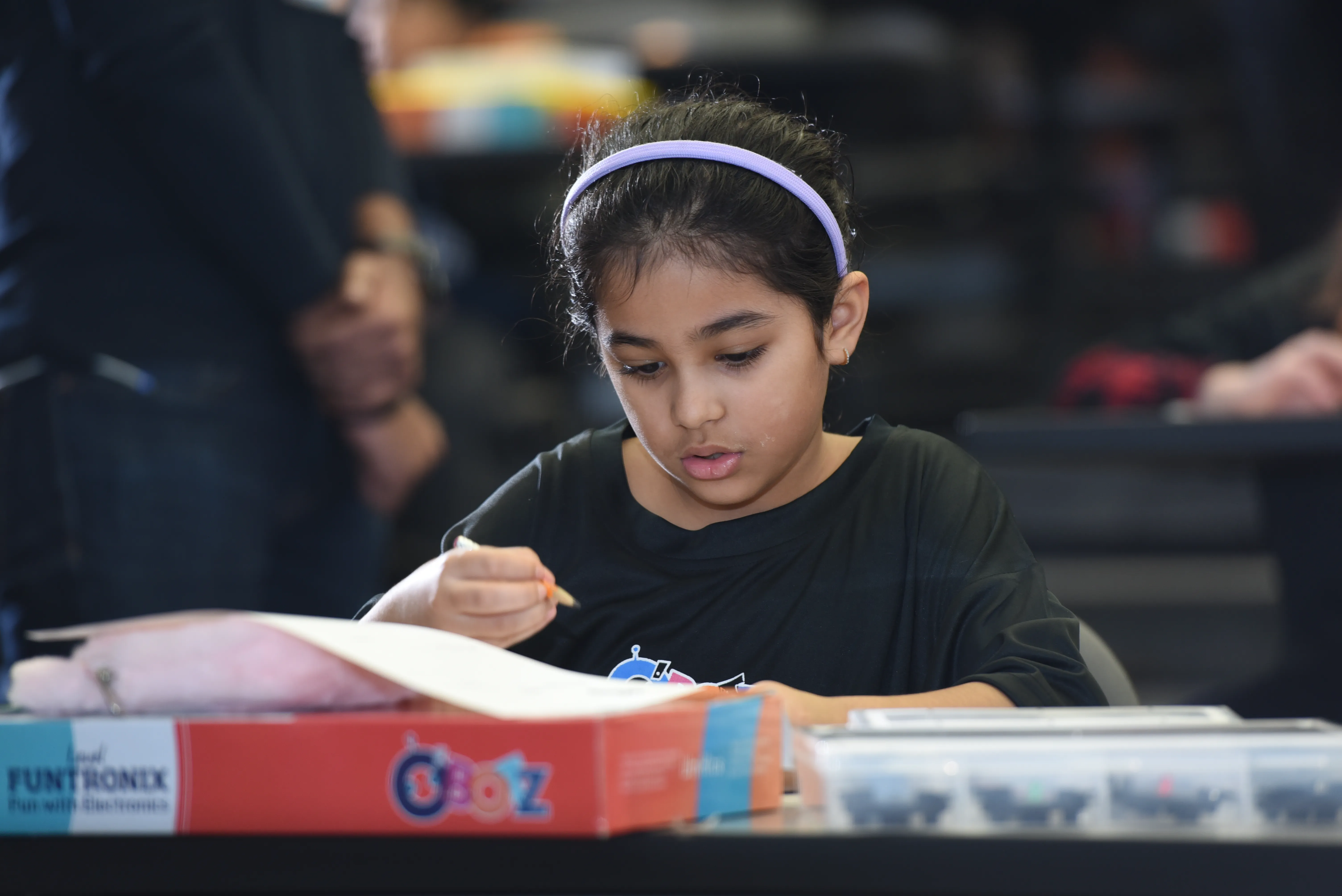
Your child doesn't need extraordinary concentration. However, being able to listen to a teacher, follow a few sequential steps and complete a simple task can indicate readiness for after-school robotics.
Structured programs build these abilities over time rather than expecting children to arrive with them fully developed.
Maybe your child loves gadgets, games, machines, computers or anything with buttons. That interest can become a gateway to understanding the technology behind the screen.
For children especially interested in the programming side, parents can explore the OBotz coding program for kids to understand how coding skills can develop alongside logical and computational thinking.
Some children constantly wonder, "What happens if I do this?"
In robotics, that's a useful instinct. Experimentation encourages children to form ideas, test them, observe what happens and make adjustments.
Watch your child's reaction when they finish a puzzle, fix a toy or finally get a difficult construction to stand.
That sense of "I did it!" can be a powerful motivator in robotics, where children get opportunities to see their ideas and efforts turn into something functional.
If you're still asking, "how do I know if my child is ready for robotics classes?", consider whether several of these statements sound familiar:
Your child doesn't need to tick every box. This robotics readiness checklist is simply a way to recognize behaviours that can make a robotics program enjoyable and engaging.
One of the biggest misconceptions about robotics program prerequisites is that children need to arrive knowing how to code.
Beginners are beginners for a reason.
A structured program should introduce concepts progressively, allowing children to develop foundational skills before moving toward more complex challenges. The 7 levels of the OBotz Robotics Program are designed around progressive learning, helping children build their knowledge step by step.
Rather than worrying about what your child doesn't know yet, focus on whether they're interested in learning.
That's completely fine.
A child's first class is supposed to introduce them to unfamiliar concepts and tools. Prior experience with robotics kits isn't necessarily a measure of readiness.
One of the most useful first robotics class tips is to avoid over-preparing. You don't need to turn the week before class into a robotics crash course. Instead, encourage curiosity and let your child experience the excitement of discovering something new.
Parents can also visit the OBotz FAQs for answers to common questions about programs and learning.
Preparing kids for coding class or robotics doesn't require worksheets or technical lessons at home.
Encourage your child to approach the experience with curiosity. Building toys, puzzles, simple logic games and conversations about how everyday technology works can all help develop the mindset used in STEM learning.
Most importantly, avoid putting pressure on them to "be good at robotics" immediately. The goal of the first few classes is learning, exploring and becoming comfortable with the process.
If you'd like to explore nearby options before enrolling, use the OBotz Centre Finder to find a location convenient for your family.
Not every future robotics enthusiast starts as a child obsessed with machines.
Some children discover their interest only after they have an opportunity to build something themselves. Others may initially be hesitant but become more engaged once they see their creation move or respond.
So when considering readiness for after-school robotics, don't look only for existing technical ability. Look for curiosity, openness to learning and an environment that meets your child at their current level.
If you're still wondering "is my child ready for robotics program," remember that readiness isn't about arriving with coding knowledge, advanced math skills or robotics experience.
It's about being ready to explore.
A well-structured robotics experience can give children room to build, test, make mistakes, solve problems and gradually develop technical confidence. With progressive learning at OBotz, children can begin at an appropriate level and build their skills as they move forward.
Your child doesn't have to know how to build a robot before joining. That's what learning is for.
Could one class reveal an interest you haven't discovered yet? Book an OBotz experience and let your child explore robotics firsthand.
Look for curiosity, an interest in building or technology, willingness to solve problems and the ability to follow simple instructions. Prior robotics experience isn't necessarily required.
There isn't one perfect age for every child. The right starting point depends on the program's age group, your child's interests and whether they are comfortable with age-appropriate hands-on learning.
Not necessarily. Beginner-friendly robotics programs can introduce coding and robotics concepts progressively, allowing children to develop foundational skills as they learn.
Basic listening, curiosity, patience and a willingness to experiment can help. Advanced coding, mathematics or engineering knowledge generally shouldn't be expected from a beginner.
Rather than focusing only on age, look for a program and level suited to your child's developmental stage and experience. Age-appropriate instruction can make robotics accessible to children at different starting points.
That's not necessarily a problem. A beginner robotics class should help children become familiar with tools, components and basic concepts before introducing more advanced challenges.
Encourage curiosity through puzzles, building activities and conversations about how technology works. Keep the experience low-pressure so your child arrives excited to explore rather than worried about performing.