How After-School STEM Programs Can Complement School Learning

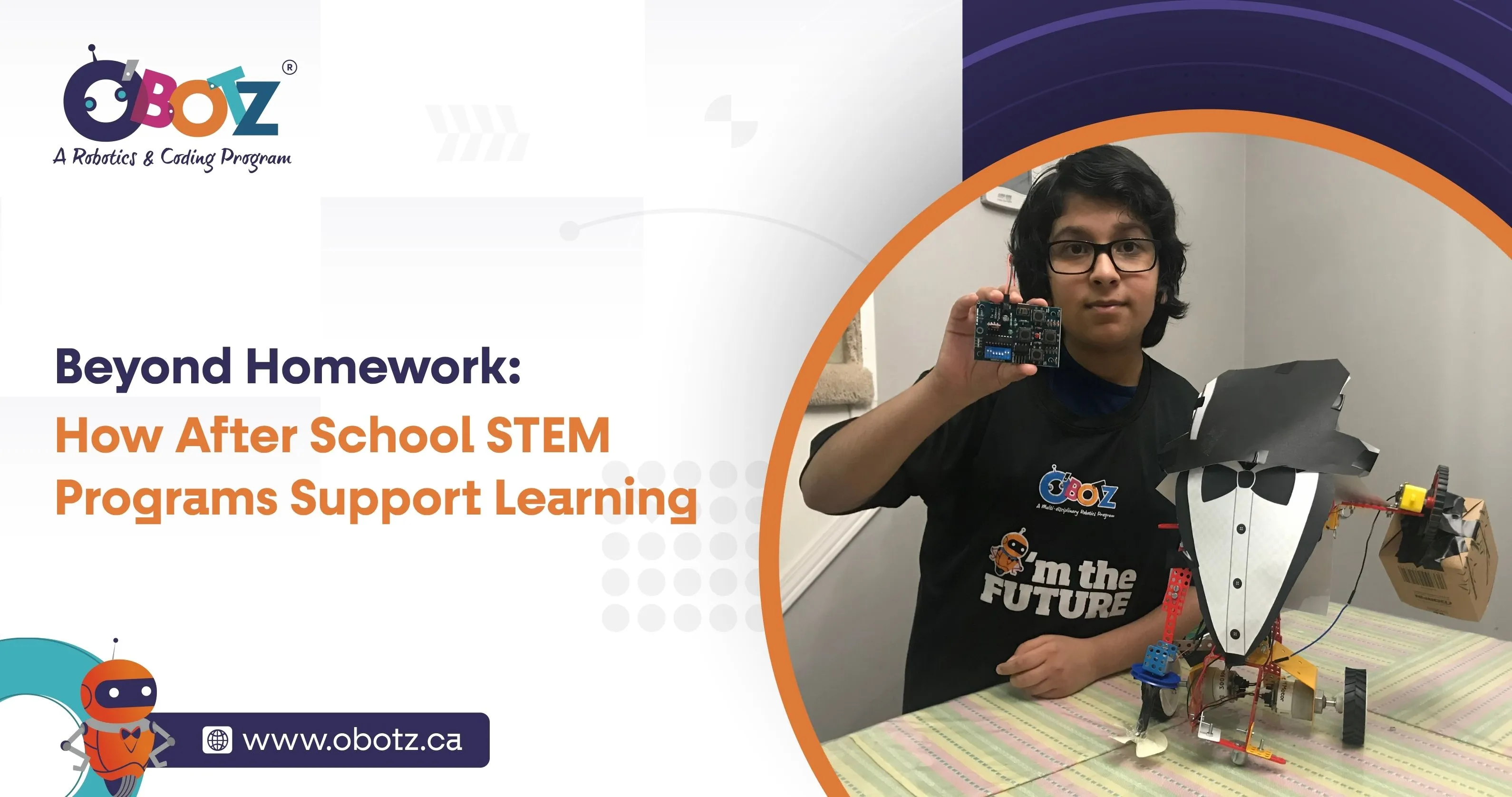
Your child spends several hours at school learning mathematics, science, and other essential subjects. But how often do they get to apply those lessons to real-world challenges?
Imagine a child who has learned about measurements in mathematics using those concepts to build a moving robot. Or a student who understands basic science principles finally seeing them in action through a coding experiment.
That's where after-school STEM programs can make a meaningful difference.
School provides the academic foundation, while practical STEM activities give children opportunities to experiment, make mistakes, and discover how classroom concepts work outside textbooks.
At OBotz, children explore robotics and programming through engaging activities designed to encourage curiosity, logical thinking, and problem-solving.
But how exactly do these programs complement what children learn at school? Let's explore.
Canadian schools introduce children to important mathematical, scientific, and technological concepts. However, classroom schedules, learning objectives, and available resources can sometimes limit opportunities for extended experimentation.
For instance, children might learn about electricity in science class without having sufficient time to build and test an electrical circuit independently.
Similarly, they might understand mathematical sequences but never explore how those sequences control a robot's movements.
This is where after-school enrichment becomes valuable.
Rather than repeating classroom lessons, well-designed STEM activities create opportunities for children to:
The objective isn't to replace school education. It's to make existing learning more meaningful.
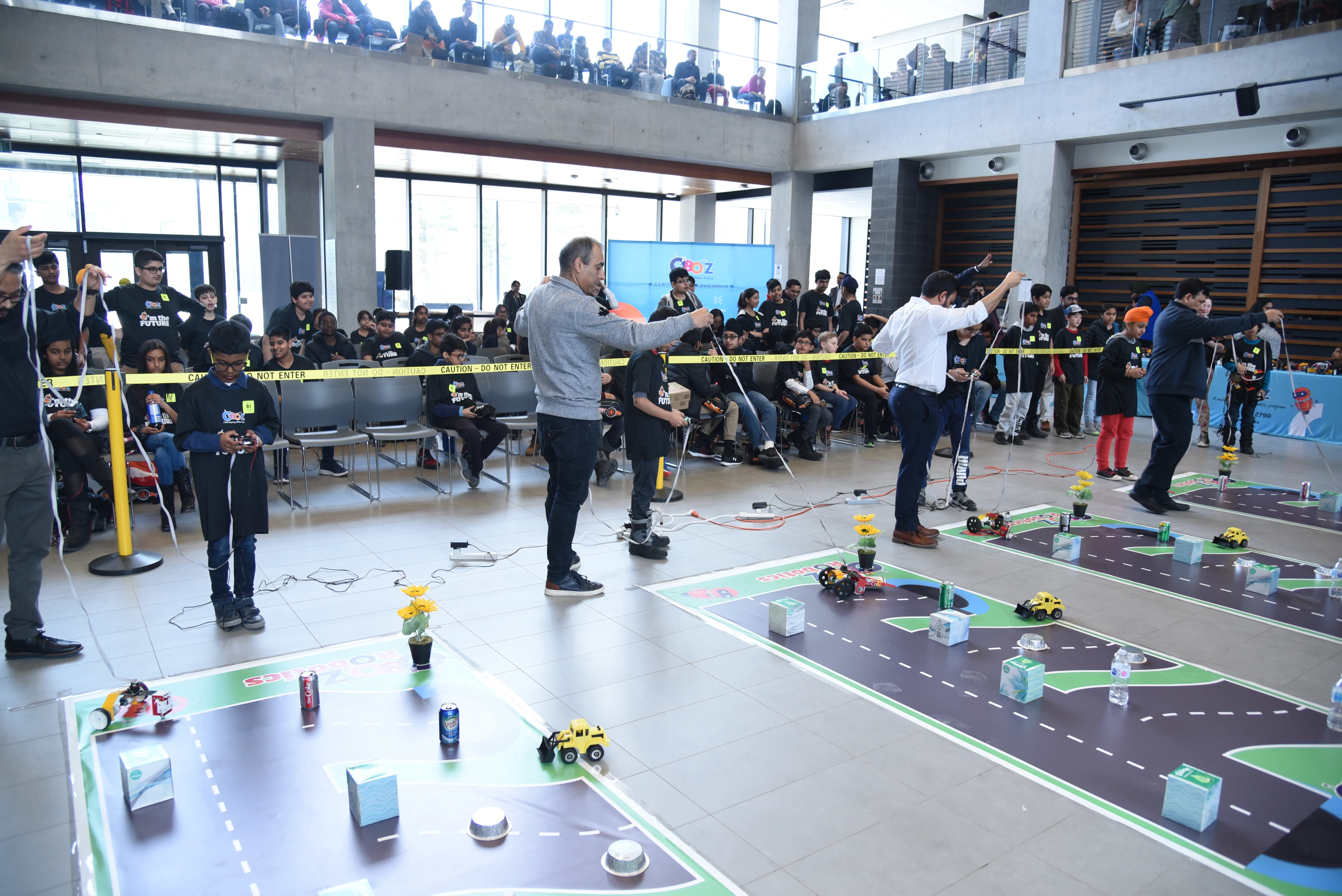
Many children struggle to understand why they need to learn certain mathematical concepts.
Robotics can provide the missing connection.
When children program a robot to move a specific distance or turn at an angle, they naturally encounter concepts such as measurement, geometry, sequencing, and logical reasoning.
For example, programming a robot to navigate a square-shaped path requires children to understand distances and turns.
This practical application helps children recognize mathematics as a useful problem-solving tool rather than simply another school subject.
Science becomes particularly interesting when children can observe its principles in action.
Through robotics activities, children can explore:
Such hands-on learning encourages children to ask questions, form predictions, and test their ideas.
These experiences can reinforce scientific inquiry skills introduced in Canadian classrooms while encouraging independent exploration.
Coding teaches children something beyond writing instructions for computers.
It encourages them to break complicated problems into smaller, manageable steps.
Suppose a robot isn't responding correctly to a command.
Instead of abandoning the task, children must identify the error, examine their instructions, and try another solution.
This process develops analytical thinking, patience, and debugging skills.
Parents searching for kids coding classes near me should therefore consider programs that emphasize reasoning and experimentation rather than simply teaching programming syntax.
Traditional classroom assignments often have defined outcomes. Robotics projects can provide more opportunities for children to explore alternative designs and solutions.
For instance, two children might receive the same challenge: build a robot capable of moving an object.
One might design a pushing mechanism, while another develops a gripping attachment.
Both approaches encourage creativity, engineering thinking, and experimentation.
Through project-based learning, children discover that complex problems don't always have one correct solution.
Explore OBotz's robotics projects to understand how children can engage with practical engineering challenges.
One of the most valuable lessons children can learn is that mistakes are part of progress.
When a robot fails to move as expected, children receive immediate feedback.
They can adjust their code, modify the design, and test their ideas again.
Over time, this repeated process can encourage persistence and greater confidence when approaching unfamiliar challenges.
These habits can also benefit children when they encounter difficult mathematics questions, science assignments, or other academic obstacles.
Parents sometimes wonder whether their children should spend additional time practising school subjects instead of participating in extracurricular STEM activities.
The distinction lies in their purpose.
Homework generally reinforces concepts already introduced in the classroom.
STEM enrichment creates opportunities to explore, apply, and extend those concepts through practical challenges.
For example, homework might ask children to calculate the distance travelled by an object.
A robotics activity might challenge them to program a robot to travel that distance accurately.
Both approaches contribute to learning, but in different ways.
Parents interested in this connection can explore how robotics supports after-school learning.
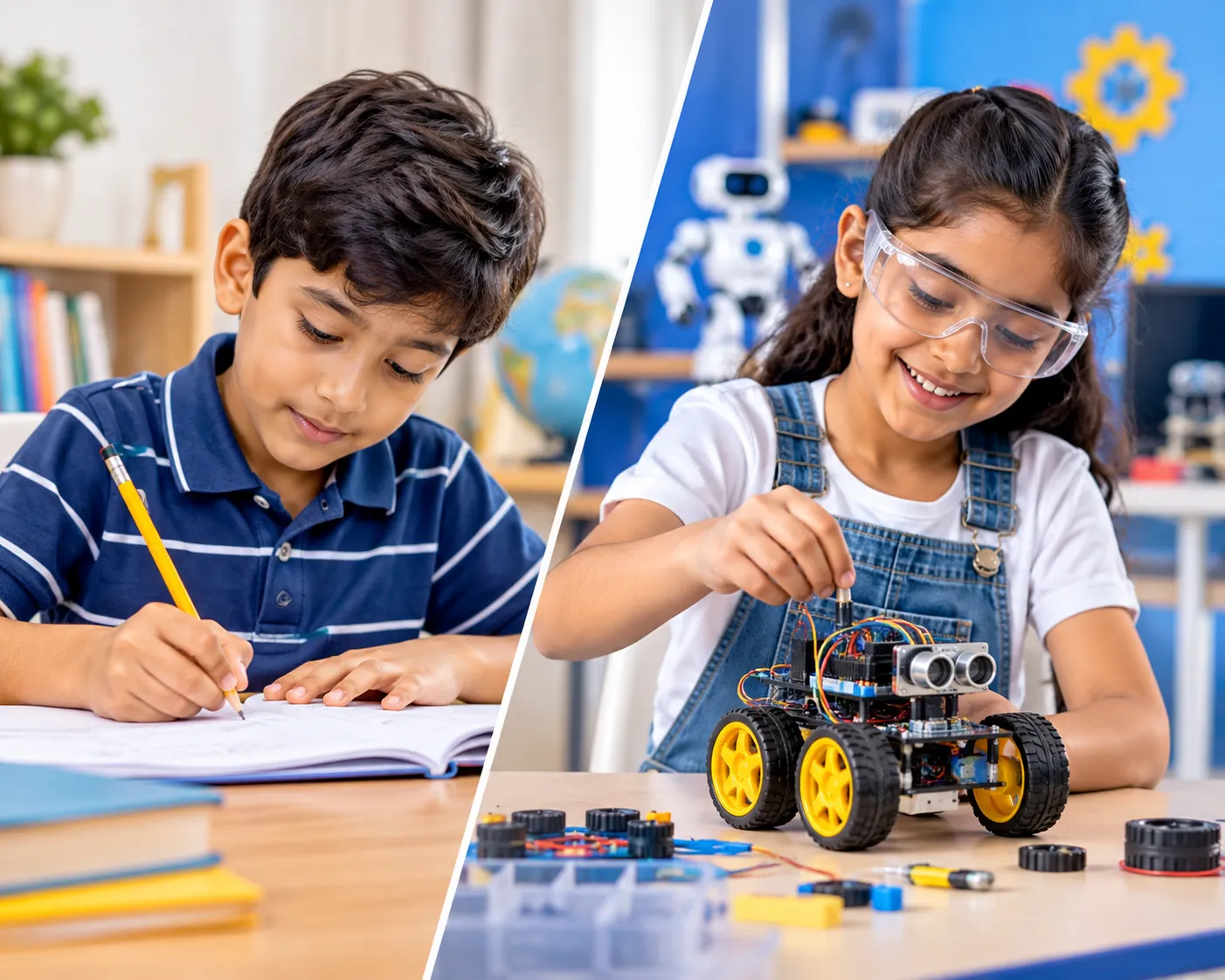
Parents understandably want extracurricular activities to support their children's education.
In Ontario, school learning includes mathematics, science and technology, and technological problem-solving. Robotics activities can reinforce related concepts through practical applications.
However, Ontario/Canadian curriculum alignment should not be confused with formal curriculum approval. Individual programs may complement curriculum expectations without following every classroom learning objective.
A quality program should help children develop transferable skills while remaining appropriate for their age and experience.
Parents can explore the OBotz robotics program to understand its learning approach and activities.
So, are after-school STEM programs worth it?
They can be, particularly when children enjoy experimenting, building, and discovering how technology works.
Before enrolling, parents should consider:
If you're searching for coding and robotics classes near me, prioritize meaningful learning experiences over the number of activities offered.
Parents exploring robotics classes for kids can use the OBotz Centre Finder to locate available centres.
Absolutely. Robotics doesn't have to remain exclusively an after-school activity.
Schools can incorporate robotics into their educational offerings to give students additional opportunities to explore technology and engineering.
Through the OBotz In-School Program, schools can explore ways to introduce practical robotics learning into their educational environment.
Such experiences can help connect theoretical classroom lessons with collaborative, technology-based challenges.
A strong education involves more than remembering information or performing well in examinations.
Children also need opportunities to experiment, question assumptions, solve unfamiliar problems, and develop confidence in their abilities.
That's how after-school programs support classroom learning: by providing additional opportunities to practise and apply important concepts.
At OBotz, children can explore coding and robotics in an engaging environment that encourages curiosity and independent thinking.
Ready to help your child explore learning beyond textbooks?
Enroll in an OBotz Robotics Program Today and introduce them to exciting opportunities to build, code, and solve real-world challenges.
They reinforce classroom concepts through practical activities involving mathematics, science, technology, and problem-solving.
Some coding programs complement Canadian curriculum expectations by reinforcing logical thinking, mathematics, and technological problem-solving, although alignment varies by provider.
Robotics encourages creativity, teamwork, logical reasoning, perseverance, and practical application of scientific and mathematical concepts.
There's no universal number; consider your child's energy, interests, schoolwork, sleep, and need for unstructured play.
Look for age-appropriate programs offering practical projects, progressive learning, and experienced instructors. OBotz offers a centre finder to explore local options.
Yes. Schools can introduce robotics through dedicated STEM activities or partnerships with educational providers such as OBotz.