Why Middle School Is a Critical Window for STEM Skill Development

Your child can spend hours figuring out a new game, yet lose interest after ten minutes of a science worksheet. That contrast tells us something important: curiosity is there, but the learning experience matters. For families exploring STEM for middle school students, the years between roughly 11 and 14 offer a valuable opportunity to turn curiosity into capability. At OBotz, we believe young learners need room to experiment, make mistakes, and discover what they can build—not simply memorize what they are taught.
Middle school is a time of change in how children think and see themselves. During adolescent brain development, young people increasingly practise planning, weighing options, and working through complex challenges. Their abilities develop at different rates, but meaningful experiences can help them exercise these emerging strengths.
It is also when many students begin saying, “I’m good at science,” or “Math just isn’t for me.” Those beliefs can shape which activities and courses they choose later. The question why is middle school important for STEM has a practical answer: students are forming academic identities while gaining the capacity to tackle more demanding projects.
Strong grade 6-8 STEM skills go beyond knowing formulas. Students benefit from learning to identify a problem, break it into manageable parts, test an idea, interpret results, and explain what happened. These habits support computational thinking, creativity, collaboration, and problem-solving skills across subjects.
Consider a robot that must travel through a maze. A student needs to estimate distances, write instructions, observe errors, and adjust the design. Geometry becomes useful, coding becomes purposeful, and failure becomes feedback. That is the difference between being told how something works and discovering it through action.
Parents who want to understand the learning pathway can explore our coding and robotics for kids: a parent’s guide for approachable examples of how these disciplines complement school learning.
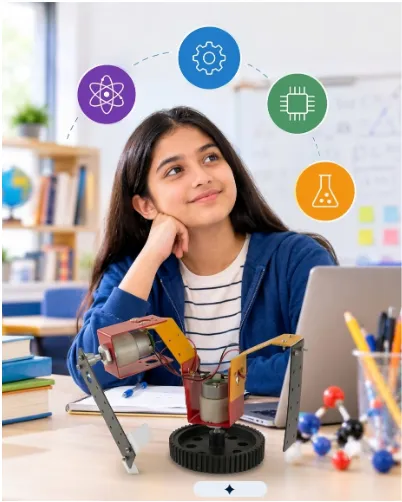
Middle schoolers often want greater independence and a clear reason to care. Hands-on STEM gives them both. Instead of completing an exercise for a mark, they might program a sensor, design a moving model, or work with classmates to solve a challenge. Their progress is visible—and they own the outcome.
Middle school coding introduces logic, debugging, and persistence. Robotics classes for kids make those ideas tangible.
For a broader look at where these experiences may lead, read the future of robotics and coding education in 2026 and consider how today’s projects can prepare students to engage thoughtfully with tomorrow’s technologies.
Some children start to withdraw from STEM because they fear getting the wrong answer, compare themselves with classmates, or feel the subject is not “for people like me.” Girls, in particular, may encounter stereotypes that affect their sense of belonging, although individual experiences vary widely. Encouragement works best when adults praise effort, strategies, and improvement rather than labeling children as naturally gifted.
Introduce diverse role models and let children choose projects, such as coding a music-responsive light display. Choice builds belonging.
If you are wondering how to keep middle schoolers interested in science and math, start with small, achievable opportunities. Ask your child what they wish they could invent. Encourage them to explain their reasoning before offering a solution. Let them test, revise, and try again without turning every project into a performance review.
Try a paper bridge or short interactive story. Encourage questions, testing, and reflection.
Structured programs can add tools, mentorship, and peers. Families comparing options should look for age-appropriate progression, active participation, and opportunities to build independently—not just watch demonstrations.
Learn how the OBotz robotics program approaches project-based learning, while schools interested in bringing practical experiences to more learners can explore OBotz in-school opportunities.
Our OBotz in-school program page offers further information for educators and school communities.
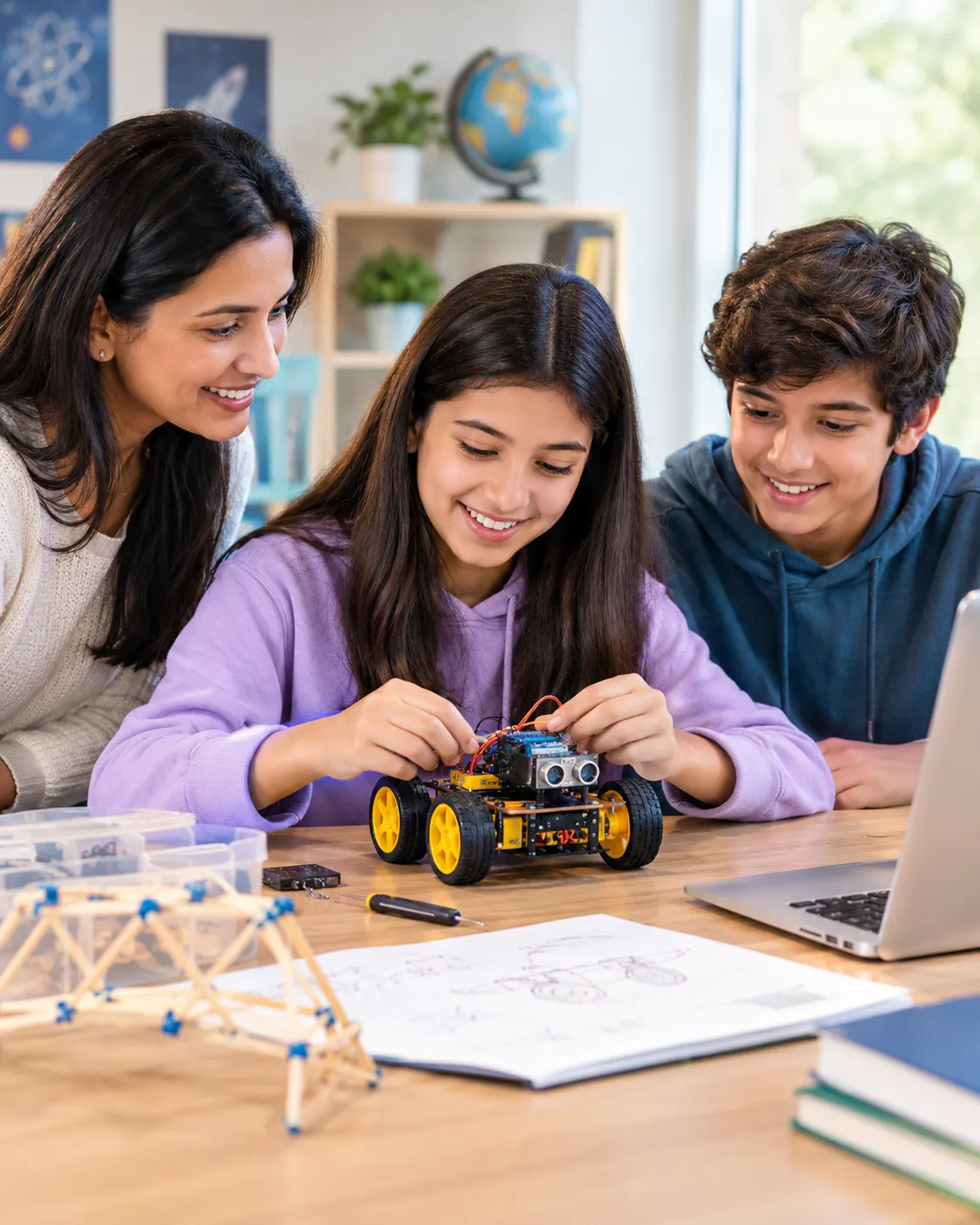
Wondering at what age should kids start STEM? Exploration can begin early, while middle school offers room for deeper projects.
If you have searched for a coding class for teenagers near me, focus less on the flashiest equipment and more on whether learners get to design, troubleshoot, collaborate, and progress at their own pace. Ask how beginners are supported, what projects students complete, and how instructors encourage questions.
Canadian families exploring STEM education Canada options can use the OBotz centre finder to look for a nearby learning location and inquire about suitable age groups and offerings.
Early experiences can influence STEM career interest by showing children what technical work actually involves. Yet the greater benefit is broader: learners practise curiosity, resilience, teamwork, and clear reasoning, whether they eventually pursue engineering, design, healthcare, business, or another field.
Middle school is not a deadline; it is an invitation. When children get opportunities to build and investigate, they can enter high school with more confidence and a stronger sense of what they enjoy. Explore OBotz to discover ways to make that exploration engaging and meaningful.
Ready to give your child a practical introduction to coding and robotics? Complete the OBotz enrollment form to take the next step toward an engaging STEM learning experience.
Children are developing more advanced reasoning skills while forming beliefs about what subjects they enjoy. Positive STEM experiences can strengthen both competence and confidence.
Useful skills include logical reasoning, basic coding concepts, designing experiments, teamwork, and explaining how a solution works. Activities should match the child’s experience and interests.
Connect concepts to hobbies, offer hands-on challenges, and celebrate thoughtful attempts rather than only correct answers. Give your child a say in what they build.
Some girls experience declining confidence or belonging during these years, but it is not inevitable. Inclusive learning spaces, relatable role models, and encouragement can help sustain interest.
Look for programs with age-appropriate projects, supportive instructors, and real opportunities to code and build. Check local centre offerings and ask about beginner pathways before enrolling.
Early exposure can broaden awareness of possible careers and help children discover interests. It does not lock them into a profession; it gives them more informed choices later.