How to Support a Child Who�s Falling Behind in Science This Term

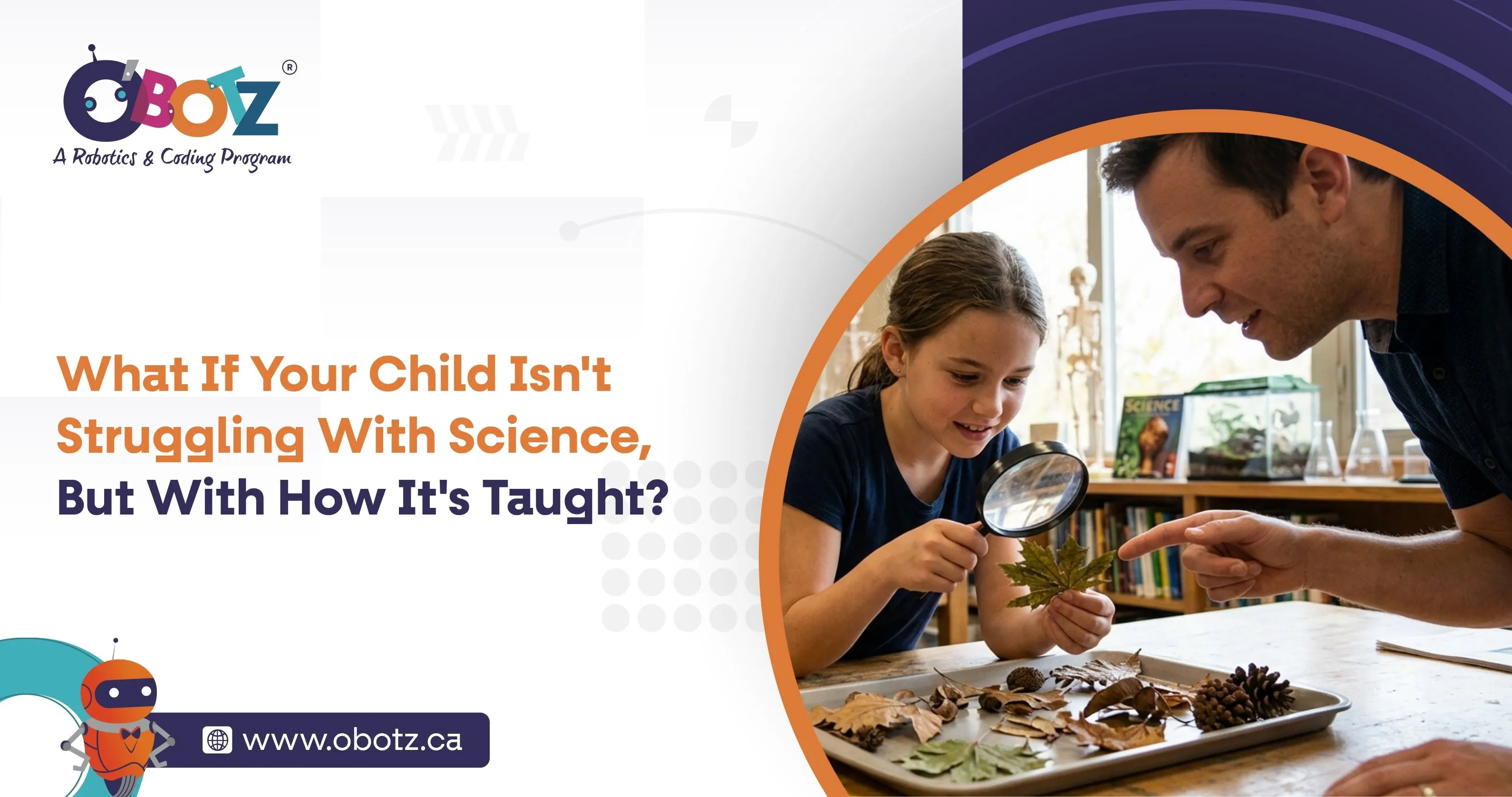
Your child studied for the science test. You helped them revise definitions, reviewed textbook chapters, and even asked practice questions. Yet, when the results arrived, their grades were disappointing.
Sound familiar?
Before assuming your child needs to study harder, consider something else: What if they understand the words in their textbook but cannot connect those words to how things actually work?
Science involves observation, experimentation, questioning, and discovery. However, children who struggle to connect theory with practical examples may gradually lose interest in the subject.
If you’re wondering how to help children falling behind in science, the answer may involve changing how they experience learning.
At OBotz, we believe children should have opportunities to explore STEM concepts through building, coding, experimenting, and solving real-world challenges.
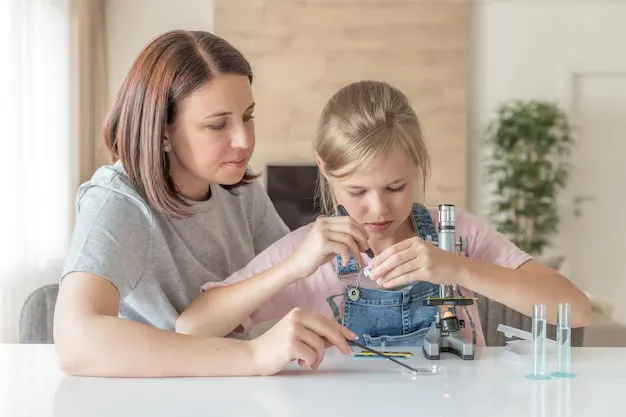
A disappointing science grade doesn’t necessarily indicate a lack of ability. Several factors can affect how children understand and retain scientific concepts.
Your child might remember that friction slows moving objects. But can they explain why a toy car travels differently across carpet and tile? Without practical connections, scientific concepts can remain abstract.
Young children naturally ask questions about everything around them. But when science becomes primarily about remembering information for examinations, that curiosity can fade. A child struggling with science at school may simply need more opportunities to explore and experiment.
Science learning is cumulative. Difficulty understanding basic forces, energy, or electricity can make more advanced topics confusing. Identifying these gaps early helps prevent frustration from building throughout the term.
When children repeatedly receive disappointing results, they may stop participating, asking questions, or attempting unfamiliar problems.
The objective shouldn’t be improving marks alone. It should be helping children feel capable of learning science again.
You don’t need to turn your home into another classroom. Small, consistent changes can make science more approachable.
Instead of asking, “Why did you score so poorly?” try asking, “Which part of this chapter was confusing?” Review their assignments and speak with their teacher to identify specific learning gaps. Focus on one concept at a time rather than attempting to revise the entire syllabus.
Wondering how to make science fun for kids? Start with experiences they’re already familiar with.
These activities encourage children to observe, predict, and explain outcomes.
When your child asks why something happens, resist immediately providing the explanation. Ask, “What do you think would happen if we changed something?” This develops scientific reasoning and helps children become comfortable investigating unfamiliar problems.
Twenty minutes of focused exploration can be more productive than an hour of frustrated revision. Create a manageable weekly routine combining schoolwork, practical activities, and short discussions about what your child discovered.
Parents researching science tutoring alternatives for kids often overlook robotics and coding.
Traditional tutoring can be useful when children need targeted curriculum support. However, hands-on science learning offers something different: opportunities to apply scientific ideas through practical challenges.
Imagine your child building a robot that must navigate around an obstacle. To complete the challenge, they may need to understand motion, distance, sensors, and how instructions control mechanical movement. Instead of merely reading about cause and effect, they observe it.
This learning by doing approach can make abstract concepts easier to explore.
As explained in our parent’s guide to coding and robotics, these activities also encourage logical reasoning, creativity, and structured problem-solving.
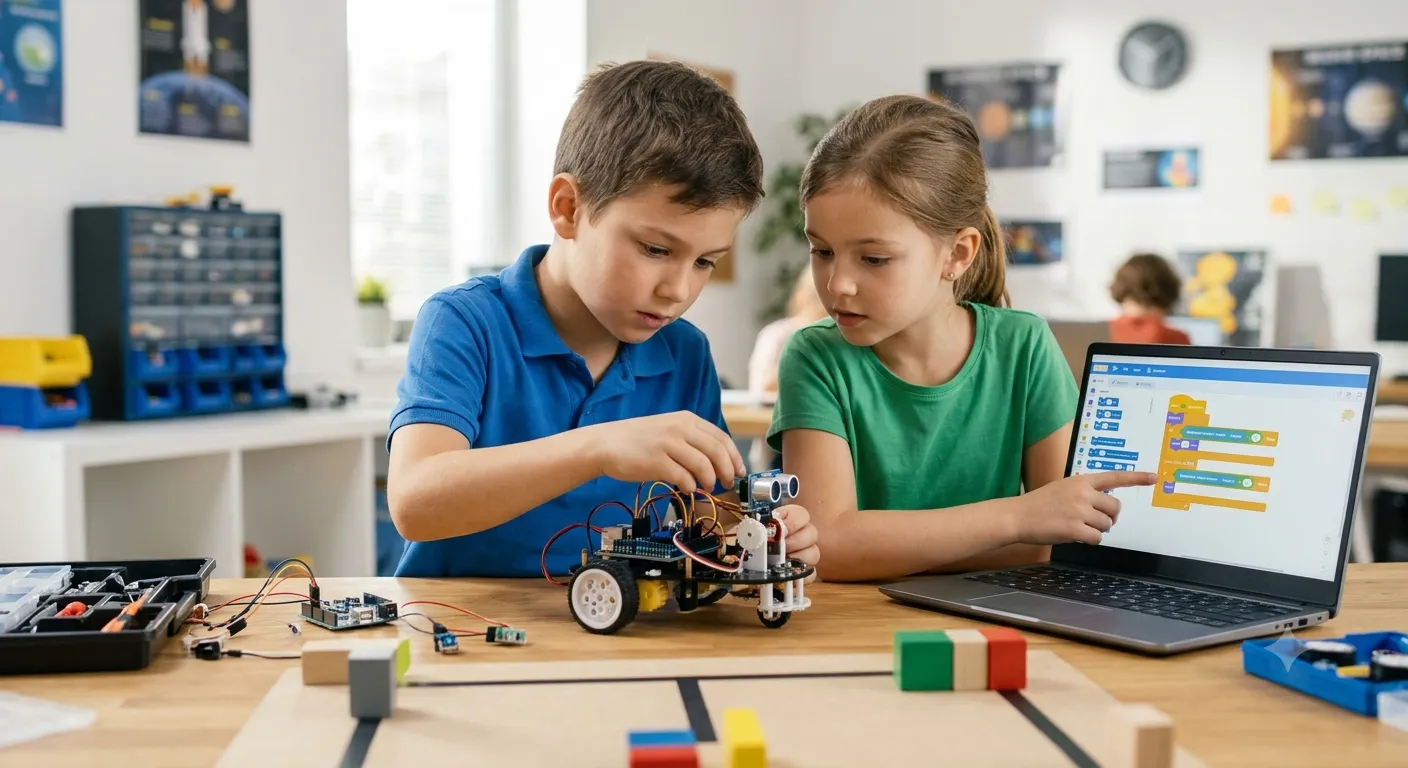
Practical STEM activities can strengthen conceptual understanding, engagement, and confidence. However, science grades improvement also depends on curriculum alignment, consistent revision, assessment skills, and addressing specific knowledge gaps. Robotics should complement classroom learning rather than automatically replace academic support.
For some children, another worksheet isn’t the most effective way to reconnect with science. An after-school STEM program introduces opportunities to experiment, collaborate, and solve problems in an engaging environment.
Through robotics-based after-school learning, children can experience how scientific and technological concepts apply beyond textbooks.
Here’s what makes this approach valuable:
For parents considering STEM enrichment for kids, these experiences can be a meaningful addition to regular science lessons.
At OBotz, children explore robotics and programming through structured, project-based experiences designed to encourage curiosity and problem-solving.
The OBotz robotics program introduces learners to building, coding, and applying technical concepts through practical challenges.
Rather than simply receiving instructions, children get opportunities to test ideas and understand how different components work together.
Parents can also explore OBotz student projects to see examples of the practical challenges learners undertake.
If you’ve been searching for coding classes for kids near me or robotics classes for kids, consider whether the program encourages experimentation, offers age-appropriate challenges, and provides a supportive learning environment.
You can use the OBotz centre finder to explore available locations across Canada.
A difficult term doesn’t determine your child’s future relationship with science. What matters is identifying where they’re struggling, providing appropriate academic support, and helping them rediscover the excitement of understanding how things work.
At OBotz Canada, practical robotics and coding experiences encourage children to explore, question, build, and learn through experimentation.
Ready to help your child discover a more engaging side of STEM? Enrol your child in OBotz and explore how project-based learning can support their curiosity, confidence, and problem-solving abilities.
Speak with their teacher, identify specific learning gaps, and combine focused revision with practical activities that make difficult concepts easier to understand.
Use simple experiments, everyday observations, and age-appropriate projects to demonstrate scientific ideas rather than relying entirely on textbook explanations.
Yes, robotics and coding can help children explore scientific concepts through experimentation, although they may still need targeted support for school-specific topics.
Consistently declining grades, difficulty explaining basic concepts, incomplete assignments, and growing frustration or avoidance may indicate a need for additional support.
Neither approach is universally better; tutoring addresses specific academic gaps, while practical STEM activities can strengthen understanding, engagement, and problem-solving skills.
When exploring the best after-school help for science Canada has to offer, look for programs with age-appropriate projects, structured instruction, and opportunities for experimentation, such as OBotz.