Is Robotics Class Educational or Just Fun? What Parents Should Know Before Enrolling

Imagine picking up your child from robotics class. They’re excited, showing you a little robot that moves, flashes lights, and follows commands. You smile, impressed by their creation.
But somewhere in your mind, a question remains: Did my child actually learn something today, or did I just pay for an hour of entertainment?
It’s a fair concern, especially when parents are already investing in academics, extracurricular activities, and skill-development programs.
So, are robotics classes worth it?
The answer depends less on how impressive the robot looks and more on what your child learns while building it.
At OBotz, robotics is approached as a hands-on learning experience where children explore technology, solve problems, and develop skills through practical projects.
Let’s understand what makes robotics genuinely educational and how parents can identify a program worth considering.
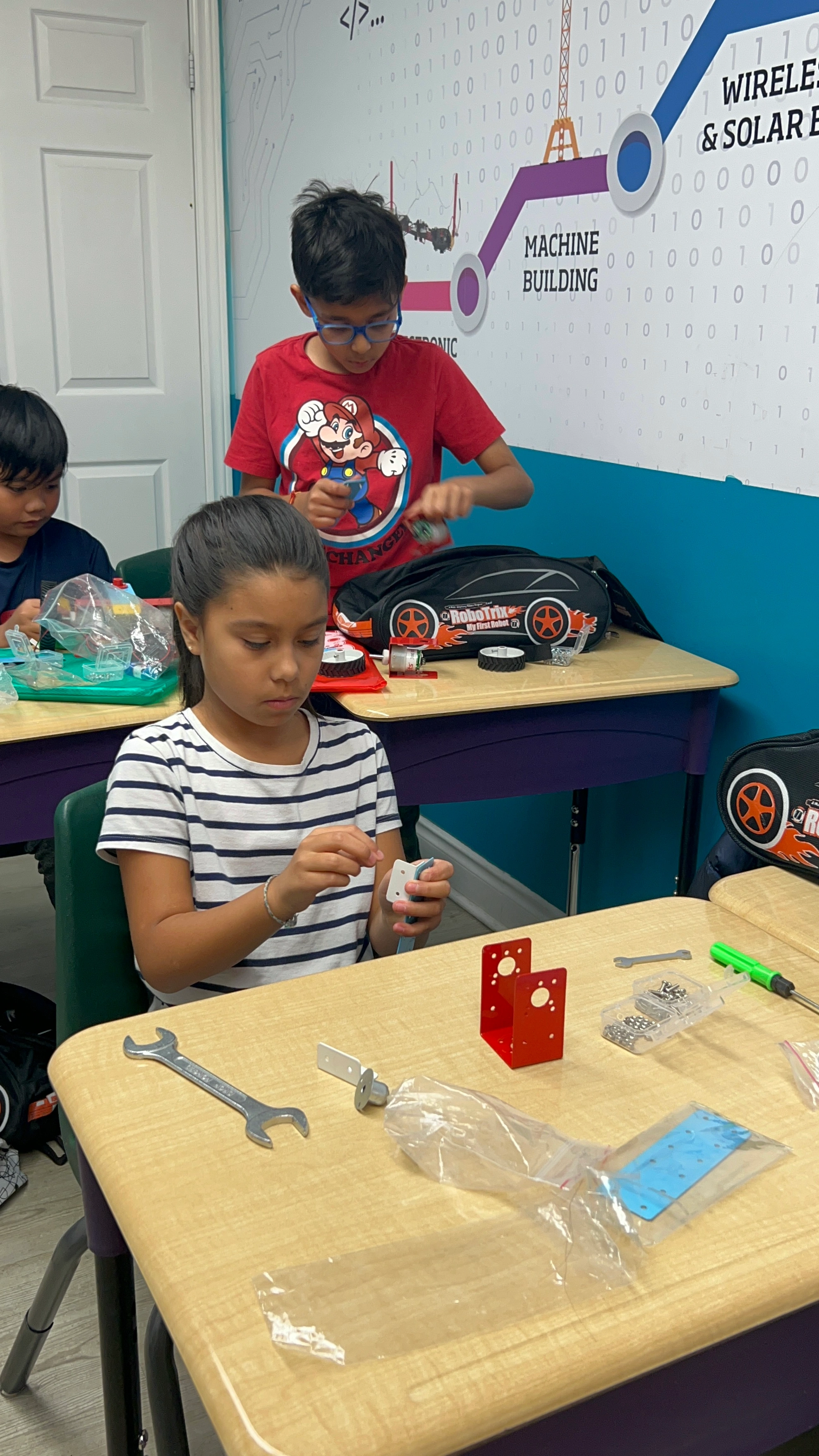
Many parents associate serious learning with textbooks, worksheets, and structured instruction. When children are laughing, experimenting, and building colourful machines, the experience might appear more recreational than educational.
However, enjoyment doesn’t automatically diminish learning.
In fact, play-based learning can create opportunities for children to explore unfamiliar concepts without feeling intimidated.
Consider two scenarios:
Scenario A: A child follows instructions to assemble a robot and watches it move.
Scenario B: A child assembles a robot, discovers it won’t move correctly, investigates the problem, changes the design, and tests it again.
Both experiences might be enjoyable, but the second introduces experimentation, reasoning, and independent decision-making.
That’s where the educational value of robotics becomes more apparent.
As explored in how robots can become meaningful learning companions for children, robots can encourage curiosity and active engagement beyond simply playing with technology.
Parents often search for what do kids learn in robotics class because the benefits aren’t always immediately visible. A well-designed program can develop several interconnected abilities.
When a robot doesn’t respond as expected, children must identify what went wrong.
Perhaps the motor is connected incorrectly, the code contains an error, or the design needs adjustment.
Instead of receiving immediate answers, children learn to investigate possibilities and test solutions. This process can strengthen critical thinking and encourage persistence when challenges arise.
Robotics introduces engineering for kids through practical activities involving structures, sensors, motors, and mechanical movement.
Children may also explore programming concepts such as sequences, loops, conditions, and commands.
The advantage? They can observe how their instructions influence a physical machine, making abstract concepts easier to understand.
Robotics projects can involve group discussions, shared responsibilities, and collaborative troubleshooting.
Children practise explaining their ideas, listening to alternative approaches, and negotiating solutions. These experiences create opportunities to develop teamwork skills alongside technical knowledge.
Not every robotics challenge needs one predetermined solution.
When children have opportunities to modify designs or experiment with different approaches, they begin thinking beyond instructions.
For parents evaluating learning outcomes, this ability to apply knowledge independently can be more meaningful than simply completing a project.
Building LEGO models at home can be a wonderful activity. Children practise spatial reasoning, creativity, and following instructions. So why consider formal robotics classes for kids?
The difference isn’t necessarily the materials. It’s how learning is structured.
|
Building at home |
Structured robotics program |
|
Activities are often self-directed |
Projects follow planned learning objectives |
|
Children may focus on assembling models |
Children explore building, coding, and testing |
|
Challenges depend on available resources |
Challenges can progress in complexity |
|
Feedback usually comes from family or self-testing |
Instructors can guide reflection and troubleshooting |
Neither experience replaces the other. Home activities can complement structured instruction, while a thoughtfully designed STEM curriculum can introduce concepts and challenges that children might not encounter independently.
Wondering how to tell if a STEM class is educational rather than simply entertaining? Start by asking these questions.
Ask about specific concepts, project objectives, and expected progress. A quality program should explain what children are learning beyond assembling robots.
Children should gradually receive opportunities to experiment, make decisions, and solve problems rather than constantly copying demonstrations.
A beginner may need simple construction activities, while an older learner might benefit from more complex coding and electronics projects.
Look beyond certificates or completed models. Ask whether instructors observe children’s understanding, independence, troubleshooting abilities, and application of concepts.
Real projects can reveal the program’s complexity and practical learning opportunities.
Parents can explore OBotz robotics projects to understand the types of hands-on activities associated with its approach.
If you’re comparing local programs, these tips for choosing coding classes in Mississauga also offer useful considerations.
When parents ask, is robotics class worth the money, they’re usually looking for benefits that extend beyond one enjoyable afternoon. The value depends on the quality of instruction, your child’s interests, and opportunities to apply new skills.
Robotics for kids can be a worthwhile enrichment activity when it encourages children to:
However, enrolling in robotics doesn’t automatically guarantee stronger academic performance or future STEM success. The best programs make learning intentional, age-appropriate, and progressively challenging.
At OBotz, the emphasis is on introducing children to robotics through structured, project-based experiences.
Rather than treating robots as finished toys, the approach encourages children to engage with the processes behind their creation.
Through building, experimenting, and programming activities, children have opportunities to connect theoretical ideas with practical applications.
Parents can explore the OBotz robotics program and its learning approach to understand how robotics activities are organized.
For families searching for coding and robotics classes near me, evaluating the curriculum, instructional approach, and suitability for their child’s interests is an important first step.
A completed robot might be exciting, but the real achievement is what happens during its creation.
Did your child ask questions? Experiment with solutions? Overcome frustration? Understand something they couldn’t explain before? Those are the experiences that can make robotics educational.
At OBotz, the goal is to make technology exploration engaging while creating opportunities for children to develop practical STEM abilities.
The next time your child proudly shows you a robot, ask them how they made it work. Their explanation might tell you more than the robot itself.
Ready to explore robotics learning for your child?
Discover a hands-on approach to STEM education and enrol your child with OBotz to take the next step.
Robotics classes can be educational when children learn coding, engineering principles, problem-solving, and experimentation through structured activities rather than simply assembling toys.
Children can learn programming fundamentals, mechanical concepts, logical reasoning, creativity, and collaborative problem-solving through practical robotics projects.
They can be worthwhile when the curriculum matches your child’s age, interests, and abilities and offers meaningful opportunities for progressive learning.
Ask about learning objectives, instructor guidance, age suitability, project complexity, class structure, and how children’s progress is evaluated.
Structured programs typically combine guided instruction, progressive challenges, coding concepts, and instructor feedback, while LEGO building at home is often more self-directed.
Children can begin exploring age-appropriate robotics in early elementary school, although the ideal starting age depends on their interests, readiness, and the program’s complexity.