Why Some Kids Thrive in STEM While Others Lose Interest Fast

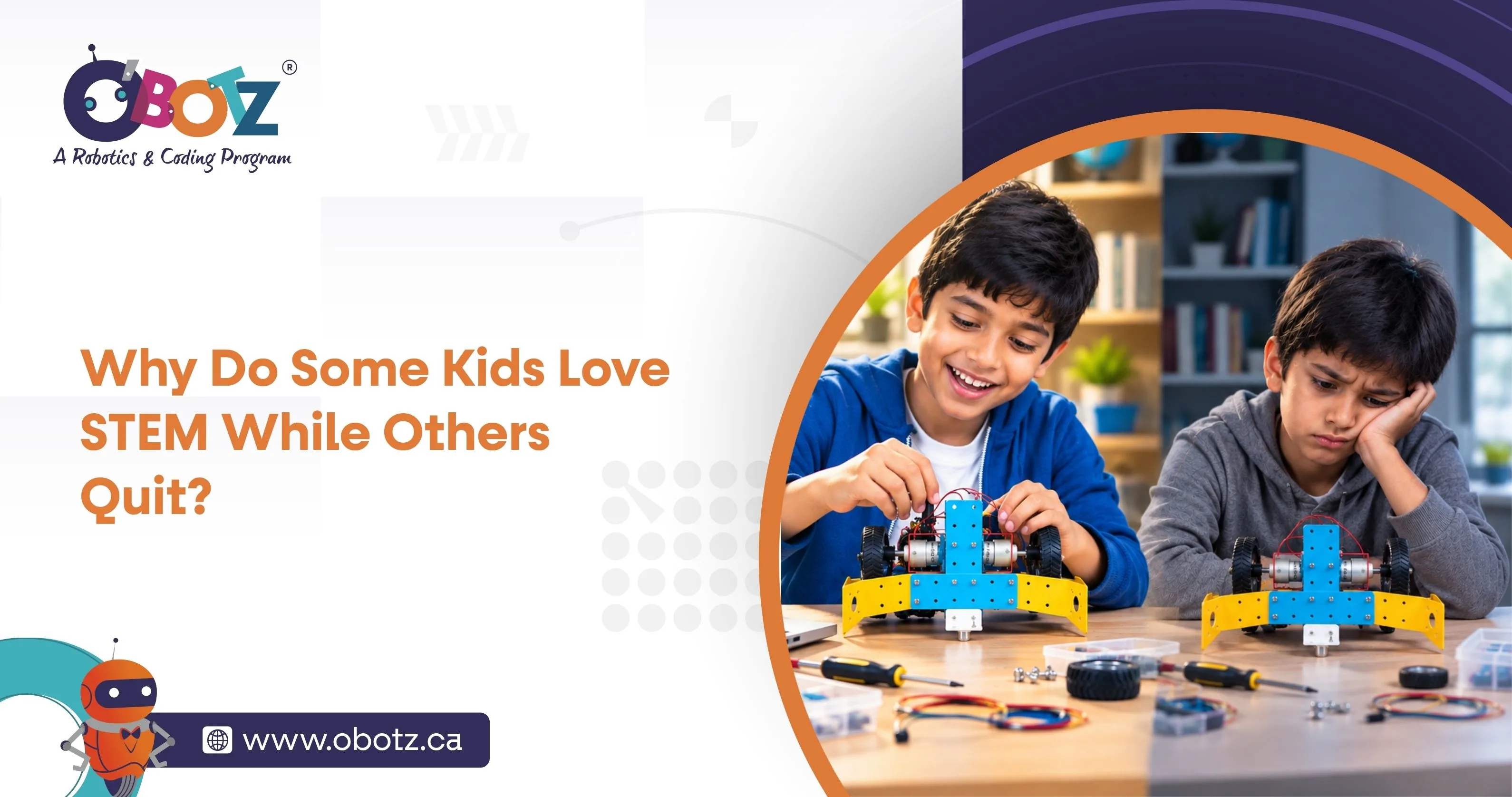
Two children can walk into the same coding or robotics class with equal curiosity. A few months later, one might be enthusiastically building robots at home while the other says, “This is boring.”
What causes that difference?
When parents wonder why kids lose interest in STEM, the answer is rarely that a child simply “isn’t a STEM kid.” Interest can depend heavily on how children experience challenges, creativity, progress, mistakes, and success.
At OBotz, children explore technology through practical activities designed to make learning active and engaging. Understanding what drives STEM engagement for kids can help parents create experiences that turn short-term curiosity into lasting enthusiasm.
Young children are naturally curious. They ask questions, take things apart, experiment, and want to understand why something works.
But curiosity can fade when learning becomes overly focused on instructions, repetition, or getting the “right” answer.
A common STEM drop-off can happen when children feel that concepts are too difficult, progress is too slow, or lessons do not connect with anything they care about. Fear of making mistakes can also turn experimentation into frustration.
Parents asking why do kids lose interest in STEM should therefore look beyond ability. The learning environment matters too.
OBotz explores this further in its guide on how to motivate kids to learn STEM, including ways parents can make STEM feel more relevant and enjoyable.
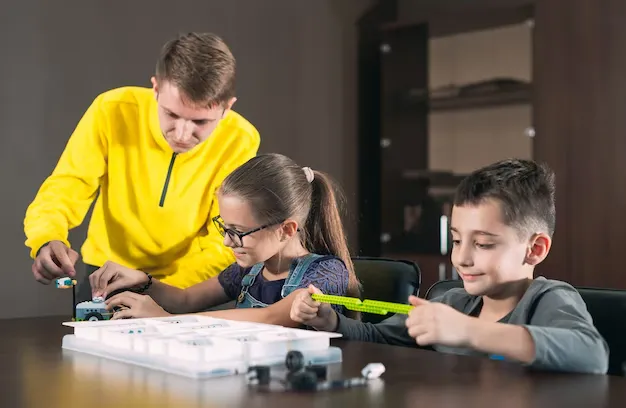
Not every child learns effectively by listening to explanations or reading instructions.
Different learning styles can influence how children respond to STEM. For many kids, an abstract idea becomes much easier to understand once they can build, test, move, or modify something themselves.
That is where hands-on STEM can make a major difference.
Instead of simply learning what a sensor does, imagine a child programming a robot to respond to one. Instead of only discussing logic, they can write instructions and immediately see whether their solution works.
This creates a simple but powerful connection:
Idea → Action → Result → Improvement
With project-based learning, mistakes also become part of the process rather than something to fear.
If an activity is too easy, children become bored. If it feels impossibly difficult, they can become discouraged.
Effective STEM learning sits somewhere in between.
Children need enough challenge to feel curious but enough support to believe they can succeed. As their skills grow, the complexity should grow with them.
This is especially important for sustaining interest in coding. Repeating basic exercises long after a child has understood them can quickly turn excitement into routine.
At the same time, moving into complicated concepts too quickly may leave a learner feeling lost.
A structured progression gives children achievable milestones while continuously introducing something new.
There is an important difference between:
“You have to complete this activity.”
and:
“What would you like your robot to do?”
The second creates ownership.
Intrinsic motivation grows when children feel they are exploring something because they genuinely want to discover the outcome.
That is why motivating kids in STEM is not always about prizes, rewards, or telling them STEM will help their future careers. Sometimes, it is about giving them the freedom to experiment.
Gamified learning can help too, particularly when challenges, levels, and achievements make progress visible without turning every activity into a test.
For more ideas, parents can explore OBotz's guide on how to get kids interested in STEM naturally.
Today's children have grown up surrounded by interactive technology.
Gen Alpha learning is often shaped by immediate feedback, visual experiences, digital interaction, and opportunities to participate rather than simply observe. This can affect how they respond to traditional teaching approaches.
It does not necessarily mean that the attention span kids have today is inherently “worse.” Rather, learning experiences may need to compete with highly interactive environments children encounter elsewhere.
The OBotz article on why Gen Alpha learns differently explains how educators and parents can better respond to these changing learning preferences.
One of the quickest ways for a child to lose confidence is to repeatedly struggle without understanding why.
Coding is a good example.
A missing symbol or incorrect command can prevent an entire program from working. To an experienced coder, debugging is normal. To a beginner, it can feel like failure.
That is why keeping kids interested in STEM also means teaching them how to handle frustration.
Children should learn to ask:
What went wrong?
What can I change?
What happens if I try again?
OBotz's guide on why kids struggle with coding and how to help offers additional insight into common learning barriers.
Parents do not need to turn every evening into a science lesson.
Instead, make STEM part of everyday curiosity. Let children build things, experiment, ask unusual questions, solve practical problems, and explore topics they already enjoy.
A child fascinated by cars might enjoy robotics. A creative child may love designing a game. Someone interested in space could explore programming through space-themed projects.
The key to keeping kids interested in STEM is making learning personally meaningful.
Parents searching for STEM programs that keep kids motivated Canada can also look for programs that combine structured progression with experimentation, creativity, and practical projects rather than relying entirely on lectures or worksheets.
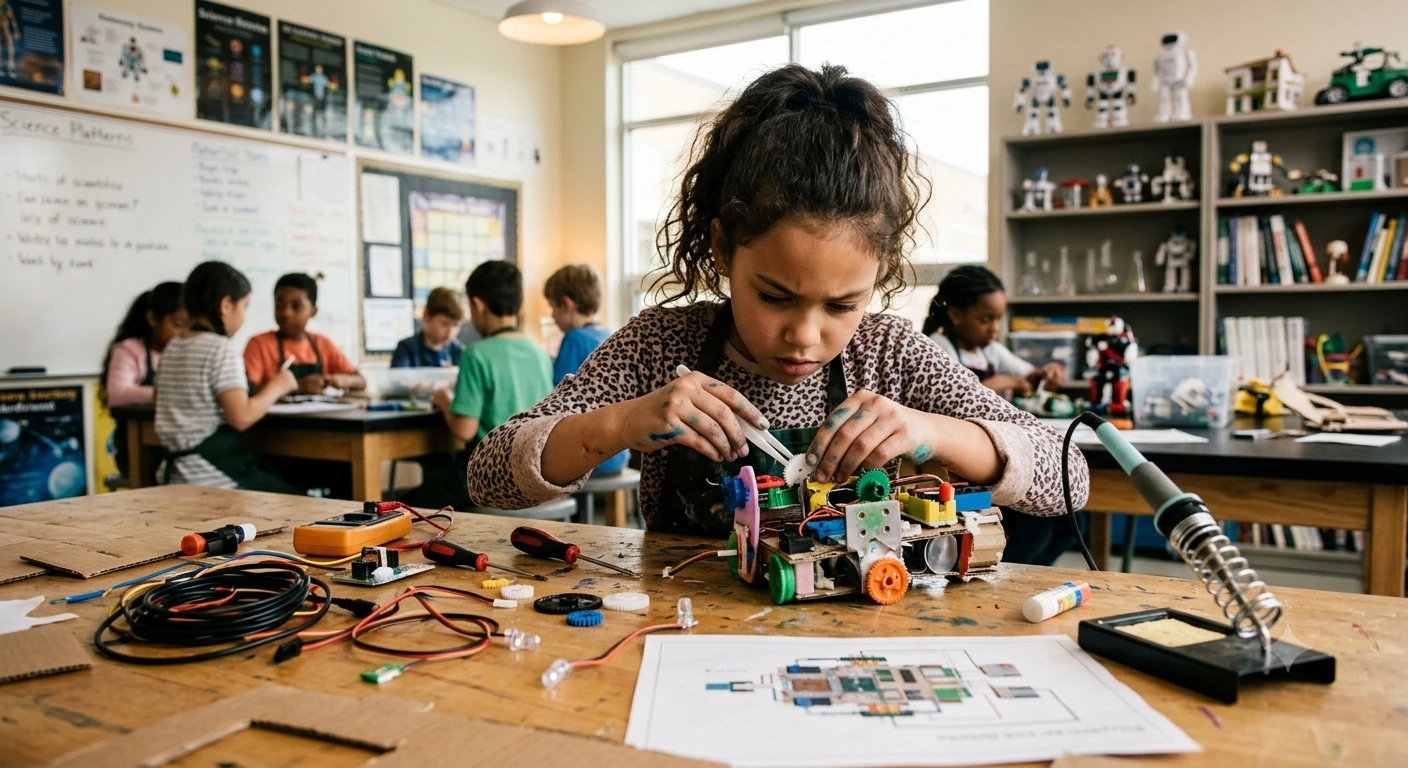
Children do not stay interested in STEM simply because adults tell them it is important.
They stay interested when they experience the satisfaction of making something work.
They stay when a difficult problem finally makes sense.
And they stay when they realize, “I built that.”
The goal is not to eliminate every difficult moment. It is to create an environment where difficulty feels like a challenge worth solving.
That philosophy shapes the learning experiences at OBotz, where children can develop technical skills while exploring, building, experimenting, and solving problems.
If you have been searching for engaging STEM classes near me and want to see how your child responds to hands-on robotics and coding, book an OBotz experience and let them discover STEM by doing.
Children are more likely to enjoy STEM when activities match their interests, abilities, and preferred ways of learning. Excessive repetition, frustration, or lack of practical application can cause interest to fade.
Give your child opportunities to choose projects, experiment, solve real problems, and progress gradually. Celebrating effort and discovery rather than only correct answers can also support long-term interest.
Kids may lose interest when activities become repetitive, too difficult, overly theoretical, or disconnected from their interests. The right balance of challenge, creativity, and support can make learning more engaging.
Try changing the type of activity instead of immediately abandoning STEM. A child bored with coding exercises may become interested again through robots, games, electronics, or a project connected to a personal hobby.
Let children build increasingly challenging projects where they can see the results of their ideas. Choice, experimentation, achievable goals, and opportunities to troubleshoot can help sustain enthusiasm.