My Child Wasn't a Math Kid�Then Tried Robotics

“I’m just not a math kid.”
It is a statement many parents hear after a difficult homework session, a disappointing test, or another worksheet filled with crossed-out answers. Over time, frustration can become something more limiting: a child starts believing that math simply isn’t for them.
But what if the problem isn’t the child’s ability? What if they simply need to experience numbers differently?
At OBotz, children experience STEM through building, coding, experimenting, and solving real problems. For some children, this practical environment can make mathematical ideas feel less abstract and more useful.
That is why robotics for kids who struggle with math can offer a different way into the subject. Instead of beginning with equations on a page, children begin with a challenge: make the robot move, turn, avoid an obstacle, or complete a task.
And somewhere along the way, they discover they are already using math.
Children can quickly associate math with being right or wrong. If they repeatedly struggle to reach the correct answer, they may become hesitant to participate, attempt harder questions, or take risks.
Math anxiety in children can make this cycle even more difficult. A child who expects to fail may avoid the very practice that could help them improve.
Robotics changes the context.
A robot that turns too far isn't a bad grade. It is feedback.
The child can check the instructions, change a number, adjust the code, test the robot again, and see what happens. Mistakes become part of experimentation rather than something to fear.
This shift can support math confidence through robotics because children get repeated opportunities to try, revise, and improve.
For some learners, “calculate 90 degrees” feels abstract.
“Program your robot to make a 90-degree turn” has a visible purpose.
That is the power of hands-on math learning. Children can connect mathematical ideas with physical outcomes. Angles determine movement. Distance affects how far a robot travels. Timing changes what a machine does. Sequences influence whether a project succeeds.
This is applied math for kids in a setting where numbers have an immediate job to do.
OBotz explores how structured projects can reinforce academic learning in its guide to structured robotics and coding projects that improve academics.
Children aren't simply memorizing concepts. They are applying them.
So, does robotics help kids with math?
Robotics projects can encourage children to use measurement, patterns, sequencing, estimation, geometry, logic, and basic calculations while working toward a practical goal.
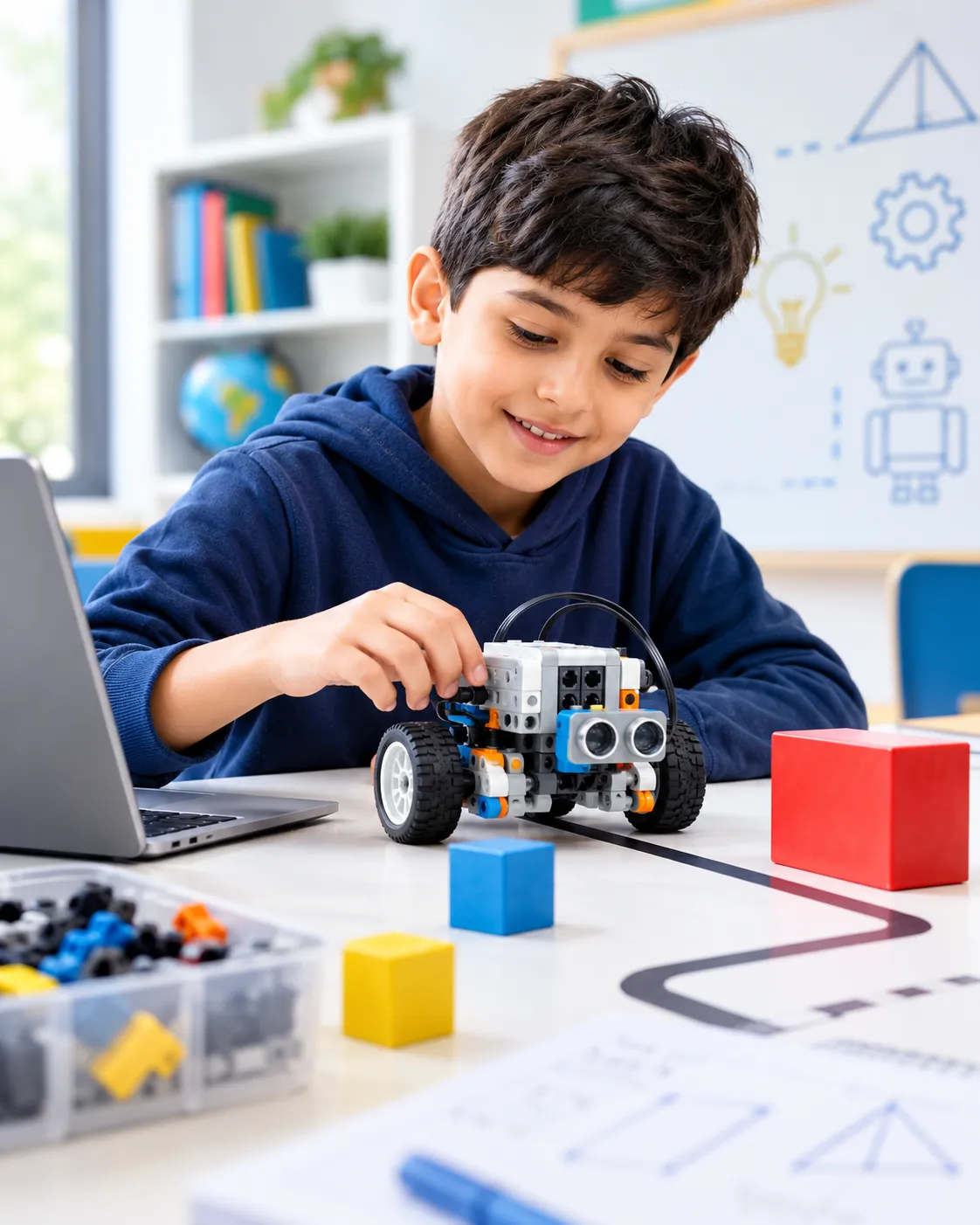
Suppose a robot needs to travel from one point to another and stop before hitting an object. A child may need to estimate distance, adjust movement duration, test the result, identify the error, and refine the program.
That single challenge can combine practical math with logical thinking and spatial reasoning.
The child is also developing problem-solving skills because the answer rarely appears immediately. They need to observe, form an idea, test it, and make adjustments.
For another look at this connection, read how Canadian kids are developing math and science skills with robotics.
Parents also frequently ask: does coding help with math?
Coding and mathematics are different skills, but they share several thinking processes. Both can involve patterns, sequences, logical relationships, variables, prediction, and breaking a large problem into smaller steps.
Learning math through coding can also give numbers context.
A child might change a value in a program and immediately see the robot behave differently. Instead of asking, “When am I ever going to use this?”, they can see why accuracy matters.
OBotz explains more about the relationship between math and problem-solving with coding.
This is one reason STEM builds math skills in a way that can feel very different from conventional practice.
One of the most valuable moments in robotics isn't when a project works immediately.
It is when it doesn't.
The wheels turn in the wrong direction. The sensor doesn't react as expected. The robot misses its target. Instead of receiving a red mark and moving to the next question, the child gets another opportunity.
Why did that happen?
What could I change?
What if I try this?
That cycle can help children become more comfortable with challenges. They learn that getting something wrong doesn't necessarily mean they are “bad” at the subject. It can simply mean they haven't found the solution yet.
When children struggle with coding itself, the answer isn't to assume they lack ability either. Understanding why kids struggle with coding and how to support them can help parents see learning difficulties as opportunities to adjust the approach.
Can robotics improve math skills? It can provide opportunities to practise mathematical thinking in an engaging, project-based environment.
That distinction matters for reluctant learners.
A child who resists another page of calculations may happily spend 20 minutes figuring out why a robot isn't travelling the correct distance. During those 20 minutes, they may estimate, measure, compare values, identify patterns, and adjust numbers repeatedly.
The motivation comes from wanting the project to work.
For parents searching for robotics classes for kids Canada families can explore, this hands-on approach offers something beyond simply adding another academic lesson to the week. It gives children a reason to use STEM concepts creatively.
Likewise, parents searching online for STEM math programs near me may want to look beyond programs that focus only on worksheets or repetition. A project-based environment can help children connect concepts with real outcomes.
Labels can become surprisingly powerful.
When a child says, “I’m not a math kid,” the goal doesn't have to be convincing them that math is suddenly their favourite subject. A better starting point may be giving them experiences that challenge the belief that they cannot do it.
Robotics provides opportunities to measure, calculate, predict, troubleshoot, and try again—all while working toward something tangible.
Over time, a child may stop thinking, “I’m bad at math,” and start thinking, “I can figure this out.”
That change in confidence can matter just as much as getting one more answer correct.
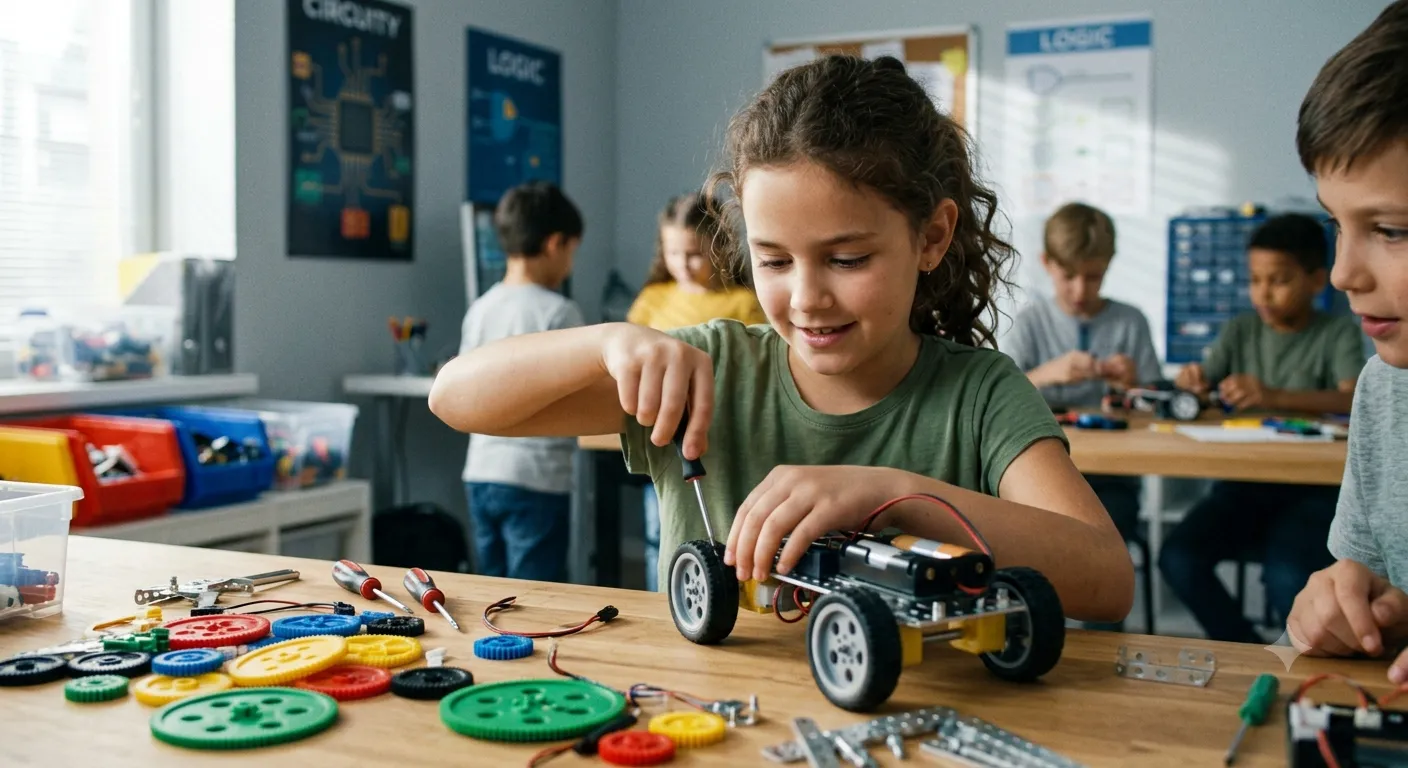
Robotics improves math skills not by turning every robotics session into a traditional math class, but by giving mathematical thinking a purpose.
At OBotz, children can explore robotics and coding through structured, hands-on challenges that encourage them to think, build, test, and improve.
Your child may not think of themselves as a “math kid” today. Give them a different way to experience numbers, patterns, logic, and problem-solving, and they may discover abilities they didn't realize they had.
Ready to see how your child responds to hands-on STEM learning? Book an OBotz experience and let them build, code, experiment, and discover what they can do.
Yes. Robotics can give children a practical way to use concepts such as measurement, angles, patterns, estimation, and logic, helping abstract ideas feel more meaningful.
Robotics encourages children to apply mathematical thinking while programming movement, measuring distances, adjusting values, identifying patterns, and troubleshooting projects.
Try robotics projects, coding games, building challenges, measurement activities, puzzles, and real-world tasks where math helps the child achieve a visible goal.
Robotics may help change how a child experiences math by moving the focus away from worksheets and toward building, experimentation, and problem-solving.
Coding can reinforce mathematical thinking through patterns, logic, sequencing, variables, and problem-solving, although it should complement rather than replace direct math instruction.