How Simple Robotics Toys Teach Cause and Effect to Young Children

In the eyes of a toddler, the world is a series of magical mysteries. They push a button, and a light flashes; they pull a lever, and a bell rings. This is the very foundation of logical reasoning.
When a child presses a button and a robot moves, lights up, or changes direction, they begin to understand how their choices influence outcomes. This early connection builds the foundation for problem-solving, STEM confidence, and independent thinking.
As we move further into the digital age, robotics toys for kids have become the ultimate laboratory for exploring these relationships. By transforming abstract concepts into tangible "if-then" scenarios, we at OBotz use these toys to turn curious kids into little scientists through cause-and-effect learning.
This blog is your roadmap to using early robotics to fuel that spark. We'll show you how hands-on play can transform everyday curiosity into a lifelong knack for innovation while giving your little one a head start in understanding the technology that’s all around them.
At its core, cause and effect is the understanding that one event (the cause) makes another event happen (the effect). While traditional wooden blocks teach gravity, early robotics toys introduce conditional logic.
When a child interacts with a robot, they learn three critical pillars of logic:
Intentionality: "I am the one making this happen; my input has value."
Predictability: "If I press the green arrow, the robot always moves forward. The rules don't change."
Error Correction: "The robot hit the wall because I didn't tell it to turn. I can fix this."
Programs like OBotz specialize in this transition, taking a child's natural curiosity and channelling it into structured robotics challenges that make these logical leaps feel like second nature.
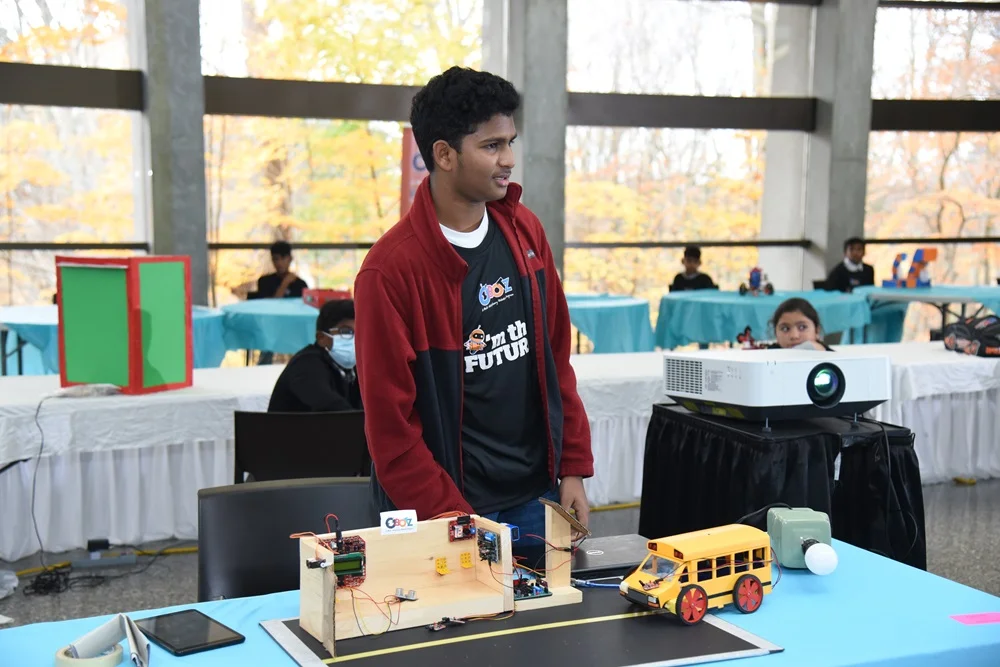
This kind of learning builds the foundation for future STEM skills, including coding, engineering, and logical reasoning.
Unlike passive toys, early robotics toys encourage children to test ideas, observe results, and adjust their approach — a process that strengthens cognitive flexibility that can improve academic performance of children.
Simple robotics tools turn abstract concepts into something children can see and control.
For example, beginner robotics activities may involve:
In structured environments like OBotz robotics program, children learn through guided projects that gradually increase in complexity. This ensures that kids of different learning levels still experience success and progress.
In an age where technology is integrated into nearly every aspect of our lives, the importance of robotics and coding for kids has increased.
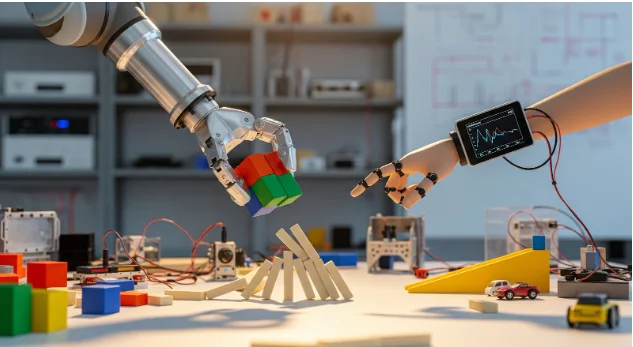
Here’s how robotics toys naturally introduce cause-and-effect concepts:
Children program a robot to move forward or turn. They quickly learn that changing the command changes the result.
Robots that respond to sound or touch help children understand input and output relationships.
When kids assemble simple machines, they observe how structure affects performance, a key engineering mindset.
At OBotz, our hands-on activities are designed to combine these elements, allowing children to experiment safely while developing early STEM confidence.
Toy Examples: From Buttons to Blocks
You don't need a screen to get started with robotics toys for kids. Many of the most effective tools are "unplugged," focusing purely on tactile interaction:
|
Toy Type |
Action (The Cause) |
Result (The Effect) |
|
Directional Robots |
Pressing physical arrows on the robot's back. |
The robot executes a sequence of movements in space. |
|
Coding Blocks |
Snapping modular blocks together (e.g., "Sound" + "Light"). |
The robot performs specific sensory outputs based on the physical order. |
|
Sensor-Based Bots |
Placing a hand or an obstacle in front of the robot. |
The robot stops, spins, or changes direction automatically. |
Research shows that hands-on STEM learning strengthens multiple areas of cognitive development:
Programs like OBotz train children to think systematically. By seeing cause and effect in action, children develop confidence in solving challenges independently.
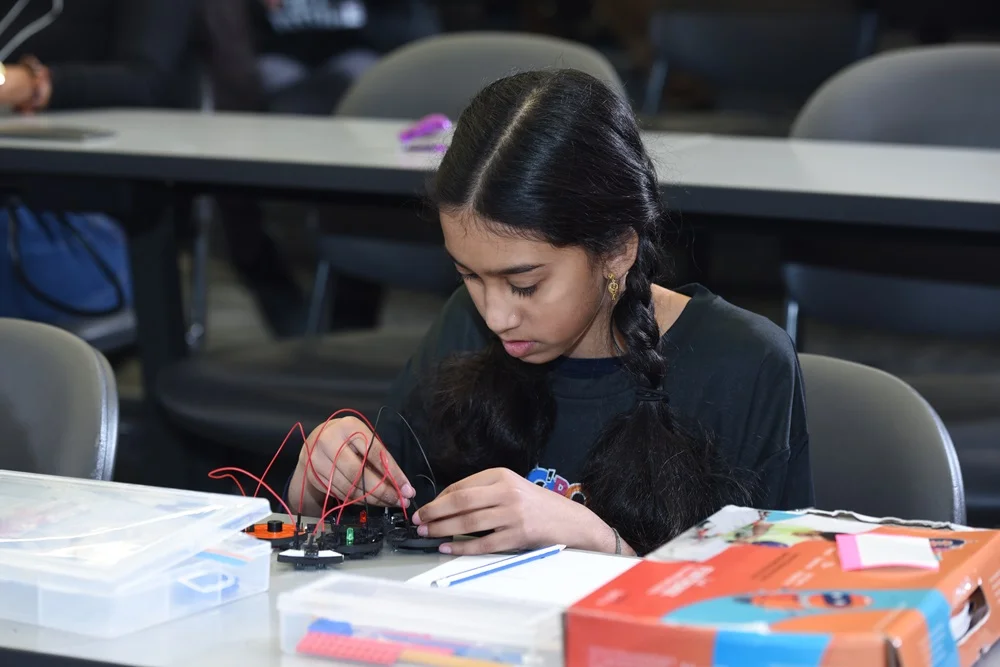
While many toys introduce basic robotics concepts, structured programs provide something more valuable: progression.
OBotz uses 7 level-based learning where children move from simple mechanical models to more advanced logic and programming. This gradual structure helps children build skills step by step instead of feeling overwhelmed.
For parents looking for meaningful STEM enrichment, structured robotics learning ensures that curiosity turns into real cognitive growth.
Are You Ready to Spark Your Child's Innovation?
At OBotz, we turn playtime into a powerful learning experience that builds confidence, logic, and problem-solving skills.
[Book a Trial Class with OBotz Today] and watch your child discover the magic of robotics!
If your child can follow a simple two-step instruction (e.g., "Pick up the toy and put it in the box"), they are likely ready for basic directional robotics. Most kits and early robotics programs are designed for ages 3 to 6.
Not necessarily! In fact, for younger children, "screen-free" robotics are often better. They use physical tiles, color cards, or built-in buttons to teach cause and effect learning without the distraction of a screen.
When a child gives a command (the cause), and the robot moves or lights up (the effect), they learn that their specific actions create predictable outcomes.
Children can start as early as the toddler years with "unplugged" toys that use physical buttons and sensors to introduce basic logic without needing a screen.
Beyond STEM skills, robotics strengthens logical reasoning, spatial awareness, problem-solving, and the ability to correct errors through trial and error.
No. Many beginner tools use tactile blocks or directional arrows, allowing children to understand "if-then" sequences before they ever learn to write code.
While toys provide basic fun, OBotz offers a 7-level curriculum that ensures children progress from simple mechanical models to advanced programming without feeling overwhelmed.