Inside the 7-Level Robotics Program: What Each Level Teaches

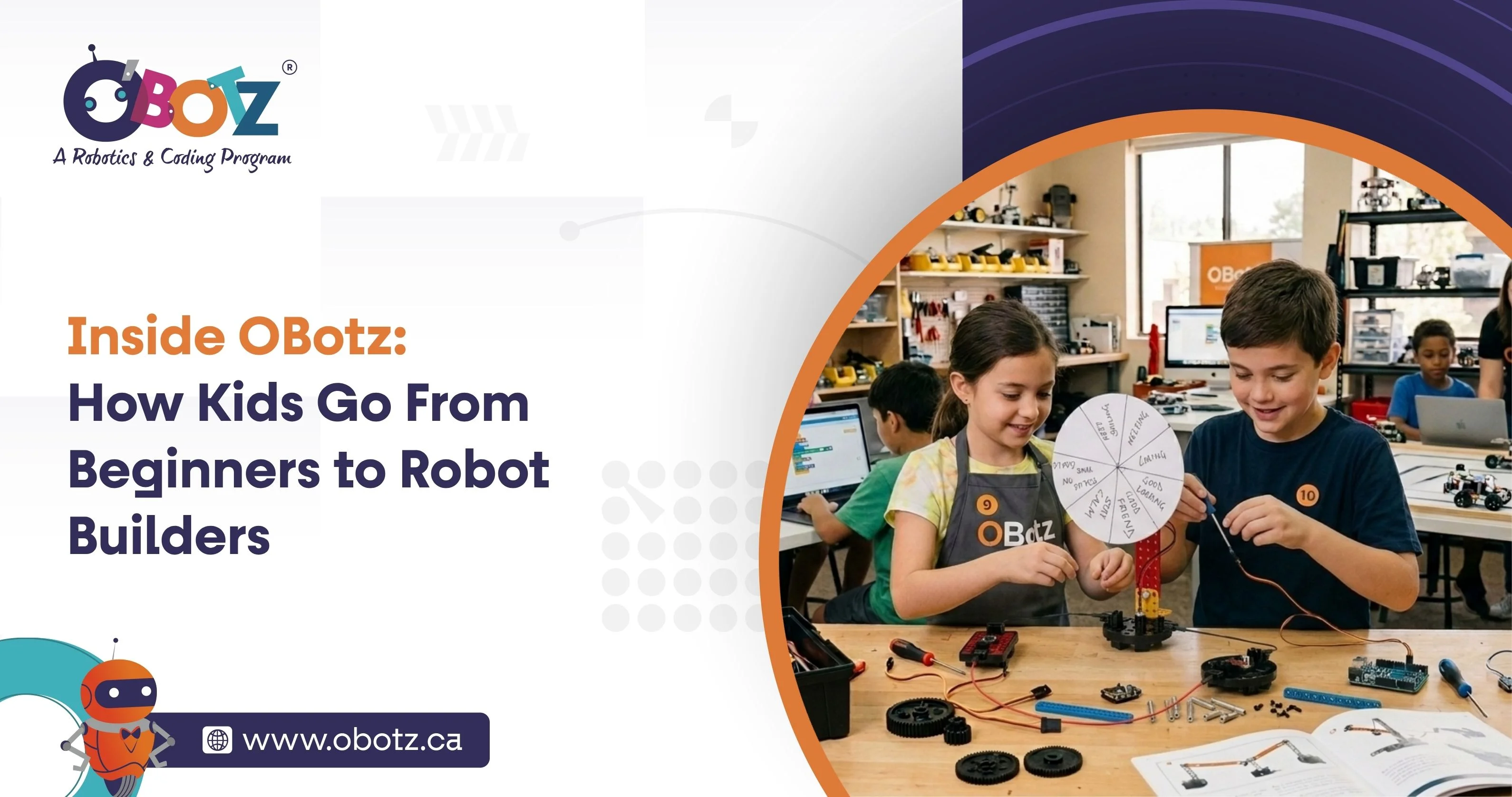
Robotics can look incredibly exciting from the outside. Kids build machines, write code, work with sensors, and eventually create robots that can respond to the world around them. But for a child to truly understand robotics, learning needs to happen in the right order.
That is the idea behind OBotz’s robotics and coding programs for kids. Instead of introducing children to disconnected projects, OBotz follows a structured learning path where concepts become progressively more advanced.
For children aged 8+, the 7 level robotics program moves from electronics and machine design to visual programming, embedded coding, and eventually walking robots and humanoids.
So, what happens at every stage? Let’s go inside the program.
Imagine asking a child to program a humanoid before they understand circuits, motors, sensors, or basic logic. It may look impressive, but much of the actual learning would be missing.
A structured robotics program solves this by creating a clear robotics learning path. Children first understand how electronic components work, then explore machines and movement, and later learn how programming can control hardware.
This progression is what makes a robotics curriculum for kids more than a collection of entertaining projects. Each level prepares students for concepts they will encounter next.
Parents who want the complete program overview can explore the 7 levels of the OBotz robotics program.
The journey begins with Funtronix, or “Fun with Electronics.”
At this stage, students explore foundational concepts such as series and parallel circuits, logic gates, sensors, motors, and STEM principles. They complete experiments, observations, applications, projects, activities, and challenges.
Projects can include an automated street light, continuity tester, Wheel of Fortune, and even a wire-frame game designed by the students themselves.
The goal is simple: before children control robots, they need to understand what makes electronic systems work.
Once children understand basic electronics, they move into machine design.
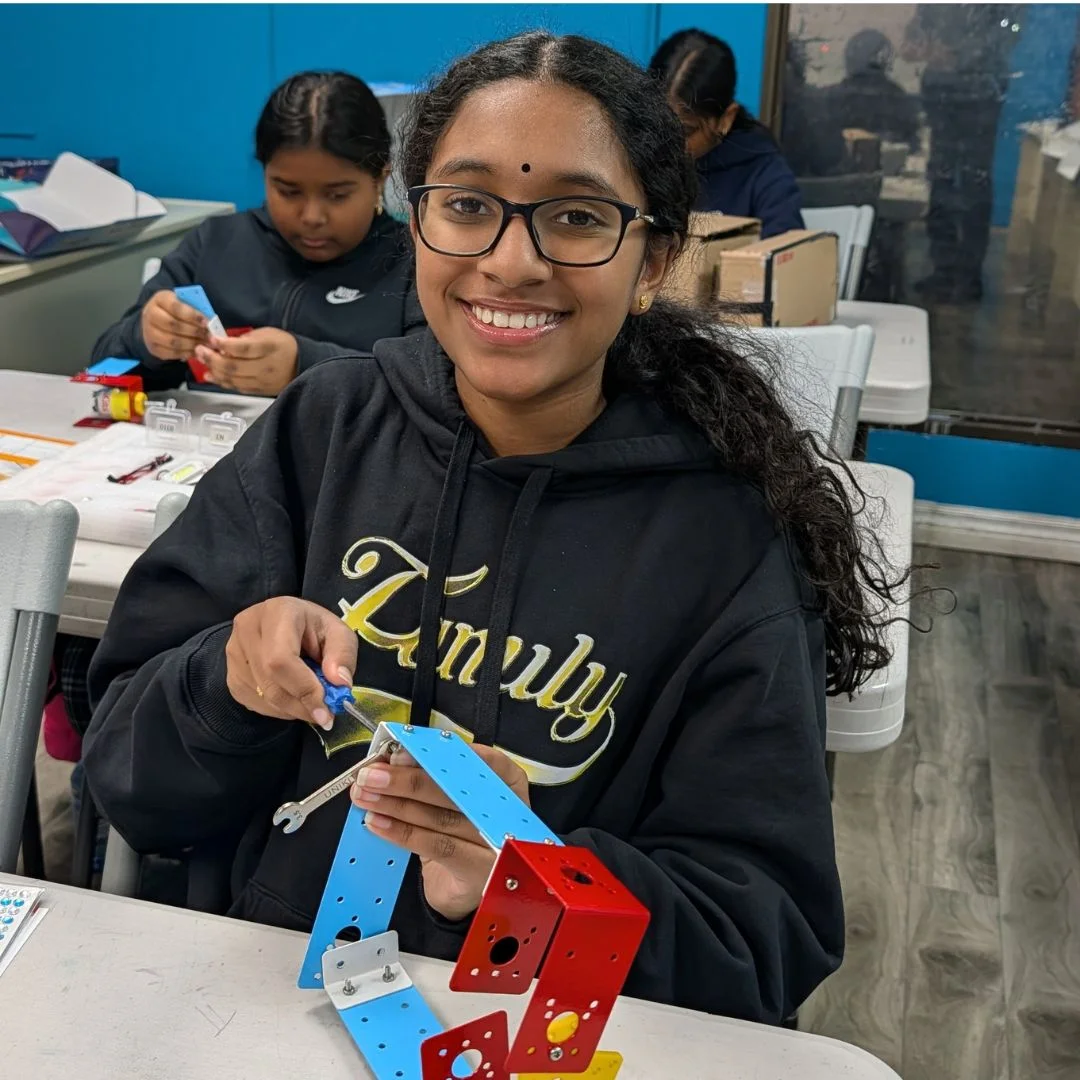
Robotrix introduces drive systems, simple and complex machines, computational mathematics, and STEM concepts. Students build projects such as an industrial crane, ATM prototype, Robo-Soccer machine, and Robo-War robot.
This stage helps children connect mechanical design with real-world functions. They are no longer simply looking at machines. They are beginning to understand why a machine moves or behaves in a particular way.
Level 3 expands the child’s understanding of electronics through wireless systems and solar technology.
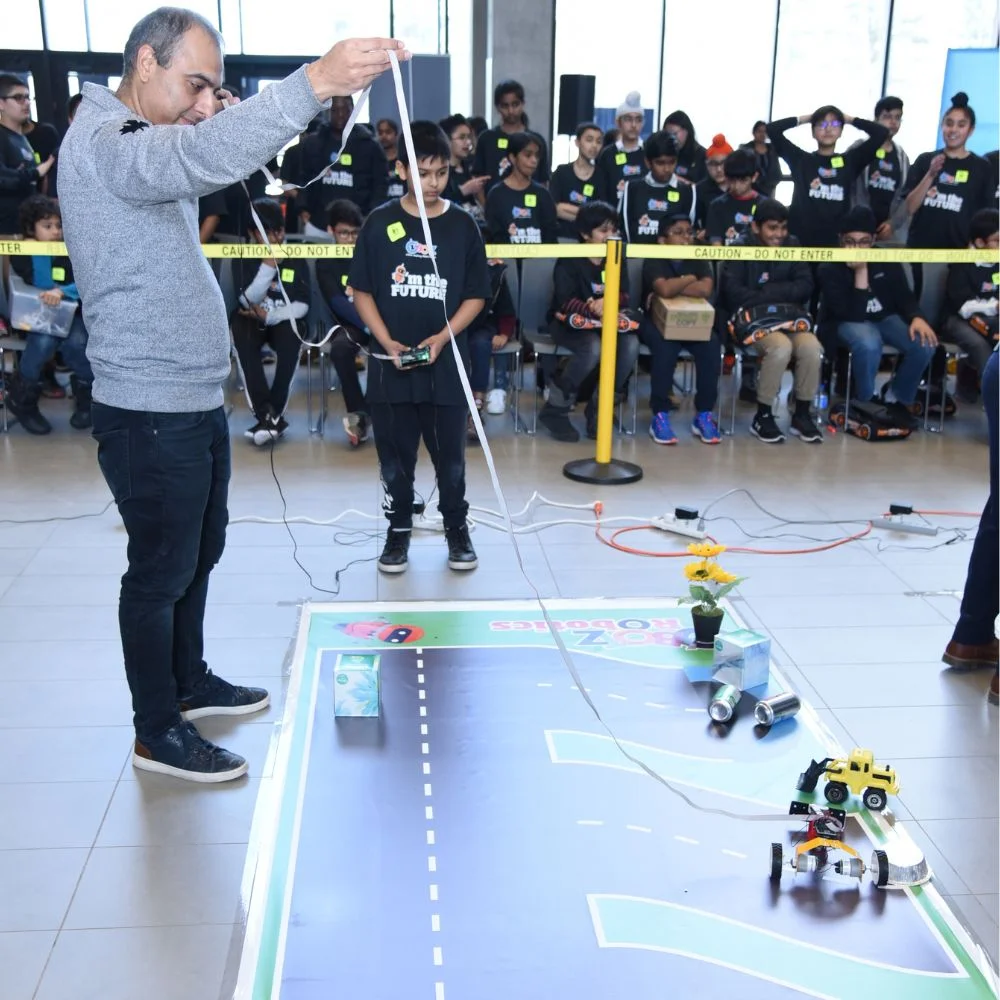
Students explore wireless circuits, solar panels, encoding and decoding, logic building, and complex circuits. Projects include a solar mobile charger, obstacle-avoiding robot, and wall-following robot.
At this point in the levels of robotics learning, children start seeing how several concepts can work together inside one functional system.
For younger children who are not yet ready for the main seven levels, the OBotz Nano Robotics Program for kids aged 6+ provides a more age-appropriate introduction to motors, sensors, motion, mechanical parts, and hands-on robot building.
Level 4 marks an important transition: children begin using visual, block-based programming.
RoboVi introduces control loops, logic gates, IR sensors, servo motors, logic building, and algorithm development. Children can create projects and applications such as a stopwatch, clap-based fan, traffic light controller, human counter, and smart parking system.
Block-based programming helps make abstract coding logic visual and approachable. It allows students to focus on how instructions control a system before moving into more advanced programming.
Parents interested in how programming complements robotics can also explore the OBotz coding program for kids.
By Level 5, students make a significant jump from visual programming to Embedded C programming.
C-Robo introduces technologies such as ultrasonic sensors, Bluetooth, LCD displays, and accelerometer sensors. Students work on applications including a distance calculator, scrolling LCD display, mobile-controlled robot, gesture-controlled application, and maze-solving game.
This is where a beginner to advanced robotics pathway becomes especially visible. Concepts learned earlier about sensors, logic, electronics, and programming begin coming together in more sophisticated applications.
At Level 6, children move deeper into embedded systems using Embedded C programming.
They learn how components such as joysticks, stepper motors, seven-segment displays, and thermistors work. Students also begin writing more complex code and creating functions.
Applications include robotic arm control using a joystick, an electronic password locker, thermostat controller, and calculator program.
Instead of only asking, “Can I make this robot work?”, students begin thinking about how different hardware and software elements can be integrated to create a complete system.
The final level brings together much of what students have learned throughout the robotics course levels.
Walk OBotz focuses on walking robots and humanoids. Students can work with two-legged humanoid robots, exercise and dance movements, and four-legged robots designed to imitate animal movement.
They learn about humanoid stability, directional movement, and programming robots to perform coordinated actions.
What began with circuits in Level 1 has now progressed to machines capable of complex physical movement.
Children naturally love the excitement of making something move, light up, or respond. But a good robotics course for kids should answer a bigger question: does the child understand why it works?
That is where progressive learning matters.
Rather than jumping between unrelated projects, every stage should strengthen knowledge needed later. Electronics supports machine design. Machine design supports robotics. Logic supports programming. Programming and hardware knowledge eventually support embedded systems and humanoids.
OBotz describes its approach as level-based learning designed to help children build upon previous concepts rather than complete random weekly activities. Parents comparing different options can read more about OBotz vs other robotics programs and curriculum approaches.
The program is designed for sustained skill development rather than a short-term introduction.
According to OBotz, Levels 1 to 3 each run for approximately three months, while Levels 4 to 7 each run for approximately four months. Students typically attend one two-hour session per week.
That longer progression gives children time to practise, experiment, make mistakes, solve problems, and gradually work toward increasingly sophisticated robotics concepts.
The most interesting part of a well-designed robotics program is not the final robot. It is everything the child learns while getting there.
Through its seven progressive stages, OBotz takes students from foundational electronics and machine design to wireless technology, programming, embedded systems, and humanoid robotics. Along the way, children repeatedly build, test, observe, troubleshoot, and apply STEM concepts.
That is the purpose behind the structured learning approach at OBotz: helping children move beyond simply using technology and start understanding how it works.
Book an OBotz experience session and give your child an opportunity to explore hands-on robotics and discover where their curiosity can take them.
Each level introduces progressively more advanced concepts, beginning with electronics and machine design before moving into wireless systems, programming, embedded systems, and humanoid robotic
OBotz follows seven progressive levels: Funtronix, Robotrix, Solarix, RoboVi, C-Robo, Embetrix, and Walk OBotz, with each stage building on skills developed earlier.
OBotz positions its main 7-level program for children aged 8+, while its Nano Robotics program provides an introductory pathway for children aged 6+.
OBotz states that Levels 1–3 take about three months each and Levels 4–7 about four months each, with classes generally held once a week for two hours.
Children explore STEM through hands-on projects while learning electronics, machine design, sensors, programming, embedded systems, robotics, logic, and problem-solving.