What to Do If Your Child Is Already Bored By Week 2 of School

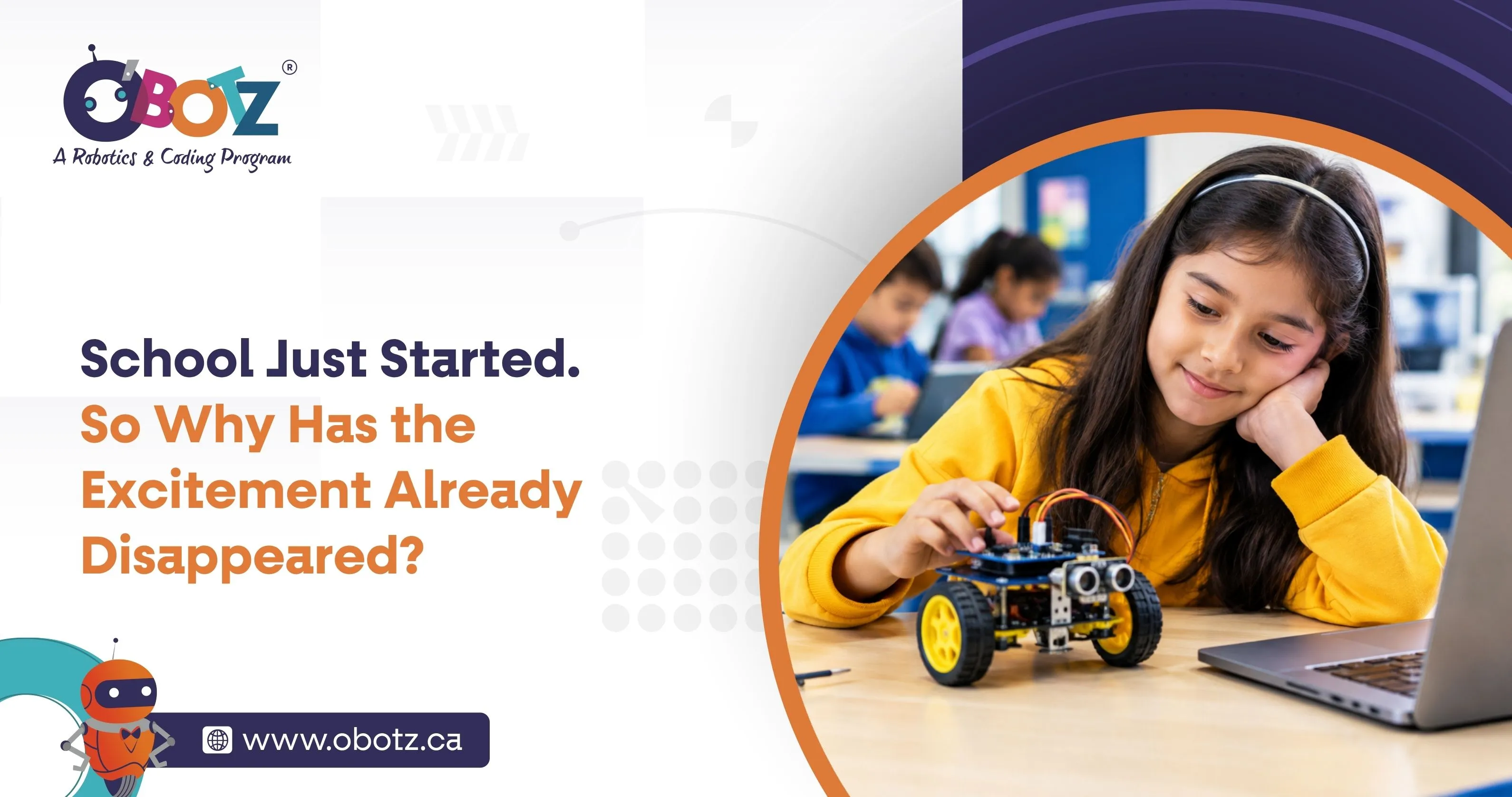
The new notebooks have barely been written in. The “back-to-school excitement” hasn’t even had time to wear off. Yet, your child walks through the door and announces:
“School is boring.”
Already?
For a parent, that can be frustrating and a little concerning. You may wonder whether your child is struggling to adjust, not paying enough attention, or simply being difficult about going back to school.
But a child bored at school may be telling you something worth listening to.
Sometimes, “boring” means the work feels repetitive. Sometimes, the child wants more challenge. And sometimes, sitting, listening, and completing worksheets simply does not engage them in the same way as creating, experimenting, and figuring things out for themselves.
The solution isn't necessarily more schoolwork after school. It may be giving your child a completely different way to use their brain.
At OBotz, where kids explore robotics and coding through hands-on learning, children get opportunities to build, program, experiment, troubleshoot, and solve problems. That kind of experience can give curious minds somewhere new to direct all that unused energy.
So, if “my child is bored in class” has already become a familiar sentence in your home, here’s what you can do.
When children say something is boring, adults often respond with, “Well, not everything can be fun.”
Fair enough. But before ending the conversation there, find out what “boring” actually means.
Ask your child:
“What part of school feels boring?”
“Is the work too easy or too difficult?”
“What do you wish you could do more of?”
“What was the last thing you learned that made you really curious?”
You might discover that your child enjoys math but finds repetitive exercises tiring. Or perhaps they love science but wish they could actually build or experiment with something.
An under-stimulated child does not always need a harder textbook. Sometimes, they need more opportunities to explore an idea independently.
Your child says school is boring.
So, should you immediately add tutoring, practice sheets, or another hour of study?
Not necessarily.
If boredom is coming from repetition or lack of stimulation, adding more of the same can make learning feel like an even bigger chore.
Instead, look for activities for unmotivated students that feel noticeably different from their regular school day.
For example, instead of solving another set of questions on paper, what if your child had to figure out why a robot wasn't moving correctly? Now there is a problem with an outcome they can actually see.
If motivation is becoming a struggle, these ideas on how parents can encourage children to learn STEM can help you approach the problem without turning learning into another daily battle.
Some children learn best when learning stops being something they only hear or read about.
Give them something to build and suddenly the questions begin.
“Why isn't this working?”
“What happens if I change this?”
“Can I make it move faster?”
“Wait, can I try that again?”
That last question is particularly valuable because the child is choosing to continue.
Hands-on learning activities such as robotics, coding projects, science experiments, puzzles, building challenges, crafts, or simple engineering activities can encourage children to test their own ideas.
This is also why robotics can make after-school learning more engaging. Children are not simply being given answers. They have opportunities to apply ideas, see what happens, and make adjustments when something does not work.
When children complain of boredom, handing them a screen is an easy solution.
It works, too. At least temporarily.
But keeping kids engaged after school and keeping them entertained are two different things.
Entertainment occupies their attention. A good challenge asks them to use it.
Try introducing screen-free activities for kids where there isn't one obvious answer. Ask them to design the tallest structure they can with limited materials. Let them take apart an old gadget under supervision. Give them a logic puzzle. Ask them to invent something that solves an everyday problem.
The goal is not to schedule every minute of their afternoon. It is to create enough space for curiosity to become action.
If STEM seems like something your child “isn't interested in,” it may simply be a matter of how it is introduced. Explore ways to get kids interested in STEM naturally without making it feel like another subject they have to study.
Think about your child's day.
They have already spent several hours listening to instructions, completing assignments, and following a timetable. An after-school program that simply repeats that experience may not solve the boredom problem.
The best after-school programs for bored kids should give children opportunities to participate rather than simply listen.
Robotics is one option because a single project can involve creativity, coding, electronics, logical thinking, design, experimentation, and problem-solving.
For a bright kid bored in class, that variety can offer something important: a new challenge to work toward.
Parents exploring enrichment programs for kids can use the OBotz Centre Finder to locate robotics programs available in their area. This can also help families searching online for after-school enrichment programs near me, STEM classes for kids in Canada, robotics classes for bored kids in Ontario, or kids enrichment programs in Mississauga & Toronto.
You don't need a complicated schedule to make learning more interesting at home.
Try creating a weekly “curiosity hour.”
For one hour, your child chooses what they want to investigate, build, or figure out.
Maybe they want to build a miniature bridge.
Maybe they want to understand how a remote control works.
Maybe they want to code something, make a paper circuit, solve a puzzle, or invent a ridiculous machine that feeds the dog automatically.
Don't worry too much about whether the activity looks “educational.”
Instead, ask:
“What are you trying to figure out?”
That question puts your child in charge of the learning process.
And when children begin asking their own questions, learning starts feeling less like an obligation and more like discovery.
Occasional boredom is normal. Every child will encounter lessons, assignments, and subjects they don't find fascinating.
But if “school is boring” turns into persistent frustration, withdrawal, refusal to participate, or a noticeable change in your child's attitude toward learning, speak with their teacher.
Ask what they are noticing in class.
Is your child finishing work unusually quickly? Are they struggling quietly? Are they distracted? Do they participate more during certain types of activities?
Understanding the pattern can help you decide whether your child needs additional academic support, greater challenge, or simply a different outlet outside school.
If your child is bored by week two of school, your first goal should not be to eliminate their boredom.
Make them understand it.
Your child may need time to settle into a new routine. They may need more challenges. Or they may simply need opportunities outside school where learning feels more active, creative, and personally meaningful.
The right extracurricular experience can complement what children learn at school without becoming another pile of homework.
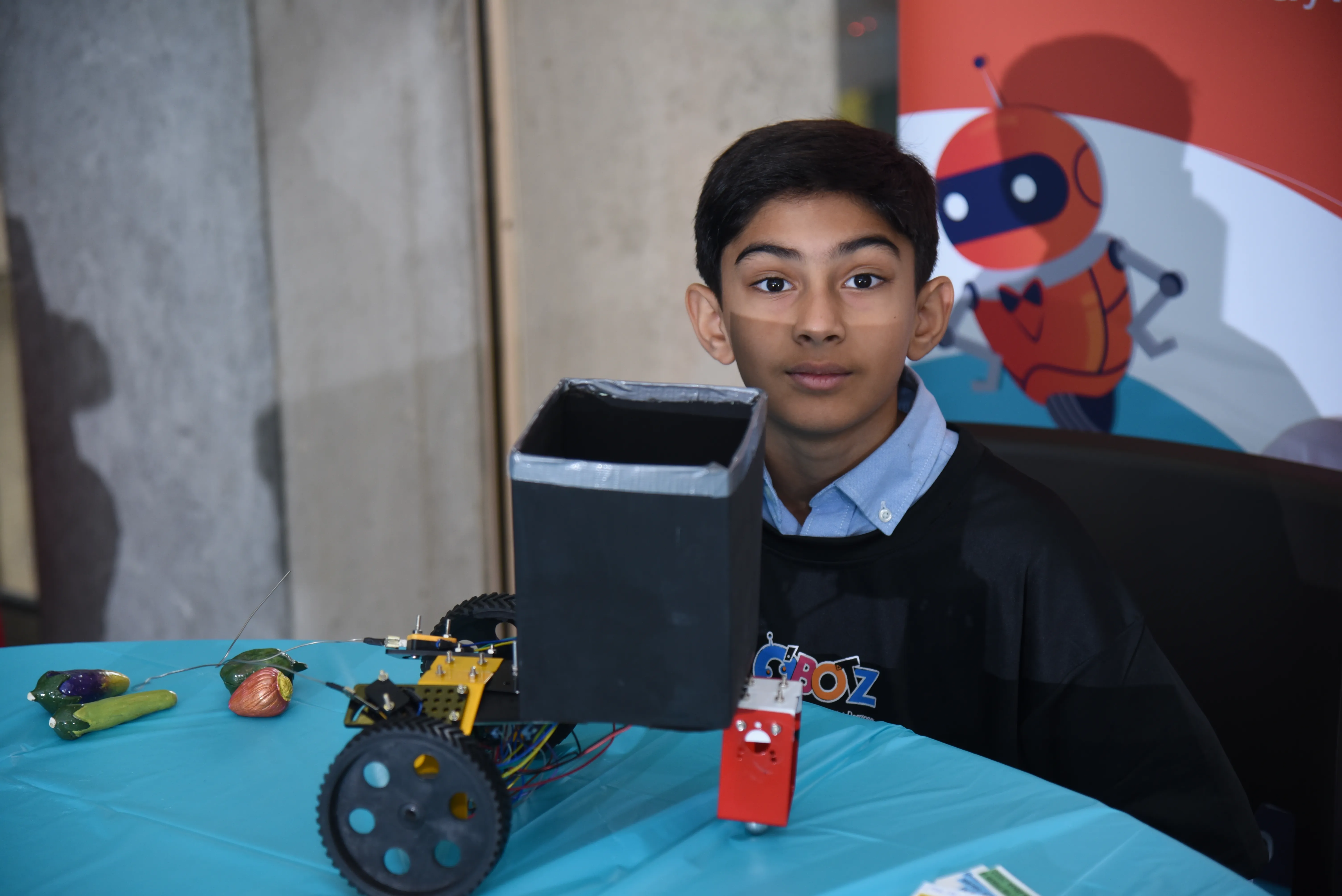
Through OBotz robotics and coding programs, children can explore STEM by building, coding, experimenting, solving problems, and learning through practical experiences.
Book an OBotz experience today and let them discover what happens when learning becomes something they can build, test, and create.
Start by asking what specifically feels boring: the pace, difficulty, repetition, or learning format. Then speak with their teacher and introduce activities that provide a different kind of challenge rather than automatically adding more schoolwork.
Look for activities that require active participation, such as robotics, coding, sports, music, science experiments, building projects, art, or strategy games. The best option will depend on what naturally holds your child’s attention.
Give them open-ended problems, projects, books, experiments, and opportunities to explore topics beyond their regular curriculum. Focus on depth, creativity, and problem-solving rather than simply giving them a larger quantity of work.
Robotics may appeal to children who enjoy hands-on challenges because they can build, test, program, troubleshoot, and see tangible outcomes from their work. OBotz programs, for example, incorporate practical projects and progressive robotics challenges rather than relying only on theoretical instruction.
Consider robotics, coding, science projects, chess, music, art, sports, maker activities, or engineering challenges. Parents looking for kids enrichment programs in Mississauga & Toronto can also explore local STEM and robotics programs that match their child’s age and interests.