What Happens to Kids Who Don't Learn Coding Before Age 12?

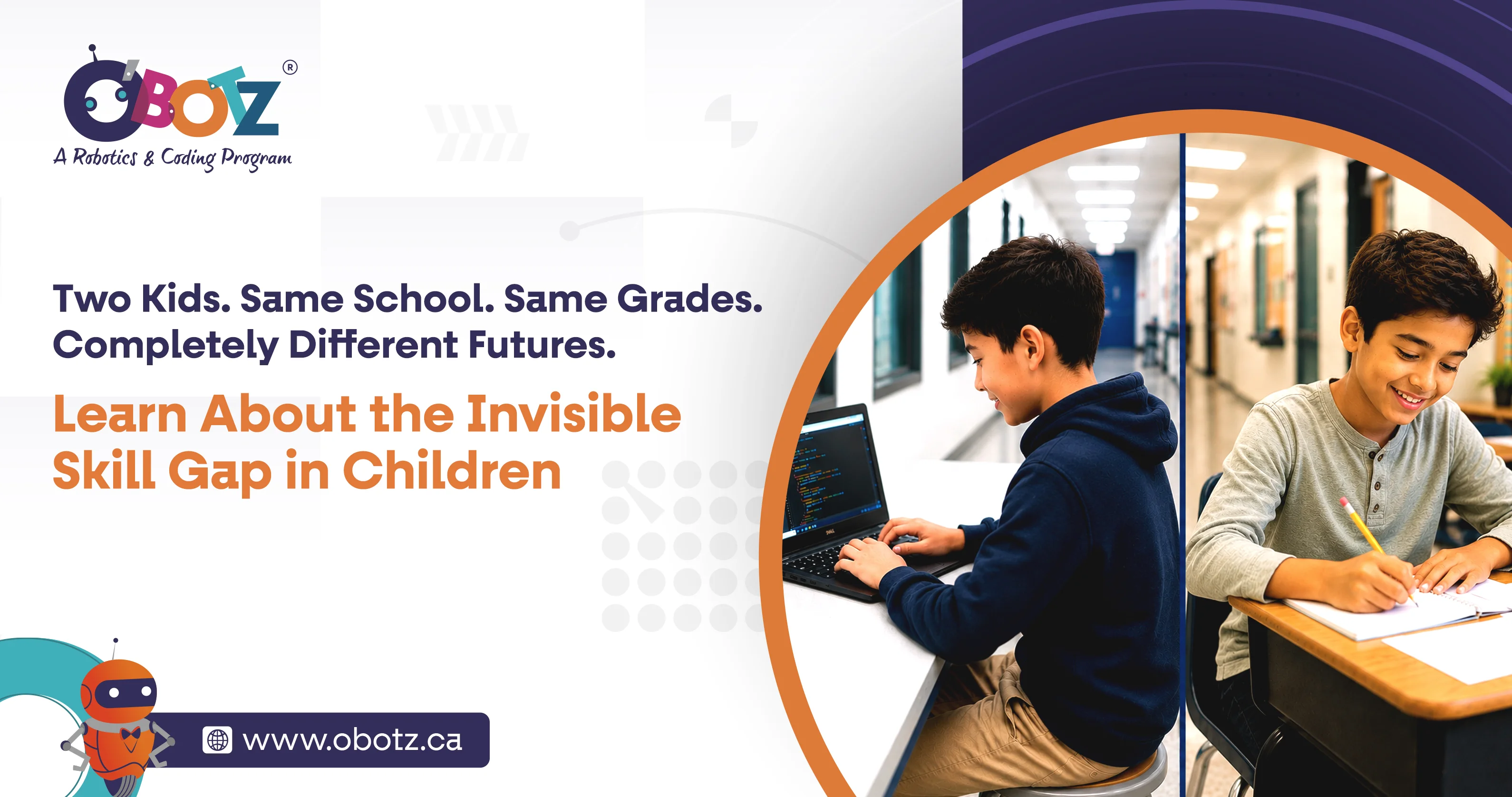
Children today grow up surrounded by technology. They can swipe screens before they can write full sentences. They know YouTube, apps, games, and voice assistants almost instinctively. But there’s a massive difference between consuming technology and understanding how it works.

That’s where coding changes everything.
At OBotz, educators are seeing a growing gap between children who are introduced to coding and robotics early and those who are not. The difference isn’t just technical. It affects confidence, curiosity, adaptability, and even how children approach problems.
The conversation is no longer about whether coding is important. It’s about when children should begin.
And increasingly, experts believe the answer is: before age 12.
Childhood brain development happens rapidly during the early years. Between ages 5 and 12, the brain forms neural connections at an incredible rate. This period plays a major role in creativity, memory, logical reasoning, and adaptability.
This is why educators discuss the importance of the coding age window kids experience during elementary school years. Learning coding early strengthens structured thinking while children are naturally more curious and less afraid of making mistakes.
The earlier children engage with logical systems, sequencing, patterns, and experimentation, the easier it becomes for them to absorb advanced digital concepts later.
That’s why many Canadian educators emphasize coding before 12 importance as part of future-ready learning.
Parents often underestimate how quickly the gap widens between kids who build technology and kids who only use it.
The kids not learning coding consequences are rarely visible immediately.
A child who misses coding at age 8 may still perform well academically. But over time, certain differences begin to emerge:
Children exposed to coding early often become more comfortable with trial-and-error learning. They learn that mistakes are part of the process.
Children without that exposure may become passive technology users instead of active creators.
That’s where the late start coding disadvantage begins to show.
Many parents still assume coding is only useful if a child wants a software engineering career.

That’s outdated thinking.
Coding today teaches:
These are transferable skills across nearly every industry.
Whether a child becomes a doctor, entrepreneur, architect, designer, scientist, or business leader, technology literacy will shape their future.
This is why tech literacy early childhood education is becoming increasingly important across Canada.
In many ways, coding is becoming the new literacy.
One of the biggest hidden effects of missing early STEM exposure Canada programs is confidence.
Children who explore robotics and coding early learn how to:
This creates confidence that extends far beyond computers.
A child who builds a functioning robot at age 9 begins to see difficult problems differently. They stop fearing complexity.
That mindset becomes incredibly valuable during teenage years.
Parents can better understand this developmental phase through why kids learn faster through robotics and coding.
The modern digital divide children face is no longer just about internet access.
It’s about capability.
Some children learn:
Others remain limited to entertainment-based screen use.
Over time, this creates major educational and career differences.
Children who understand technology become future creators. Children without exposure often remain dependent users.
That divide is expected to widen dramatically as AI and automation become integrated into education and careers across Canada.
Young children naturally experiment without fear.
They press buttons. They test ideas. They try again.
But as children grow older, fear of failure often increases. Curiosity begins declining when environments become overly academic or performance-focused.
That’s why early exposure matters so much.
Programs focused on creativity and experimentation help children maintain curiosity during crucial developmental years.
Parents concerned about this shift should explore how curiosity declines with age and how parents can keep it alive.
The earlier children associate technology with creativity rather than pressure, the stronger their long-term learning relationship becomes.
Research increasingly connects coding activities with stronger executive functioning skills.
The relationship between brain development coding age and structured problem-solving is becoming a major discussion in education.
When children code, they practice:
These mental processes strengthen cognitive flexibility.
This is part of the reason experts discuss the early coding advantage Canada educators are seeing among younger learners exposed to robotics and STEM activities.
Coding isn’t just teaching technology. It’s training the brain to think differently.
One surprising truth about coding education is this:
Children who begin early usually learn advanced concepts faster later.
That’s because foundational thinking patterns are already established.
By middle school, children with prior exposure already understand:
They aren’t overwhelmed by technical vocabulary because the concepts already feel familiar.
This is one reason parents frequently search for topics like what happens if kids don't learn coding early in Canada.
The concern isn’t about immediate failure. It’s about long-term adaptability.
Parents interested in understanding the best age for learning can explore the ideal age to start coding for children.
The good news is this:
Children who start later can absolutely learn coding successfully.
The problem is that older children often face:
This is why age matters for learning robotics. It’s not that older children cannot learn. It’s that younger brains absorb exploratory learning more naturally.
For older children, the key is rebuilding curiosity first.
Parents can support this process using strategies and proven tips that instill curiosity in teenagers.
The future economy will increasingly value:
Children who develop these abilities early may have a significant advantage later in life.
This is why early coding advantage children Canada discussions are becoming more common among educators and parents.
Coding isn’t replacing traditional education.
It’s becoming part of foundational learning itself.
The question is no longer whether children should learn coding.
The real question is whether they can afford not to.
Coding classes are not only about screens or software.
They teach children how to:
That mindset shapes academic performance, leadership ability, and future career readiness.
And the earlier that foundation begins, the more naturally it develops.
Children don’t need to become programmers by age 12.
But they do need opportunities to explore logic, creativity, robotics, and structured problem-solving while their curiosity is strongest.
At OBotz, coding and robotics programs are designed to help children build those future-ready skills through hands-on learning experiences that feel engaging, creative, and exciting.
The best time to introduce coding isn’t “someday.” It’s during the years when curiosity, creativity, and confidence are developing the fastest.
Help your child explore robotics, coding, and future-ready STEM skills through hands-on experiences designed for young learners.
No, it’s never too late to begin coding. Older children can still become highly skilled learners, especially with the right guidance and hands-on projects. However, younger children often absorb coding concepts more naturally because of stronger curiosity and cognitive flexibility.
Children who miss early coding exposure may develop lower confidence with technology, weaker computational thinking skills, and less comfort with experimentation. Over time, this can contribute to a wider digital skills gap compared to peers exposed to robotics and STEM learning earlier.
Neuroscience suggests that ages 5–12 are especially important for building neural pathways related to logic, memory, creativity, and problem-solving. During this stage, children learn through experimentation more naturally, making coding concepts easier to absorb and apply.
Early robotics programs often strengthen problem-solving, logical reasoning, focus, and collaboration skills. Many Canadian educators also notice improved confidence in STEM subjects because robotics combines creativity with practical learning experiences.
Early exposure doesn’t guarantee a tech career, but it often increases comfort and confidence around technology-related subjects. Children introduced to coding younger are generally more open to exploring STEM pathways later in school and university.
Parents can begin with beginner-friendly robotics or coding programs that focus on creativity instead of pressure. Encouraging project-based learning, curiosity, and experimentation helps older children rebuild confidence and develop digital skills gradually.