New School Year, New Skills: Why STEM Should Be Part of Your Child's Fall Routine

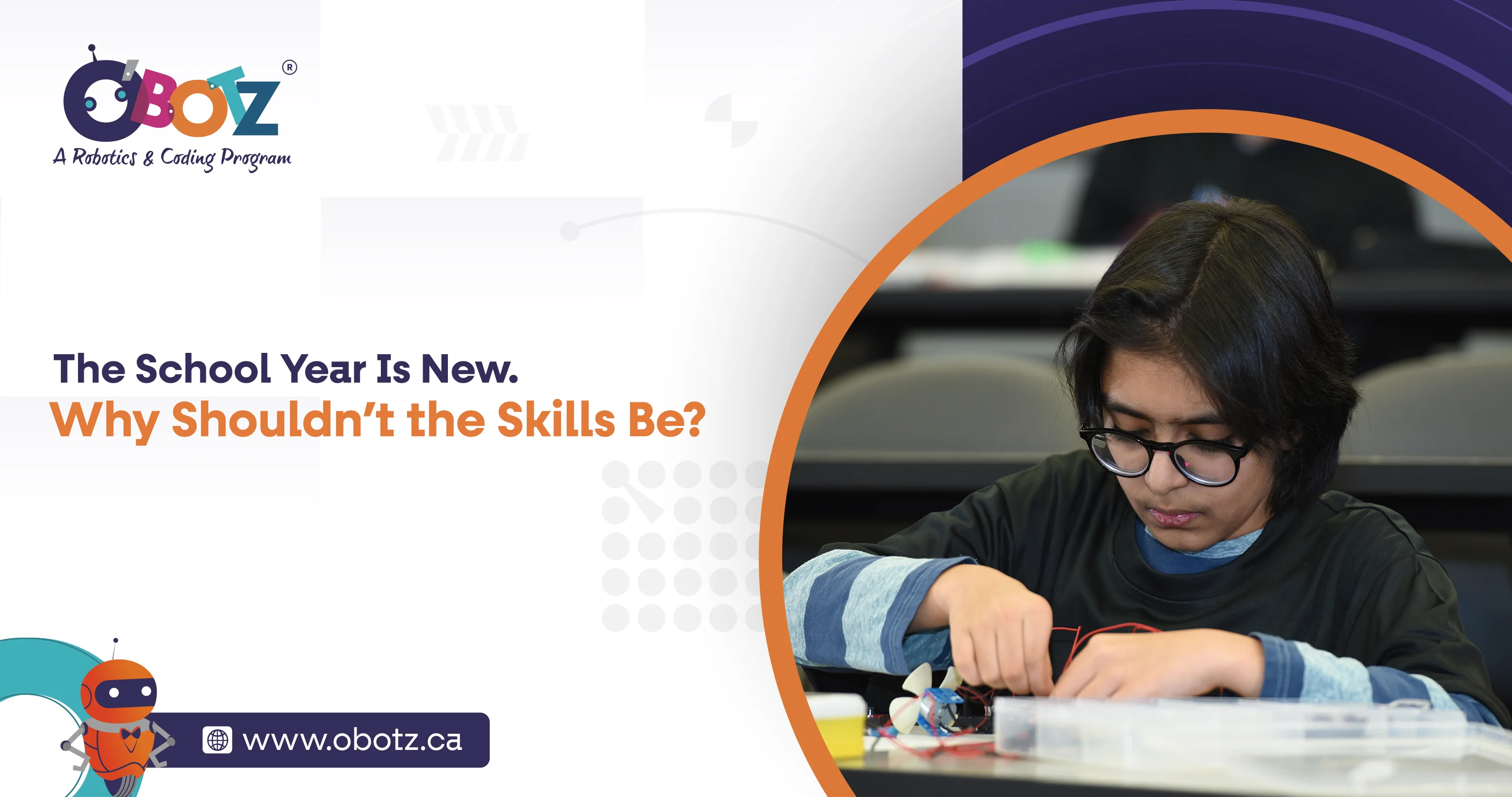
The start of a new school year is more than a return to classrooms. It is an opportunity to help children develop habits, interests, and skills that can support them throughout the year. While academics naturally take priority, the right after-school activities can make learning more engaging and practical.
That is where STEM comes in.
A thoughtfully planned STEM after-school fall routine can give children opportunities to experiment, build, code, solve problems, and learn from mistakes. At OBotz, STEM learning goes beyond worksheets by encouraging children to explore how ideas work in the real world.
For parents wondering why should STEM be part of my child's weekly routine, the answer is simple: regular exposure can turn important skills such as creativity, logical thinking, collaboration, and problem-solving into everyday habits.

September often brings a predictable pattern: school, homework, dinner, screen time, and bedtime. Adding another activity may seem like a challenge, but STEM does not have to feel like another academic obligation.
The right program can become an enjoyable part of a child's weekly rhythm.
Unlike one-time activities, consistent STEM learning gives children the opportunity to revisit concepts, tackle increasingly challenging projects, and see their skills improve over time. This makes a STEM extracurricular routine particularly valuable during the school year.
For parents planning back-to-school STEM activities, the goal should not be to fill every free hour. Instead, it is about creating a balanced routine where children have space to learn, play, create, and explore.
OBotz also explores this idea in its guide to starting the academic year with STEM, which highlights how STEM can complement a child's regular school experience.
A new school year naturally comes with new expectations. Children may need to manage more complex assignments, work with classmates, communicate ideas, and solve unfamiliar problems.
STEM activities can provide a practical environment for developing these abilities.
When children build a robot that does not work as expected, write code that produces an unexpected result, or design a structure that collapses, they have to think about what went wrong and try again. That process encourages resilience and analytical thinking.
These are examples of new school year skills that can benefit children across subjects—not only science and mathematics.
The importance of these capabilities becomes even clearer as technology continues to influence education and careers. OBotz's discussion of skills kids need in an AI world explores why adaptability, creativity, critical thinking, and technological confidence are increasingly valuable.
Technology already plays a major role in many children's lives. The bigger question is how children interact with it.
There is a significant difference between simply consuming digital content and learning how technology works.
Coding, for example, can introduce children to sequencing, logic, debugging, and structured thinking. Through age-appropriate projects, children can move from asking, "What does this app do?" to asking, "How could I create something like this?"
For families considering robotics and coding fall classes, this shift can make technology more purposeful and educational.
OBotz's coding program for kids offers another example of how coding can be introduced through structured, hands-on learning rather than passive screen use.
STEM does not need to take over a child's calendar to be effective.
A consistent weekly experience can be more practical than occasional intensive activities. When children have a predictable time for STEM, they gradually become familiar with the process of exploring an idea, testing it, making changes, and trying again.
That is the foundation of building STEM habits.
A realistic weekly STEM schedule for kids could involve one structured class alongside time for independent exploration at home. Even simple activities—building with blocks, experimenting with household materials, creating patterns, or solving logic puzzles—can reinforce the mindset introduced in a formal program.
The key is consistency without creating unnecessary pressure.
For many children, robotics provides an especially engaging entry point into STEM because it turns abstract concepts into something they can see and interact with.
A child can design a robot, program its movements, test the result, identify a problem, and modify the solution. In one project, they may encounter elements of engineering, mathematics, coding, creativity, and problem-solving.
This is one reason structured STEM programs for kids fall 2026 can be a useful addition to a school-year routine.
OBotz's seven-level robotics program demonstrates how robotics learning can progress through different levels rather than remaining a one-time introductory experience.
The best way to add STEM to kids' fall schedule approach is to start small.
Parents can begin with one weekly STEM class and observe how their child responds. If the child enjoys robotics, coding, or building projects, additional STEM-inspired activities can be introduced at home.
A balanced routine might look like:
This approach leaves room for sports, music, arts, family time, and unstructured play.
The goal of fall STEM enrollment should not simply be to add another class. It should be to create an enjoyable learning habit that fits naturally into the child's life.

STEM should not necessarily replace sports, music, art, or other extracurricular activities. In fact, a well-rounded routine can benefit from a combination of different experiences.
What makes STEM distinctive is its emphasis on applying knowledge to solve problems and create something.
A robotics project may require a child to plan, build, test, communicate, troubleshoot, and redesign. That combination makes STEM highly experiential.
This is also why the case for STEM learning as an important part of children's development deserves attention from parents planning their children's extracurricular schedules.
The beginning of a school year is often framed around catching up, getting organized, and preparing for the next grade. But it can also be a chance to help children develop skills that aren't always measured through traditional assignments.
Curiosity. Creativity. Persistence. Logical thinking. Collaboration.
These abilities grow through practice.
A consistent STEM routine can give children a space where asking questions is encouraged, mistakes are part of learning, and solutions are discovered rather than simply provided.
As families consider STEM programs for kids fall 2026, the bigger question is not whether children need one more activity. It is whether their weekly routine gives them enough opportunities to create, experiment, and think independently.
OBotz's perspective on how STEM learning can provide a pathway to future skills offers further insight into why these experiences can matter well beyond the school year.
A new school year brings a natural reset. Before calendars become crowded with homework, activities, appointments, and commitments, parents have an opportunity to intentionally design a routine that balances academics with meaningful skill development.
STEM can be part of that balance.
Whether your child is interested in robots, coding, engineering, or simply figuring out how things work, a regular STEM experience can turn curiosity into practice and practice into confidence.
Instead of asking whether there is room for STEM in your child's fall schedule, consider what could happen if STEM became one of the habits that shaped it.
Discover an OBotz learning centre near you and explore how hands-on STEM learning can fit into your child's new school-year routine.
You can also learn more about OBotz and its STEM learning opportunities for children.
STEM gives children regular opportunities to practise problem-solving, creativity, logical thinking, and collaboration. A consistent routine can make these skills part of everyday learning.
Children can develop skills such as critical thinking, coding, communication, creativity, teamwork, experimentation, and problem-solving through age-appropriate STEM activities.
Start with one structured STEM session per week and complement it with simple hands-on activities at home. Keeping the routine consistent but manageable can prevent children from feeling overwhelmed.
STEM activities typically combine hands-on exploration with problem-solving and the practical application of concepts. They can involve children in designing, testing, building, coding, and improving solutions.
There is no universal amount that works for every child. One regular weekly session can be a practical starting point, with additional activities based on the child's age, interests, and overall schedule.
Yes. Robotics and coding can help children practise logic, sequencing, experimentation, troubleshooting, creativity, and problem-solving while working on tangible projects.
Canadian children can explore age-appropriate programs involving robotics, coding, engineering, and other hands-on STEM concepts. OBotz offers structured STEM learning opportunities designed to help children build these skills through practical projects.