STEM Summer Camps vs Year-Round Classes: What Canadian Research Says

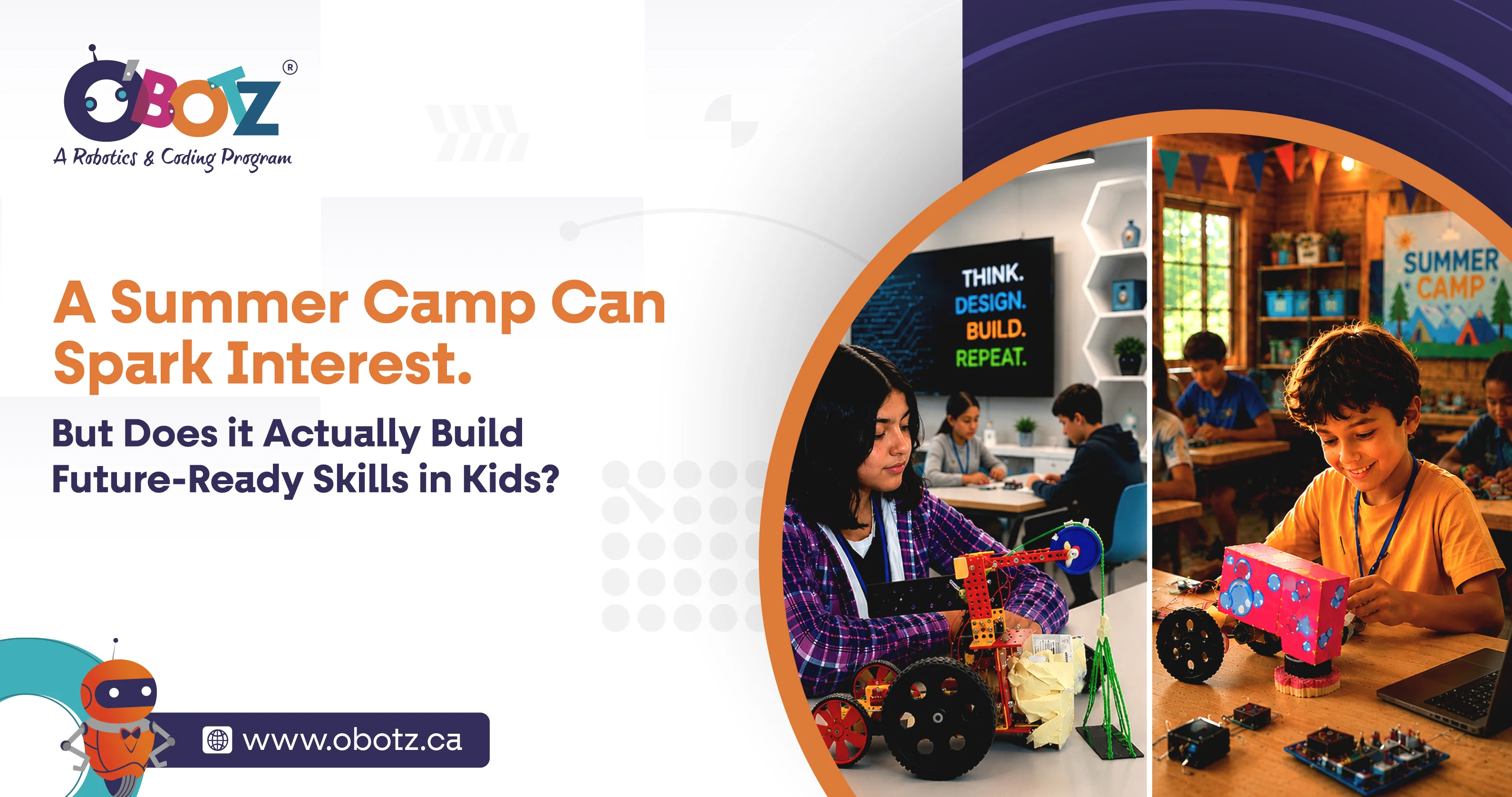
Parents across Canada are investing more than ever in STEM education. From robotics labs to coding bootcamps and AI workshops, the demand for future-ready learning has exploded over the last few years.
Programs like OBotz have become increasingly popular because parents are no longer looking at coding as an “extra activity.” They see it as a foundational skill — much like math, communication, or reading.
But one big question keeps coming up among Canadian parents:
Should children attend STEM summer camps, or are year-round classes more effective?
The debate around STEM summer camp vs class Canada has become especially relevant as families try balancing enrichment, academics, screen time, and long-term skill development. Some parents prefer immersive summer experiences, while others believe consistency matters more than intensity.
The truth? Both models serve different purposes — and Canadian learning research is increasingly showing that the best results often come from combining both strategically.
Across provinces like Ontario, British Columbia, and Alberta, schools are gradually introducing more coding and computational thinking into classrooms.

But many parents still feel traditional schooling alone is not enough.
This is one reason searches related to summer coding camp Canada and year-round robotics class continue growing rapidly. Families want children to develop:
Programs outside school are now filling gaps that regular classrooms often cannot address deeply enough.
Parents who want to build stronger academic momentum before the school year often begin with structured STEM exposure early. Resources like How to Start the Academic Year With STEM explain why consistent exposure can significantly improve engagement and curiosity.
There’s a reason STEM camps continue growing across Canada every year.
The immersive environment works exceptionally well for certain types of learners.
A summer robotics or coding camp feels very different from a classroom. Kids are surrounded by hands-on activities, competitions, games, collaborative projects, and creative experiments.
This environment often helps children associate technology with fun rather than pressure.
For hesitant learners, a camp format can reduce fear and make STEM feel approachable.
One major advantage in the kids coding camp vs year-round debate is intensity.
In a camp setting, children may spend multiple hours daily working on robotics, coding, engineering challenges, or design thinking projects. This concentrated exposure can rapidly improve familiarity and confidence.
A child who barely understood block coding on Monday may build a functioning robot by Friday.
Summer camps naturally encourage teamwork. Kids learn to collaborate, present ideas, troubleshoot problems together, and communicate during projects.
This is especially valuable for children who are shy or hesitant in traditional classrooms.
Many parents also notice increased independence after camp-based learning experiences.

While camps are powerful for engagement, Canadian education experts often highlight one major limitation: retention.
This is where the conversation around STEM retention summer vs ongoing becomes important.
Research around learning loss summer consistently shows that children often forget newly acquired academic skills when they are not reinforced regularly afterward.
The same principle applies to coding and robotics.
A child may enjoy a robotics camp in July, but without continued practice, many concepts weaken by fall.
This doesn’t mean camps are ineffective. It simply means that inspiration alone is rarely enough for mastery.
The biggest advantage of year-round programs is consistency.
Unlike short-term camps, ongoing robotics and coding classes reinforce concepts gradually over months.
Educational psychology strongly supports spaced repetition and continuous practice.
Children retain skills better when concepts are revisited regularly rather than learned in one intensive burst.
This is why many educators believe after-school vs summer camp coding should not be treated as a competition — because ongoing reinforcement often determines whether children truly internalize STEM skills.
A structured year-round robotics class usually follows a progressive curriculum.
Instead of isolated activities, children build skills level by level:
This gradual complexity helps children move from curiosity to capability.
Long-term STEM education helps kids develop learning discipline.
Children begin viewing coding and robotics as part of their identity rather than a temporary summer activity.
This shift matters enormously for future academic and career readiness.
Canadian learning experts increasingly emphasize continuity in STEM education.
Studies surrounding seasonal STEM learning Canada indicate that sustained exposure generally produces:
Short-term camps are excellent for sparking interest, but long-term programs tend to create deeper competency.
This is especially true for younger children whose cognitive skills strengthen through repeated exposure and structured reinforcement.
Absolutely.
The real issue is not “camp vs classes.”
It’s whether the learning journey continues afterward.
A summer camp can:
But year-round learning often determines whether those interests evolve into meaningful skills.
The strongest approach for most families is usually:
This creates both engagement and retention.
One major misconception is that robotics classes only teach technical skills.
In reality, STEM programs often strengthen broader life abilities.
Children frequently improve:
Programs that focus on project-based learning can influence confidence far beyond academics.
Resources like 5 Life Skills Kids Learn Through Robotics explain why robotics education impacts emotional and cognitive development simultaneously.
Parents can also reinforce learning at home through simple project-based activities. Guides like Simple Robotics Projects Kids Can Do at Home help children stay engaged between sessions.
Interest in STEM enrichment is growing rapidly across major Canadian provinces.
Searches related to coding camp Ontario BC Alberta continue increasing as parents prioritize future-ready education.
In cities like Toronto, Vancouver, and Calgary, parents are increasingly looking for programs that combine:
Teen-focused intensive programs are also becoming popular. Resources like Coding Bootcamps for Teens in Canada show how older students are using STEM learning to prepare for future academic and career opportunities.
Younger children often benefit from playful exploration first. Summer camps can help create positive emotional associations with STEM learning.
This is where ongoing structure becomes increasingly important. Long-term coding exposure strengthens logic, retention, and problem-solving abilities significantly during these developmental years.
Teenagers usually benefit most from hybrid learning:
At OBotz, the philosophy is not built around choosing camps or classes.
The goal is creating continuous STEM engagement that evolves with the child.
Summer programs focus on immersion, creativity, experimentation, and excitement. Year-round classes focus on structured progression, retention, and long-term growth.
This balance helps children move beyond simply “trying coding” toward genuinely understanding technology and problem-solving.
Technology is changing too quickly for STEM education to remain occasional.
Children today are growing into a world shaped by AI, robotics, automation, and digital systems. Exposure matters — but consistency matters even more.
A summer camp may ignite curiosity.
A year-round learning journey is what often transforms curiosity into confidence.
And in many cases, the most effective path is not choosing one over the other — but combining both intentionally.
Whether your child is just beginning or already passionate about robotics and coding, structured STEM exposure can shape problem-solving, creativity, and future readiness in remarkable ways.
Explore immersive camps and long-term robotics learning programs. Book an OBotz Experience Now and discover what consistent STEM education can unlock.
Both offer valuable benefits, but they serve different purposes. Summer camps are excellent for sparking excitement and immersive exposure, while year-round classes are often better for long-term retention and skill progression.
Most children retain concepts better through ongoing reinforcement. Coding camps create strong initial engagement, but continuous practice through regular classes usually improves long-term understanding and confidence.
Research around STEM learning and summer learning loss suggests that consistent exposure generally produces stronger retention. Camps are effective for motivation, but ongoing STEM programs help maintain and deepen those skills over time.
Costs vary widely depending on location and program type. STEM summer camps in Canada may range from a few hundred to over a thousand dollars per week, while monthly robotics or coding classes are typically spread out across the year with recurring fees.
Younger children often benefit greatly from camp-style exposure because it introduces STEM through fun and interactive experiences. Older kids and teens also benefit, especially when camps include advanced robotics, coding, or engineering projects.
OBotz uses camps for immersive hands-on exploration and creativity, while year-round programs focus on progressive skill-building and deeper STEM understanding. This combination helps children stay engaged while continuously improving over time.