Why Every Canadian Parent Is Talking About STEM Education in 2026

Not long ago, STEM education was viewed as an optional enrichment activity for children who loved science or computers. Today, it has become one of the biggest conversations among Canadian parents.
Artificial intelligence is reshaping industries, automation is changing workplaces, and technology is influencing almost every profession. Parents are realizing that preparing children for tomorrow requires more than strong report cards—it requires adaptable thinking, creativity, and technological confidence.
Across Canada, families are enrolling children in STEM Camp Canada programs, robotics workshops, and coding academies that combine learning with hands-on experiences.
At OBotz, we've seen firsthand how children become confident innovators when they're encouraged to build, experiment, and solve problems instead of simply memorizing answers. As discussed on our homepage, STEM learning is about preparing children for the future—not just the next exam.
Parents no longer ask whether children should learn technology.
They're asking how early they should begin.
Canadian employers continue to report increasing demand for technology, engineering, automation, cybersecurity, and AI-related skills. While children won't become engineers overnight, early exposure develops the mindset these careers demand.
Modern STEM education teaches children to:
Rather than simply consuming technology, children learn how to create it.
Academic performance still matters.
But parents increasingly recognize that grades alone won't determine future success.
Today's workplaces reward curiosity, innovation, communication, and resilience.
That's why many families are choosing coding camps for kids that encourage project-based learning instead of repetitive worksheets.
Children who design games, build robots, and create interactive applications naturally develop:
These abilities benefit every subject—not just technology.
The rise of artificial intelligence has transformed how parents think about education.
Many repetitive jobs will evolve over the coming decade, but human creativity, innovation, and critical thinking will remain valuable.
As explored in our blog on the Future of Robotics and Coding Education in 2026, tomorrow's professionals will need to collaborate with AI rather than compete against it.
Similarly, our article on Gen Alpha and the AI Revolution in Robotics explains why today's children require learning experiences that go beyond traditional classroom instruction.
STEM programs provide exactly that environment.
Children learn best when they actively build something.
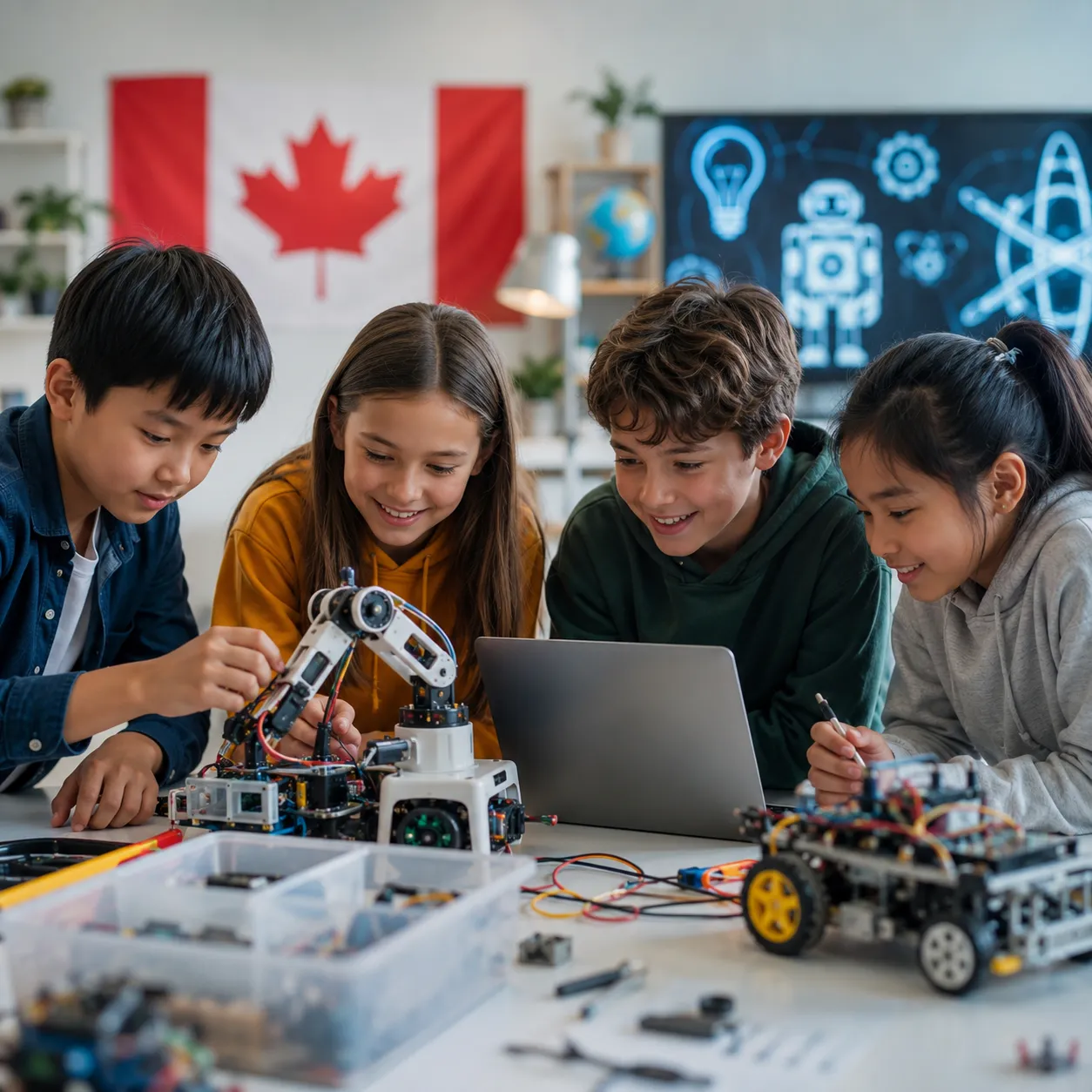
Whether assembling robots, programming animations, or designing simple AI-powered projects, hands-on experiences create deeper understanding than passive lectures.
A quality robotics camp allows children to:
This active learning builds both technical knowledge and confidence.
Parents increasingly prefer immersive experiences over occasional weekend classes.
Unlike traditional lessons, intensive coding camps allow children to remain fully engaged over several days while working on larger projects.
Many families also appreciate the flexibility of seasonal programs during school holidays.
Whether it's a Spring Break Camp or summer program, camps combine structured learning with creativity, teamwork, and excitement.
Children often leave camp inspired to continue learning long after the program ends.
If you're exploring seasonal learning opportunities, OBotz's Summer Camp offers project-based STEM experiences that keep children engaged while school is out.
Many parents mistakenly believe STEM means writing code all day.
Modern STEM education is much broader.
Children explore:
Coding simply becomes the language used to bring ideas to life.
This interdisciplinary approach develops flexible thinkers who can solve real-world challenges.
Parents understand that no one can predict every future career.
However, they can prepare children with transferable skills.
These include:
Whether children eventually become doctors, architects, entrepreneurs, scientists, or designers, these skills remain valuable.
This growing awareness explains why more parents search online for kids camps near me that offer meaningful learning rather than simple entertainment.
Demand is growing nationwide.
Parents looking for coding camp mississauga programs, coding classes for kids winnipeg, coding classes for kids calgary, and coding classes for kids surrey are discovering an expanding range of STEM opportunities designed specifically for young learners.
Many also search for coding camps near me because they want nearby programs combining robotics, coding, and innovation under one roof.
The common goal isn't simply teaching children technology.
It's helping them become confident creators.
Parents don't simply want children to learn programming.
They want children to enjoy learning.
At OBotz, students learn through:
Instead of memorizing concepts, children apply them through engaging projects that make learning memorable.
Parents also appreciate that OBotz continually evolves its curriculum to match emerging technologies.
As discussed in our article Is Coding Still Worth It in the AI Era?, coding today is less about syntax and more about learning how to think like an innovator.
The conversation around STEM education isn't driven by trends.
It's driven by preparation.
Parents recognize that tomorrow's opportunities will favour children who can think critically, adapt quickly, and confidently solve unfamiliar problems.
Whether through robotics, coding, engineering, or AI, STEM education gives children practical experiences that traditional learning often cannot.
If you're ready to help your child build the confidence and future-ready skills that matter most, explore the innovative learning experiences available at OBotz and book a hands-on trial through our Book an Experience page.
Parents recognize that technology is reshaping nearly every career. STEM education helps children develop critical thinking, creativity, problem-solving, and digital skills that prepare them for future opportunities beyond traditional academics.
The best STEM camps combine coding, robotics, engineering, AI, and hands-on project work in an engaging environment. Programs like OBotz emphasize practical learning that builds both technical knowledge and confidence.
STEM education prepares children for emerging fields such as robotics, artificial intelligence, cybersecurity, engineering, and data science. More importantly, it develops transferable skills that remain valuable regardless of future career choices.
Both offer valuable learning experiences. STEM camps provide immersive project-based learning over consecutive days, while after-school programs support continuous skill development throughout the year.
Children should develop logical reasoning, computational thinking, basic programming concepts, collaboration, creativity, communication, and confidence with technology. These foundational skills make future STEM learning much easier.
Look for programs with experienced instructors, project-based learning, age-appropriate curriculum, robotics activities, coding projects, and opportunities for creativity. Parent reviews and structured progression are also strong indicators of quality.
OBotz offers a comprehensive STEM curriculum that combines coding, robotics, AI, engineering, and hands-on innovation. Its project-based approach helps children develop both technical expertise and future-ready life skills while making learning engaging and enjoyable.