What Is the Best Age to Start Coding?

Parents today know that coding is no longer just for future software engineers. It has become a life skill that nurtures creativity, logical thinking, problem-solving, and resilience. But one question continues to puzzle families:
What is the best age to start coding?
Some believe children should begin as early as preschool, while others feel coding should wait until middle school. The truth lies somewhere in between—and it depends more on how coding is introduced than when.
At OBotz, we believe every child can learn coding when the learning experience matches their developmental stage. Rather than pushing complicated programming languages too early, children should gradually build computational thinking through age-appropriate activities, robotics, and hands-on challenges.
Whether you're searching for coding classes for kids near me or simply exploring STEM education for your child, this guide will help you understand when to start and what to expect.
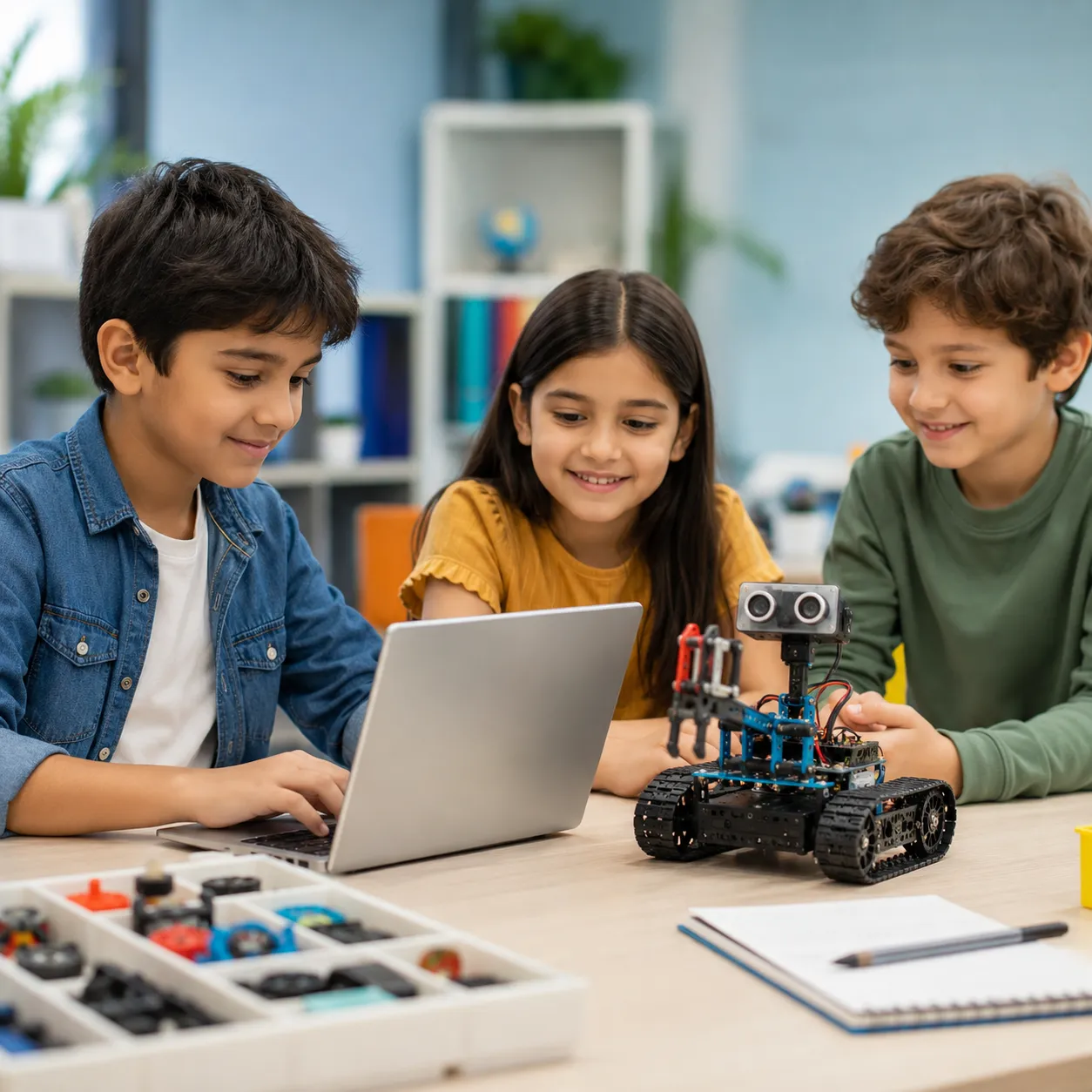
The biggest misconception is that coding starts with typing code.
In reality, coding begins with learning how to think.
Before children ever write a single line of Python or JavaScript, they develop skills such as:
These abilities can be introduced long before traditional programming.
That's why successful STEM programs focus on building thinking skills first and coding syntax later.
Children in this age group learn best through exploration and play.
Rather than expecting them to understand programming languages, introduce them to activities involving:
These experiences strengthen cognitive development while making technology fun instead of intimidating.
This stage also complements mathematical thinking, something explored in our guide on Math and Problem Solving with Coding.
Many educators consider this the sweet spot.
Children now have:
They are ready for:
Instead of memorizing commands, children learn how instructions create outcomes.
This is where robotics for kids becomes especially valuable because they immediately see their code come to life.
At this stage, children become independent problem solvers.
They enjoy:
Coding shifts from following instructions to building original ideas.
Many parents looking for coding class for kids near me discover that this age group progresses quickly because children can combine creativity with logical thinking.
The emphasis should remain on project-based learning instead of memorization.
Older children are ready to explore:
By this stage, coding becomes more than a hobby—it becomes a tool for innovation.
Our article on future-ready robotics education for Canadian students explains why these skills matter even more in the coming years.
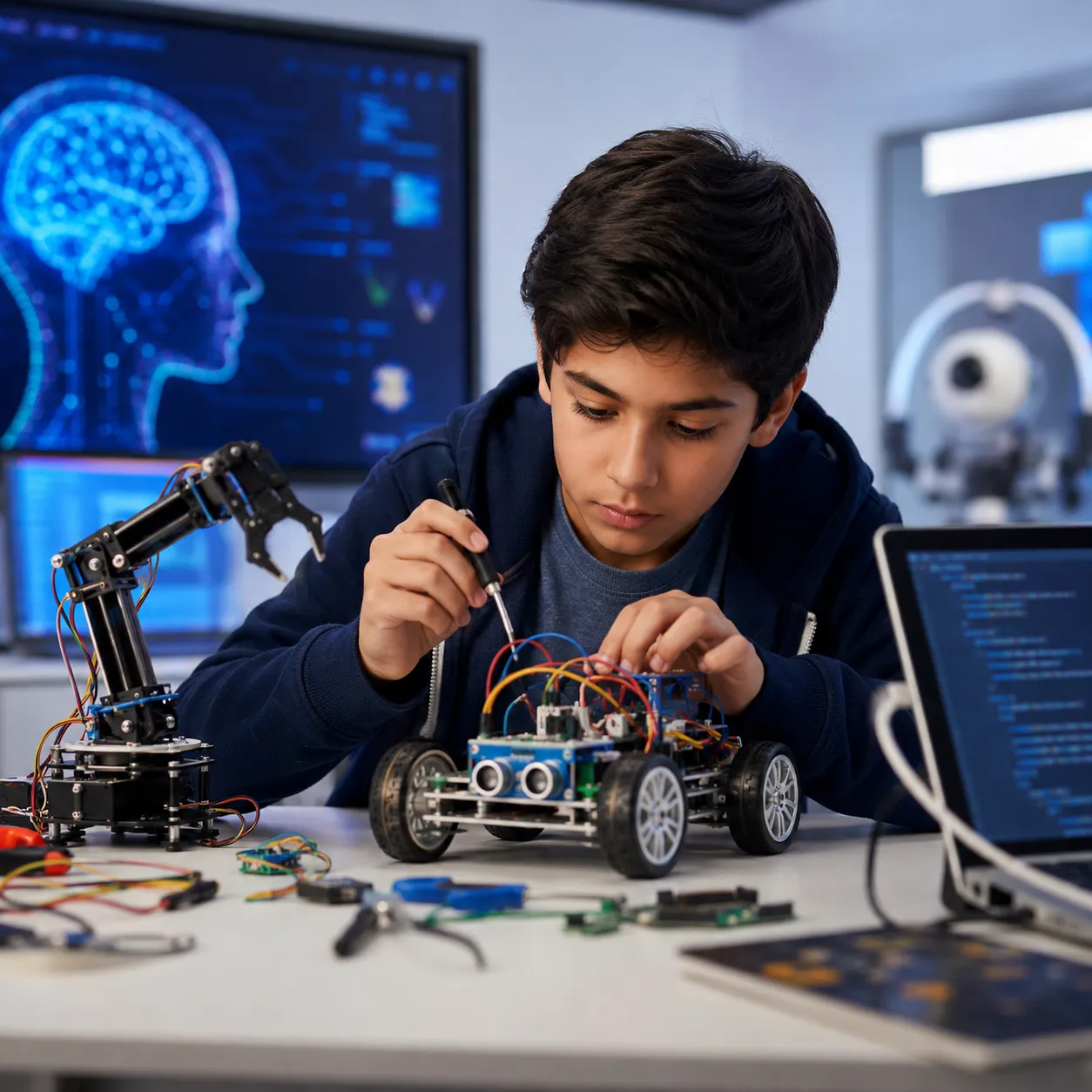
Not always.
Starting appropriately is better than starting early.
Children forced into advanced coding before they're developmentally ready often become frustrated.
On the other hand, children introduced through games, robotics, and creative challenges develop confidence that lasts for years.
Good coding education grows with the child.
Parents often ask if their child is "ready."
Instead of focusing on birthdays, look for these signs:
If these sound familiar, your child is likely ready to begin STEM learning.
Children naturally understand physical movement.
When they program a robot to:
They immediately understand how coding affects the real world.
This hands-on learning dramatically improves engagement compared to screen-only lessons.
That is why coding and robotics classes near me have become one of the fastest-growing searches among Canadian parents.
Not every coding class is designed the same way.
The best programs:
Rather than teaching children to memorize syntax, quality STEM programs help them become thinkers and creators.
Parents exploring kids coding classes near me should focus on curriculum quality rather than simply finding the earliest available class.
If you're in Ontario, our guide on coding benefits for Toronto children explains what to look for in a quality STEM program.
Coding shouldn't feel like another school subject.
Children learn best when coding becomes an adventure.
OBotz Summer Camps, robotics competitions, innovation challenges, and collaborative projects help children apply what they've learned in exciting ways.
Hands-on experiences keep motivation high while reinforcing technical skills.
Parents across Canada often search for:
While location matters, the curriculum matters even more.
Choose a program that evolves alongside your child's age and encourages experimentation rather than rote learning.
Whether your child begins at five or eleven, the right learning environment can spark lifelong curiosity and confidence.
The best age to start coding isn't determined by a calendar.
It's determined by your child's curiosity, confidence, and access to engaging learning experiences.
When coding is introduced through creativity, robotics, and hands-on exploration, children don't just learn programming—they develop the problem-solving mindset needed for tomorrow's world.
If you're looking for a trusted STEM program that grows with your child, visit OBotz to explore age-specific robotics and coding programs.
Book a free experience session with OBotz today and discover the program that's perfect for your child's age and learning style.
Most educators recommend introducing coding concepts between ages 5 and 7 through games, robotics, and visual programming. The focus should be on developing logical thinking rather than learning complex programming languages.
Yes. Five-year-olds learn best through visual coding platforms, storytelling, puzzles, and robotics activities. These playful experiences introduce computational thinking without requiring typing or advanced reading skills.
Children aged 5–8 usually benefit from block-based platforms like Scratch Jr. As they grow older, they can transition to Scratch, Python, and eventually text-based programming depending on their interests and skill level.
Not at all. Twelve-year-olds often learn coding quickly because they have stronger analytical and reading skills. With the right guidance, they can rapidly progress into Python, robotics, and AI-related projects.
Look for programs that group children by developmental stage rather than simply by age. Search for experienced STEM providers offering project-based robotics, coding, and hands-on learning with structured progression.
Children who start around age 6 often develop computational thinking naturally alongside other foundational skills. Those beginning at age 10 usually advance faster into technical concepts because they already possess stronger reading, reasoning, and problem-solving abilities.
OBotz offers age-appropriate learning pathways designed to match each child's developmental stage and experience level. During a free assessment session, instructors recommend the most suitable Nano, Micro, or Macro program based on your child's readiness rather than age alone.